Tuesday, May 8, 2018

8 Steps to Kick Off an Ultra Powerful Link Building Campaign

We can already see a convergence between digital marketers, SEOs and webmasters. Although they all have their own tasks and responsibilities, at some point all of their work will revolve, more or less, around the concept of link building. This is the topic that we’re going to talk about in today’s article.


While link building, alongside content, might have a bad name in the industry it still is the number one signal Google looks at when deciding to rank a website. There are countless guides, tips and “top five ways to build links” articles out there, but we’d like to take a deep dive into the technical part to approach this subject. We want to make sure that when you get into the link building process, you do it the right way, since we all know what happens when you get bad and harmful links pointing to your website.


How to Kick off an Ultra Powerful Link Building Campaign in 2018


It’s crucial you follow a tested guidelines and link building tactics when planning the link building process. So, here they are, 8 steps for doing proper link building in 2018.


  1. Step 1. Preparation 
    1. Agree Upon Concepts, Budgets and Reporting Metrics
  2. Step 2. Strategy
    1. Develop Context for Your Link Building Strategy
    2. Create a Content Marketing Strategy
  3. Step 3. Quick Wins
    1. Take Advantage of Broken Link Building
    2. Practice Internal Link Building
    3. Turn Mentions into Links
  4. Step 4. Content
    1. Craft Content for Influencers and Existing Customers
    2. Integrate Online and Offline Campaigns
    3. Create a Variety of Content *Types*
    4. Build Surveys
    5. Initiate User-Generated Content
    6. Create ‘How-to’ Videos
    7. Make Quality Images Available Under CC License
    8. Use Blog Reviews
    9. Re-purpose Existing Content
    10. Consider Every Possible Idea
  5. Step 5. Prospects
    1. Prioritize Link Prospects that Can Deliver Traffic, As Well As SEO Benefits
    2. Perform Competitor Research
    3. Look for Expired Domains in Your Industry
  6. Step 6. Networking
    1. Engage with your customers and with the influencers
    2. Establish an Online PR Mindset
    3. Become an Industry Expert
    4. Offer Giveaways, Contests and Special Offers
  7. Step 7. Promotion
    1. Promote to Your Customer List
    2. Promote to Your Prospect List
  8. Step 8. Report & Debrief


We’re now in 2018 and the times when you were hunting for links for the sole purpose of ranking higher in the SERPs are long dead.  Yes, it’s totally OK to want links, shares, and mentions as a result of something worthy you did, something real that people found to be worth sharing. The higher ranks in the search engines and driving traffic will come as a result of this, the algorithms are already advanced enough to notice when people are speaking about you. And the more people are speaking about you, and the more influential those people are, the better the results. 


Before starting a successful link building process, you need first to know the rules, the lines that you shouldn’t cross, which basically translates to “What can I do in order to avoid Google Penalties?”. Whatever your goals for the link building efforts may be, you must stick to the guidelines in order not to shoot yourself in the foot with your actions. Let’s take a look briefly.


Manual Penalties


The first type of penalty you want to avoid is Google’s manual penalty. As the name suggests, this kind of penalty refers to actions taken by Google employees who personally go through your website, review it and penalize it. You will encounter this situation if Google believes that you may have deployed some shady tactics in your link building actions. Dealing with this kind of penalties takes a lot of work but it can be done. Our advice would be to stay clear of any shady tactic and read up on the guidelines.


Algorithmic Penalties


The second type of penalties are the algorithmic ones. These are the penalties received from the Penguin or the Panda updates and, as the name suggests, they are automatically applied to your website if the Googlebot detects an unhealthy link profile, duplicated content on the pages and other shady behavior on your website. Google is constantly updating the algorithms in order to minimize the involvement of human reviewers.


The biggest difference between these two types of warnings is that you will not receive any message or email from Google when your site is affected by an algorithmic penalty. You’ll just see your rankings drop into the void. There are also ways to recover from a Penguin penalty, but again it takes time and effort so we suggest you should avoid any shady action in your link building process.


Main Guiding Principles


Before we get into the action, let’s go over some guiding principles that we’re going to pay attention to when starting the link building process.

Never get unnatural links. Always aim for earning good, natural and high-quality links.

Let’s go through an example by using the cognitiveSEO tool to check the aftermath of a backlink profile. Remember that this is not one of those link building tools that guarantee 10 high quality links in one day. What the cognitiveSEO tool does is to automatically classify the links you’ve alreadygained into three separate categories: unnatural link/black hat link (the ones that will draw the wrath of Google), suspicious link (the ones that may raise a few flags) and OK link/ white hat link (the good ones).


Lots of good links


Above you have a somewhat good link profile. The vast majority of links (87%) are awesome, but still, there are some bad ones. The thing to get from this link profile is the fact that if you have this many good links, you can get away with a couple of shady links. If you find yourself in the situation above, with a lot of good links, you shouldn’t worry about those grey/suspicious ones (though you should check each one of them to make sure they are not actually unnatural). You should still get rid of the unnatural links since they may bring penalties, no matter what percentage of unnatural links you have.


Lots of unnatural links


Now the example above is what you don’t want to see after you’ve done some link building. In this situation, all your efforts have been in vain and you just gave yourself a lot of work to remove the links you have gained. You should pay close attention to unnatural links, especially in the early stages when you have few overall links.

Always Look at the “Brand” value first. Ranking value is a by-product when you talk about the acquisition of a link! Don’t Make “Rich” Anchor Text Links!

What we suggest when starting a link building campaign is to focus more on the brand terms and not on commercial terms. 


Anchor text cognitiveSEO


Even if you want to rank for that keyword, it’s best to have your brand’s name in the anchor text. We’re not saying that you shouldn’t get any keyword rich anchor text, but keep track of the balance between brand anchors and commercial anchors. If you have the majority of anchors pointing to your website in commercial terms, it could very well raise some red flags at Google and “decrease” that links’ quality.


We know what you’re trying to do with link building, you know it and you can be sure Google knows SEOs are trying to influence its search engine. Building links should be natural, a reward for great content or a great product, not some guy spamming comments to various websites. Keep that in mind when starting such a process, don’t make links that are clearly unnatural, “build” them as if people found value in what you do and want to spread the word.


When calculating risk, you weigh-in the benefits vs. the harm. Well, in this case, let us be as clear as we can be, the harm of building low quality, unnatural links is immensely bigger than the reward. Not to mention the fact that Google’s algorithms get better each day. Google is a pattern recognition machine, so don’t leave a pattern in your links that match spam sites. Get only small amounts of links from easy-to-build neighborhoods.

Less manual link building!

Don’t go around asking for links to your business. Even though it could be a great one, and even if you know links are an important rank factor, people are less likely to link back to you if you do that. Instead do cool things, write great content and people will share that. Present your own product to potential link building prospects, ask for reviews and if they find it ok or not, they might link back to you.

Always monitor your links!

If that product review gets a link, and Google might see it as unnatural, then ask the reviewer to include a nofollow tag on it. By monitoring your links you can notice if you get a wave of bad links that could indicate that you are the target of a negative SEO attack. By noticing it, you can easily disavow those links and rid yourself of a potential Google penalty.

Target links from sites and articles relevant to yours. The same semantic category of content means a lot nowadays.

When you’re running some SEO audits, you will surely agree with us that it’s rather shady if you’re in a US car insurance business and the majority of your backlinks come from a cooking magazine, from Sweden. Those links are toxic. Now, even if you bought some advertising space on that magazine, those links don’t help you all and they may even raise some flags over at Google and may get you penalized in the future. Within your online marketing campaigns, when building links, focus mainly on your business, and build links in the country that you are targeting.


Step 1. Preparation 


So we went over the guiding principles of link building and now it’s time to get to business. And that word, business, is exactly how companies should view link building.

The link building process is not something that some guy over in IT can easily do once a month.

It has to be well thought out and the campaign needs sound business practices, including budgeting, good relationships between all the people and departments involved and agreed monitoring metrics in place before the process starts.


1.1 Agree Upon Concepts, Budgets and Reporting Metrics


The main idea you should get from the first step in the link building process is what your client does, what your business wants. As an SEO, you need to sit down with your client, boss or colleague and go over the definitions of what a link represents if the social mentions and discussions can be counted toward links. Get to know all that and make your client understand the concepts that you’ll be working with.


After going through the concepts and the budget, the next step is to go over the metrics that will measure the success of your link building campaign. Define these metrics together with the client and agree on what you’ll report on, be it ranking improvements, number of links/referring domains, social visibility and so on.


Step 2. Strategy


So, you’ve agreed on the metrics and the budget with your client: it’s time to start planning and strategize the next steps. And just as the greatest strategist wrote: “Strategy without tactics is the slowest route to victory. Tactics without strategy is the noise before defeat”, in order to achieve success you need a well-established plan with a list of tactics.

That plan should be placed within the context of the owning company’s goals and any historical and existing marketing and sales strategies.


2.1 Build Context for Your Link Building Strategy


Before going on with the strategy, you need first to understand the context. Context is very different for each company, for each industry and market. You will need to have answers for all of the following questions:

  1. What is the brand?
  2. What are you selling?
  3. Who’s it being sold to? What do they love and hate?
  4. Are there personas to represent target audiences?
  5. What are the big world goals of the company?
  6. How important is the website to those goals?
  7. What are the expectations of link building?
  8. Who are the decision makers?
  9. What’s the history of this company’s link building – what has/hasn’t worked, and why?
  10. Does the site have an existing Google penalty for bad links? If so, fix first.
  11. Do you know the company’s editorial calendar (online and offline)?
  12. What stakeholders do you need to work with (ie. other departments)?
  13. Find out what you need to know about internal company politics.

Only after you’ve answered all these questions you may proceed to building the strategy.


2.2 Create a Content Marketing Strategy


Make your content marketing strategy as in-depth as possible. This is the only way to ensure that when executing it, you won’t waste time on details such as “Who am I writing for”, “What do I want the reader to do after finishing my article”. You strategy should include:

  • the topics to tackle
  • the headlines for each article
  • the frequency of posting
  • the length of the articles
  • the articles schedule
  • inspiration and research sources
  • call to action for each article

After you’ve finished the overall strategy, it is time to move on to the tactics. We advise you use a broad range of tactics to achieve your strategic goals.


Step 3. Quick Wins


The next step in the link building process is the “quick wins”. These refer to quick and easy fixes to your website that can bring in a lot of results.


3.1 Take Advantage of Broken Link Building


The first quick win tactic is fixing the broken links on your website. To find out exactly which links have 404’s, you can use Site Explorer. Follow these steps:


Microsoft Broken Pages SiteExplorer cognitiveSEO


As you can see, having broken pages might mean losing a lot of traffic, rankings and link juice. You can also see the type of error by looking at the status code. In our case, we have only HTTP 404 (not found).  


You’re now presented with a list of all of the 404 errors that Google crawlers have found on your site. The next step of this quick win is to add 301 redirects from these 404 error pages to pages that you wish your visitors to go to. To see exactly who is linking to the broken pages you can use the cognitiveSEO tool and check each of the broken 404 pages.


Filters for 404 error pages


Now that you’ve found who is linking to your broken 404 pages, you can even send a message to the webmasters to fix their link and have them link wherever you wish. This is a great advantage for you, but also for the owner of the webmaster who has broken links. Usually, they don’t even know about this situation and offering to fix this issue and replace their broken links with new ones should be hard to refuse.


3.2 Practice Internal Link Building


Optimizing your own website is the key here. Make sure you review all the pages from your website and make sure that from each one you can get to any page which has a similar and related subject. You can use here relevant anchor text to link to the pages that can provide value to a user who’s on one of these pages. What we mean here is to keep the user behavior in mind and try to place links to any page on your website that users might be particularly interested in.

If your users see you as a Hub of Quality Content, the Search Engines will follow.

It doesn’t really matter if you are linking up and down or even across the site’s hierarchy. Make sure related and relevant pages are inter-linked and if your site is big enough to be organized into categories, a separate menu for each of them might help you out. Should you have a smaller website, linking from content can also provide great help to both the user and the search engine.


Remember that wherever the pages are in your site’s hierarchy, you’ll need to present your most important pages on your home page. Take a look at how Tripadvisor does this on the image below:

Internal Links on Tripadvisor


As you can see from Tripadvisor’s home page, you’re able to quickly access its most important pages. By linking them this way, lots of link power from your homepage is transferred to the deep pages of your website.


3.3 Turn Mentions into Links


Another quick and easy win to gain some great links is to be on the lookout for your brand mentions on the internet. BrandMentions can help you perform a quick search for your brand and analyze what you get. The tool has a special feature that will let yo identify those 


BrandMentions unlinked mentions


Check out each site from the Web category and each post from the Social category to see if they point back to you. If they don’t point back to you, convert those mentions into links. Just go ahead and contact the webmaster or the author of the articles that mention your brand and ask them nicely to add a link to one of the mentions of your brand. There is a high chance that they will do since they are already interested in your product or business to talk about.


Concert Brand Mentions into Links


Brand Mentions offers you the possibility to track your brand name, topics from your niche or anything you might be thinking of.  Patiently wait for notifications when you’ve got a new mention and, if it’s the case, transform that into a link. 


Step 4. Content


Now that we went through the quick and easy gains of link building, it’s time to get to the hard stuff. The content in itself is where most of your focus should be directed to.


4.1 Craft Content for Influencers and Existing Customers


Links can be gained from both influencers as well as from your existing customers. If you make evergreen content, we assure you that there is a higher chance they will share it and even link to it. They are one of the targets of your content marketing strategy.


When you write, make sure you have the overall strategy in mind and your strategy should include valuable information for influencers and for your existing customers. 


That way, you can adapt your content to their preferences. Find out what makes your audience tick, so you can make sure your content contains the best baits and hooks to draw in the audience’s attention.


One of the simple ways to find topics that create the most emotional response is to invest time on forums, Facebook pages and read blog posts and see which kind of content gets the most traction. Let us give you an example and let’s say that you’re targeting Chelsea FC fans. You go to one of their unofficial forums and take a look at what gets the most attention (now write about Jose Murinho and Eden Hazard).


Popular Topics for Your Audience


This example says it all. You go in, check for what’s “hot” with your audience and immediately start producing content that will be of interest. If your content and opinions are great, you will probably be receiving links from them.


cognitiveSEO offers you the possibility to spy on your competitors and see their most shared content on social media to get inspiration for topic ideas. 


Social Visibility Module Competition


Directly from the tool, you can spot content marketing insights from your competitors and some content ideas that might work in your niche and audit your content through the power of social shares.


4.2 Integrate Online and Offline Campaigns


Make sure you build online hubs for every offline campaign. Especially in the case of events, where many people are invited, gathering them in an online hub on your website or on a social media site could provide some great linking opportunities. If you heavily promote the campaign in the online world, make contests and start engaging users, they will link to it and you’ll build some great natural links that way.


4.3 Create a Variety of Content *Types*

Content doesn’t refer only to blog articles.

Sure, they are the backbone of a well-structured content marketing strategy but there are so many ways to do it. Surprise your audience once in a while and produce an infographic. This type of content gets often shared, and it can be easily linked back to your business. Or better yet, start writing e-books for your audience.

Depending on the industry you’re in, make sure you take in consideration video content, too.

It has such a great potential in almost any market. Even though it is more expensive to produce, it could provide amazing results.

Make sure you don’t get stuck with blog content as a content marketing strategy. Start to include ebooks, webinars, press releases, podcasts and video content in your content strategy, too.


4.4 Build Surveys

We’ve even talked about surveys on our blog a while ago. They are a great way to get tons of ideas, better understand your users and get tons of data from them. You can create surveys super fast with tools such as Survey Monkey or services as Reserchnow. Emphatic or unexpected survey answers can inspire interesting articles that are worth promoting to “big media” publishers (such as infographics).


Let’s take the Forza supplements survey as an example.

Forza Supplements Survey on their Blog


They first ran a survey for research purposes on their site. Following the success of the research and the traction this is what happened:


Forza Supplements Survey Gets Linked and Mentioned


Tons of links from high authority websites pointing back to the survey. Now depending on your industry and market, make sure you’re able to produce these types of survey. If you do it well, the reward for such content is big.


4.5 Initiate User-Generated Content


Getting your users to actively engage with your brand in such a way that it makes them want to generate content for your brand is an art. It’s such a difficult thing to do that the majority of businesses simply don’t even bother to focus on it. Well, that’s not necessarily true. Let’s say that you have a small cooking website, a simple way to build up user-generated content is to make a contest and ask them to post their own recipes on your website or on social media. We find that contests work best here, they are really easy to come up with, only require resources for prizes and the community can promote the contest among themselves.


You can incentivize this with a giveaway if you don’t make a contest. Let’s take Starbucks for example.


Starbucks User Generated Content


From the Starbucks’ example we can learn that it doesn’t have to be some great over the top contest, but just a simple idea that doesn’t require a lot of work from the community and which yields great results and, in the end wil,l get many links.


Another valuable user-generated content idea is the received comments for your articles. Passing the days when comments were spammy, now you can filter them and accept only those that are relevant and weigh information. Comments can complement your articles, generate new content ideas, create relationships and bring new clients. 


4.6 Create ‘How-to’ Videos


How-to videos have always bee on the wave right. They’re somewhat easy to produce, depending on your industry, and provide great linking and social share potential.


To get some ideas on what to focus on let’s use the Site Explorer tool to find the most linked pages:

Find Most Linked Content on cognitiveSEO


Once you get the idea of what piece of written content gets a lot of traction, you can try to turn it into a “how-to” video. You already know that it can raise a lot of interest for your audience so you won’t take the risk that all the effort will go to waste.


Another way is to use Google’s autocomplete feature to find out what people are searching for:


Get Ideas from Google


Google provides tons of great ideas for “how-to” videos. Use the autocomplete feature from Google as seen above.


Create How To Videos

Take a look at diy. We can see that the most popular videos are the ones that appeared in the autocomplete feature from Google. We can’t say for sure that this is the way they get ideas for content, but for their website, it seems to work really well.


Looking through Google related searches is a good recommendation to get ideas for how-to videos based on the query you searched for:


Google related searches for how to paint a room


4.7 Make Quality Images Available Under CC License


A simple and effective way to get some links is to upload images to your company’s Flickr account and mark them available through CC license. This will get lots of links since the only requirement for using the images is linking back. Ford seems to be using this strategy really well. The company profile is filled with images, graphs, and pictures of their cars that are used in different media and are linking back to the company’s website.


4.8 Use Blog Reviews


Review great blogs and websites in your market. This will draw the attention of the big players in the industry and if your review is a positive one, in most cases they will link back to you.

 Blog Review


In the example above, Dailymeal made a top of the best food blogs in 2014 and posted it on its website. Now tell me which blogger doesn’t want their name to appear in such a top and which of them wouldn’t want to link back to this top in order to show how great they are.


  • Collaborating with Generic Influencers to Receive Product Reviews 


These two next content types go hand in hand. The Generic Influencers product reviews refer to giving away your product, for free, to influencers in the industry. Depending on the product and industry, they will usually write reviews about and link back to you. Influencers are looking for content that will be of interest to their user base. It’s tough to convince influencers to try your product but here is where your “sales” tactics should come in handy.


  • Getting Product Reviews from Experts


The second type of product review is getting experts to review your business on your own website. Now with this content type, you’re betting on the authority of the expert that writes the review. You’re betting that their authority will draw in the social attention that will be enough to get links from. In general, this kind of practice works best in auto industries, to get a celebrity to write a review of your product on your website will get a lot of people talking about it. You can even view it as an endorsement.


4.9 Re-purpose Existing Content


If you’ve been working on your content for some time, we’re pretty sure that you also have some old and great content that rarely sees the light of day. You can re-purpose the content in ways that it will bring additional value to your users. Creativity is always the key! Old content can be gathered up, cleaned up and promoted to your audience once again. You can easily make an e-book out of the content that has gathered over the years in your blog archive and promote it to your users.


Content pruning is a strategy that you could apply. We documented a comprehensive article about the topic and we also gathered some experts’ insights to find out whether it is an efficient strategy. It seems that most of them experienced some eye-catching results, such as 31% increase in organic traffic, a boost of 2,500 visitors, improved search visibility and so on.  


4.10 Consider Every Possible Idea


Always try to improve and never settle for the same ideas, even if they worked and provided great results. We all know the saying “if it’s not broken, don’t fix it”, but in today’s world, what works today might not work tomorrow. This is why you always need to be constantly up to date with every new link building technique out there.


Consider Every Idea


Even if you’ve done your research and worked in the same field for years, it’s still best to go over what’s new. There are a lot of sources out there from which you can learn, experts and people in the industry are always publishing and are trying to create conversations around the newest strategies. That way, you can make sure you’ll never be one step behind the industry and that your efforts are always up to date.


Step 5. Prospects


This part is done now. Now it’s time to move on to find the people and sites that should be outreached to in order to maximize your contents’ external linking.


5.1 Prioritize Link Prospects That Can Deliver Traffic and SEO Benefits


Always go for link prospects that have high authority and can bring in lots of traffic and SEO benefits. We’re not saying you should ignore the low authority domains but focus your efforts on the big fish. It’s likely that you’ll have to analyze the prospects with a Pro tool.


cognitiveSEO Link Rank


With a quick analysis, we can already see that this prospect is one of those “big fish”. They have a good link rank and a large number of referring domains that are pointing to the website. This is what you should be looking for. Next up is to check the link velocity:


Link velocity prospects


By studying the link velocity charts, we can tell that this site is being worked on. Once you have data about the growth potential of the website, you can add it to your outreach list. In the chart above we can see that the website has a good link growth with nothing too shady about it. Getting a link now on this website will probably be worth a lot more in the future.


In Site Explorer, you can perform quick researches for potentialy linked websites, where you can view the link velocity, the domain performance, the number of links and reffering domains as long as the overall rankings.


5.2 Perform Competitor Research


You’re probably already checking what your competitors are doing. So why not check where they are getting their links from?


Compare websites in cognitiveSEO campaigns


The cognitiveSEO competitive analysis allows you to benchmark your metrics to those of your competitors. But that’s not all it does. You can also check out your competitors’ links. By using the link intersection technique you’ll be able to find a lot of new link opportunities for your website.


View competitor's high athority links


Once you apply the filters, you should be left with only the high authority link prospects.


Filtered high authority links


Above you have the filtered version displaying only the high authority link prospects. They are a great opportunity for your business to tackle. They are already linking to your competitors, meaning that they are somewhat interested in the business area you’re in. Once you contact them and present your product or your content, there is a high chance that they might mention you.


There are other ways to view your competitor’s links. For example, you can see which links you have and don’t have in common. In your SEO campaigns you can see a list of all the links your competitors have and you don’t. Those are all link opportunities. 


Link opportunities


5.3 Look for Expired Domains in Your Industry

Another way to find quality link prospects is to search for expired domains in your industry. By using the cognitiveSEO tool, you can easily track and find links that are pointing to expired domains. Next step would be to try and contact the owners of the sites in order to fix the dead link issue. You can present them with another link (to your business) and tell them that broken links are hated by both users and Google alike. You will get some links this way. Here you can read more about identifying link from dead businesses. 


Step 6. Networking

It’s all about building a community, a tribe around your business and market. In the age of the internet, time flies faster than in the offline world. If you are not communicating online for a week, or a month, people will forget that you even existed, so don’t let that happen.


6.1 Engage with Your Customers and with the Influencers


Social media is a great way to speak to your customers. Have your company or your client set up accounts on all the major ones and with each piece of content that you create, spread it out. Find out what works best for each social media platform and fine-tune the content for the one that works best or for the one that you wish to tackle.


Targeting influencers is a more in-depth topic that should be tackled separately. Basically, you need to start and nurture a relationship with them in order to be able to even start to ask them for “favors”.


6.2 Establish an Online PR Mindset


When you engage in a link building process, you’re no longer an SEO or a marketer. You’re supposed to be all of it: webmaster, SEO, marketer, copywriter, PR specialist researcher and so on. Always pay attention to the industry news and get to understand the content that they publish. Reach out directly to the journalists and editors and offer them tailored content. If the content is great and if it offers value to their audience, it will be posted. Our advice is to be persistent and polite. Following up emails with phone calls is not something that you should shy away from.


Make sure you research on the person you have to contact, make a friendly and polite email for outreach. We’ve tackled some techniques for cold emailing you could follow to get the attention of your recipients.


6.3 Become an Industry Expert


People need reasons to listen to you.

You can “scream” as loud as you can on the internet, but if people don’t see the reason, they won’t be bothered to look at what you’re saying.

The only way to fix that is slow: step by step become an industry expert. And, since you’re working in that industry, it will help you as much as it helps your business. So our advice is to become an expert, prove your knowledge through blog posts, user engagement, books, and guest articles. Once you reach that level, you’ll find it a lot easier to reach your audience. Eventually, others will come to you for quotes and ask for content from you, the links will also follow shortly.

Become an Industry Expert


HARO (Help A Reporter Out) offers a great service. You can use them in order to get on the radar for the journalists that are looking for experts in specific areas of expertise. Moreover, they could mention and quote your expertise in their own articles, getting really great and high-quality articles.


6.4 Offer Giveaways, Contests and Special Offers


Invite bloggers and other influencers to run contests and giveaways on their blogs with your top products. Everybody likes a contest and we’ve mentioned earlier that they have a lot of link potential.


You can use the rafflecopter platform for giveaways that require entrants to follow, like and share. With a simple giveaway, you can get links and a lot of social media attention.


Step 7. Promotion


There are lots of ways to engage in this action. You shouldn’t focus only on social media. You can opt for email campaigns, paid advertising (search and other forms), content syndication or guest posting. 


7.1 Promote to Your Customer List


Each new piece of content should get announced to your audience.

You’re not running a monologue website, you need people to talk back to you, to engage, share or challenge your ideas.

Keep an email list of your readers and regularly email your content (with their permission). Use social media to promote your content and use their groups and circles to promote it to relevant users, the users that you want to promote your business to them.


7.2 Promote to Your Prospect List


The same goes for influencers. Emails, social activity are all welcome, but for them you need to go that extra step. You need to always have a conversation going on, help them out on their articles and even meet up with them at social events.


Step 8. Report & Debrief


We’re finally at the last step of the link building process. The one in which you check if all your efforts were successful or not. Now is the time to go over the notes you initially talked about with your boss or client and study the metrics that you set out to follow.

Only by constantly monitoring metrics you can improve future campaigns.


Conclusion


It looks like 2018 has a lot to offer to digital marketers. The link building process is getting more and more creative while Google tries to reward great content with higher rankings.


Always keep in mind Googles’ guidelines so that you won’t shoot yourself in the foot while trying to grow your business. We advise you to creatively build natural links and to try to create lots of conversation around your business. Google is constantly upgrading its algorithms to finds the unnatural links and a penalty is the last thing you want to deal with when you try to grow your business.


The present article is not intended to be an ultimate guide for link building resources. It’s more of a process backed up with link building tips that might positively impact your ranks in Google. Some are more advanced link building tactics, including some technical SEO topics, but most of them are link building opportunities easy to find and implement. There are many great research tools that can help you reach your goal of having high search engine rankings, yet, remember that the greatest tools you have at hand are your own brain, your common sense, and your experience.

The post 8 Steps to Kick Off an Ultra Powerful Link Building Campaign appeared first on SEO Blog | cognitiveSEO Blog on SEO Tactics & Strategies.


8 Steps to Kick Off an Ultra Powerful Link Building Campaign posted first on http://nickpontemarketing.tumblr.com/


Friday, May 4, 2018

How Expertise, Authority and Trust Impact Your SEO Efforts with David Harry

Here it is: a new episode of our cognitiveSEO Talks – On Search and Traffic, this time with David Harry, one of the most important pioneers in SEO. Before jumping into the nitty-gritty, you need to know that there are 20 years since David is working in the SEO niche. 


David Harry spent about five years doing forensic SEO (which is helping people with SEO problems, penalties, and things related to this) and he got to the point where he doesn’t need to pitch to clients to attract them, they come to him for who he is. Aside from being an expert in the field, David is also an authentic guy you’ll surely enjoy listening to. 


subscribe to cognitiveSE) youtube channel


You probably know David Harry as the founder of the SEO Training Dojo, one of the first and top training environments on the web today. David has a passion for search, information retrieval, and all things marketing. And nobody says it better than himself: he is a Super Uber-duper Search Engine Algorithm Analyst and Web Presence Visibility Optimizer. 

I started in 1998, back when we used to sit down do an HTML on napkins and stuff before Google existed. There wasn’t even forms, there were newsgroups and you had a zillion search engines, it was Lycos and HotBot, and all this other stuff..
david-harry-dojo david harry
Search Engine Algorithm Analyst  @SEOdojo / seotrainingdojo.com


When he has time, he mentors young SEOs, and in this present interview, he is doing a bit of mentoring for all of us. David is great at sharing his experience (of which he has plenty) and facing so many algorithm changes over the years, so many clients issues and managing a community of SEO professionals, we surely need to keep our ears open on what he has to say. 

My version of ethics is simple. If you’re doing something that can put a client’s site at risk and you don’t tell the client that there’s a risk, well, that’s where the ethics come in.
david-harry-dojo david harry
Search Engine Algorithm Analyst  @SEOdojo / seotrainingdojo.com


Tackled Topics :


  • David’s experience with forensic SEO and consulting;
  • Black hat SEO and how much of it still goes legit;
  • How to dissect all major Google updates in the course of history;
  • On how SEO teams should work in order to see results and thrive;
  • The rank tracking debate: is it dead or alive?
  • About evergreen and seasonal content;
  • What’s the best way to approach clients in order to win them;
  • On forensic SEO;
  • About Word2Vec and Phrase2Vec patents.


10 Marketing Nuggets: 


  1. Forensics SEO is essentially like Sherlock Holmes used to say: “Once you’ve eliminated what it can’t be, whatever remains must be the truth”. It’s a process of figuring things out. 2:28
  2. If you’re gonna say that black-hat is anything against Google’s guidelines, well, that puts most of us in there. 8:10
  3. It’s only the real hardcore technical guys that are really still getting away with blackhat SEO and are still using that. 8:26
  4. Data’s just data; if you can’t analyze the data and if you don’t know the questions to ask the data, you’re screwed. 10:24
  5. Patience is the virtue in the SEO world. 14:31
  6. Many people think content is just about getting links or whatever and no, you gotta remember that Google has algorithms that look at expertise, authority and trust. 24:29
  7. One of the most overlooked metrics for technical SEO stuff is internal link ratios. 25:36
  8. I like the word “attracting links” not “building links”. 33:33
  9. If you’ve got a bunch of content on your site that’s really useless, it’s not getting links, it’s not getting search traffic, get rid of it because you’re eating up crawl budget for other pages that might be more important for your business and for Google. 35:24
  10. Everyone thinks that SEO is just the same process, cookie-cutter page over a page, and so on. 37:09


Video Transcript


Razvan: Hello everyone! This is Razvan Gavrilas from cognitiveSEO and today we have David Harry, an old-school SEO. David is a Senior Consultant with Verve Developments, while many of you know him from SEO Training DOJO.


I’ll let David tell you more about him, and we’ll be talking today about old-school SEOs and new-school SEOs and all this stuff. David?


David: Oh, good to be here, brother! Yeah, I’m on my 20th year now; I started in 1998, you know, back when we used to sit down, do an HTML on napkins and stuff before Google existed, you know. There weren’t even forms, there were newsgroups and you had a zillion search engines, it was Lycos and HotBot, and all this other stuff. Today everyone’s just “It’s all Google or nothing, really”, and even Bing kind of doesn’t matter so, yeah.


It’s 20 years in SEO as of this year and spent some time in about five years for forensic SEO, which is kind of helping people with problems, penalties, and things of that nature, but it’s “been there, done that, seen it”.


Tell our listeners about forensic SEO. Many of them probably don’t know the term, so…


David: I think it’s really a kind of a term we made up at the time, you know, but essentially it’s dealing with lost traffic, and it still happens today. A lot of people see losses in traffic and they jump the gun and say “Well, Penguin or Panda” or “We got a penalty” and it could be so many things. What we find a lot of times when we do forensic work is trying to figure things out because it’s often different things, a myriad of things. If you’re not having your developer team keeping changelogs, a developer can go in, your hosting company could make a change to their PHP, they can update PHP, or MySQL, or something, which can affect your site in a way that you didn’t know about.


Yeah, forensics is essentially like Sherlock Holmes used to say: “Once you’ve eliminated what it can’t be, whatever remains must be the truth”, and it’s that process of figuring out “Okay, it’s not this, it’s not that, it’s not this. You’ll find it especially when you get larger corporate situations – we have SEO teams and larger development teams: one SEO makes some title changes, and one of the dev guys goes and changes URL on a page or something. You can have an effect of many different things that start to cause a problem. So, in forensic SEO, your job’s to come in and essentially try to establish why there are losses, what has happened there, because everyone usually has that knee-jerk reaction “Oh, I got hit by Panda, I got hit by Penguin”, or something like that. In so many times it’s not. You can’t just assume what made you lose on organic traffic, so you have to kind of take it apart piece by piece and talk to all the people involved and trying to figure out what happened. And, sometimes, Google makes changes. Google makes changes to some query spaces and not to others, right? And that happens. So forensics is essentially that process of being a consultant that comes in to take apart losses and figure out what happened so you can recover them.


Since you’ve been in the space for so many years – you were saying over 20 years – how do you see the changes that Google has been doing lately compared to how proactive they were maybe 7-8 years ago?


David: Yeah. It was about 10 years ago, 2008-2009-2010 area, that’s when we started seeing them hammering hard on links and penalties, and that’s when manual actions came in. And then, around 2011, we started getting the Pandas and the Penguins, and that was a very aggressive period for Google when they were really more aggressive as far as spam detection and spam kind of issues went. Because before that obviously everyone knows you could really spam the heck out of them and it worked, you know. There was, I remember, article directories and all that stuff; you used to be able to beat the heck out of Google with that. And so they had that period 8-10 years ago where they really broke down on that.


Then, around 2013-2016, it was when they started to focus more I guess on their own search quality, right? That’s when you started seeing things like Hummingbird, which is a query classification and how they were dealing with those queries because, in around that time, you had places like eHow, and eHow had like a zillion posts on “How to fix a tire”, “How to change a tire”, “How to replace a tire”. And for this kind of articles that were essentially the same thing, you could rank for each of them because pre-hummingbird Google wasn’t really as intuitive on query classifications, and what Hummingbird and, later on, RankBrain and stuff like that were tending to do with that is lump those things together, start to associate that “auto” means “car”, “car” means “vehicle”, and this and that.


And so, that same example with how to change a tire, how to fix a tire, how to replace the tire, becomes one classification for a query and I think that’s what was a huge change for Google. And that was good for a lot of us because you can write articles and create content that will satisfy multiple queries now, where, sometime in the past, you really couldn’t do that. You had to actually create very specific pages for different queries. So, you know, that evolution, I think, is playing out now still today. And, obviously, you know, you got mobile and you’ve got the mobile first index – that started coming out on February 18, I believe, is when they started doing that this year -, and obviously the HTTPS thing will be fully rolled out by July this year, we’ve had Schema Markup, Google My Business started to evolve even more. It’s an amazing a bunch of changes, you know!


One of my clients, the other day, she was relating some article she’d read on Search Engine Land or somewhere, and she was like “Well, Google keeps your business at least, Dave, because they’re always changing something so you’ve always got work doing on your clients’ sites”.


Razvan: How do you think the black hat community has evolved since 10 years ago – because black hat was used a lot and worked for a lot of people back then – How do you see this community, since you have your own community, the SEO Training DOJO, and have been active in other communities –


How do you see people that did black-hat in the past and that maybe are still doing it?


David: A lot of that went legit.


Razvan: You were forced to enter legit by Google.


David: Yeah, you know, it’s really only the very very good ones that are still out there doing it, meaning the very technically-inclined, the ones that are really good at it. Those sort of cursory borderline black hats that were just kind of using script kiddie stuff, they’ve all gone legit now and they moved into that realm. It’s kind of like link builders, you know: link builders was… you could maybe call that black hat. Again, I’m not a big fan of the whole “hat discussion” because, you know, there’s gray areas and there’s this and that. If you’re gonna say that black hat is anything against Google’s guidelines, well, that puts most of us in there.


Razvan: I wasn’t talking about that, I was talking about people who really do black hat.


David: Yeah, but, you know, a lot of them went legit. You’re talking 10 years ago when Google got really hard on this stuff. I’d say almost about 50% of them went legit; it’s only the real hardcore technical guys that are really still getting away with that and still using that. And it’s there. Again, if you’re doing SEO, not for clients, but you’re doing it for yourself because you’re doing affiliate, making money off affiliate stuff, I guess it’s still there, because Google still has that problem of a lag time, meaning you can churn and burn some sites out there, make some money, and by the time Google catches you you’ve made your money. You know, they penalize that site, you throw it out, go get a bunch more, rinse and repeat. So churn and burn still work like that because it’s still a bit of a lag time of, you know, probably 2-3-4 months and you can still go out there and do that stuff and make some money so it’s just about churning sites over and over and over. So it still exists out there.


Some of these guys went into negative SEO. I mean there’s no lack, you know… Some of the clients that I have, start getting hammered by negative SEO tags with links and stuff like that. It still happens. Of course, Matt Cutts always told me it’s not a thing but okay… It’s a thing!


Razvan: Yeah, I also see with our cognitiveSEO customers, people complaining and showing us data from negative SEO attacks and some of them correlate with rankings drop.


David: Yeah, you gotta be careful and vigilant. One of the things our company still does up to this day and part of our monthly service is monitoring that kind of stuff. If it’s through Majestic, AHREFS, or like you guys, cognitiveSEO,


Razvan: There are a lot of tools, but the best tool is your brain.


David: That’s always the question “What’s the best tool for SEO?” and it’s right here. Because data’s just data; if you can’t analyze the data and if you don’t know the questions to ask the data, then you’re screwed. We had a really neat question that Google didn’t even catch. I got ahold of John Mueller and Danny Sullivan about it and they had gotten into the backend of this site and they started injecting code that was essentially – it was a Pharma, right? Viagra, Cialis, all that kind of stuff – and what it was doing was when Google would come along, it would redirect to this sort of CDN that they had been serving up this Pharma stuff, but if you were a legit user who went to the site, you wouldn’t see it. But it was certainly indexed and everything else. And what they had done was they had hidden the code in PNG files, image files, so when we were forensically looking with our team to the site to try and figure out, you’re seeing such-and-such .PNG, so you’re thinking “Well, that’s not it”, but when we started doing a file comparison on the WordPress theme and stuff like that, we realized these are files that they had hidden the code in the PNGs. And this had been there for six months and this site didn’t get a penalty or nothing, man. Google didn’t have a clue that this was happening. So yeah, there were some pretty inventive stuff still going on out there, and that’s not even negative SEO, that’s just straight-up black hat and they were using piggybacking on this site to get themselves some links.


A lot of our users and readers sometimes ask about personal blogging networks. Do you think they are safe? Is it still worth having them?


Dan: I got it. That’s that teams for me with the whole “SEO ethics thing”, and a lot of people like to say “ethics of SEO is to be white hat”, and this and that. No, my version of ethics is simple. If you’re doing something that can put a client’s site at risk and you don’t tell the client that there’s a risk, well, that’s where the ethics come in. So, PBN’s fell under that. There’s always a risk, you know. People are “Well, mine is undetectable”. Well, it’s undetectable until the day Google finds it and then your client gets penalized and then you screwed something. So, by and large, with our membership, we don’t advise them, no. This goes back to the whole story “is that a client site or is it your own site”. Do whatever you want with your own site, go out and do PBNs, do whatever the heck you want, I really don’t care. Stuff keywords, do redirects, do cloaking, I don’t care, because that’s your site so if something happens you’re the only one who gets hurt.


But when I did forensics, I’d get clients that their SEO had done this kind of stuff, and they’d come to me “I’ve lost my savings, or I mortgaged my house and I’m losing my house, or I can’t send my kids to University now” – that hurts, you know. I used to have a lot of sleepless nights and so I’m very very against anything like that. Be honest with your client, they can’t afford a proper content strategy, tell them, “Hey, we can’t compete, you’re gonna need to find some other way to raise some money to properly do SEO, and have a social strategy aligned with a content strategy, aligned with proper technical on-site SEO etc”.


I don’t believe in PBNs for client sites unless you tell the client “Hey, we can do a PBN but here is the risk. If you get caught, you’re gonna get penalized and it could take you up to 18 months to fully get everything back”. If the client still signs up and says “Hey, go for it!”, then fine, you covered your butt, you advised them of the risk, that’s great. But PBNs in general, no, I don’t use them for any of my clients but my clients tend to be able to afford, they have the budgets in place to do content strategy, plus social and so on to get links and to get you know visibility. So I’m not a PBN guy myself, but my advice generally is it’s very risky because everyone always says “Oh, it’s undetectable!” until the day it gets detected. So, it’s all about that ethics thing and ensuring that you’re not putting a client at risk. And if you are, then make sure they fully understand that risk.


Razvan: We all know that in the SEO world, patience is the virtue because it gets harder and harder to make a change on your site or do something and see some kind of results in Google. People want results, customers want results.


Can instant gratification or near-instant gratification coexist with SEO nowadays?


David: Well, I think so. It was Dan’s thesis that once gave me this sort of concept that I now call “the art of war”. Sun Tzu’s “The Art of War” tells you that when you’re facing a larger, more powerful opponents, you need to go around from the outside and take them down piece by piece. And what that, to me, means in SEO terms, is, now, as you wait for those larger terms, those big money terms to percolate over 6 months, 12 months, 18 months, you have to make your inroads through to longer tail terms, and in other terms where you can compete. So often what you’ll do is when you’re faced with larger competitors that it’s going to take you a while to get those rankings, look for those ones that they’re not targeting, reverse engineer their SEO strategy and look for terms that they aren’t chasing actively or terms that you can actually get to quickly. Or look at video, look at other things, like we’ve been able to …


How can someone identify these gaps? Do you have a methodology that you’re using to identify this kind of stuff?


David: It depends on the market, you know. Again, if you have like… Rank tracking is a funny thing, some SEOs say “Oh, you should rank track” or “rank tracking is dead”, you know, you have those two camps. We still use rank tracking mechanisms and softwares, and tools here, but it’s to actually watch query spaces. So, we’ll load it up with 10 different competitors across different terms and then we can see where the weaknesses are: “OK, this guy is ranking 10th and this guy’s …”. If there’s a bunch of guys that are ranking number 1-5 or something on your head terms, your big money terms, but you look across those 10 competitors that are the core competitors in your hub and you see that none of them are really chasing these terms, that’s a place you can get into affordably. Those are places you can create content and get into. So, literally, a rank tracking tool is about the best place to start with that, because you can see the ones that they’re not chasing. I had monthly reports with a client the other day because it’s the beginning of the month, and I saw this one competitor start bouncing up on a certain term that they apparently didn’t care about until recently. So I can surmise that their SEO team identified this as a place they could go so I said: “Okay, well then, maybe we’ll go look at this term and see how much it’s gonna take to get in there”.


And verticals are another good place too. People look at a query space and if there’s no video Universal they think “Well, no point doing a video”. The problem is everyone thinks that, so we’ve created a video sometimes for a certain keyword, maybe we’re on page 2, ranking 16th or something, and we’ll create a video for that term and boom!, Google just didn’t have a video to put there so all of a sudden, within two weeks, now we’re sitting number 3 with a video Universal because it pops up because there just wasn’t any video to put there before. So, sometimes, you can look at verticals as well, as a good way to get from page 3 up to page 1. So, there are always ways to do that. That kind of holistic approach helps smaller clients that, again, like you’re saying, it’s gonna take you a year to 18 months to get into those big head terms, so you attack from the smaller outside terms where you can and where it’s affordable.


What do you think about the new SEOs that are in the market, that are advising clients or maybe just doing SEO for themselves? How would you compare them to the old SEOs?


David: Well, it’s a lot like you were saying earlier, it’s just the same with clients as it is with SEOs. Is that instant gratification need. There isn’t a lot of patience, with a lot of them younger or newer, I don’t know, age-wise, but newer SEOs have that instant gratification, you know. It’s always like “What’s the new method because PBNs are on the rise again and people are talking.


10-8 years ago, people were like “Oh, forget PBN. It’s scary!”. Now it’s a thing again, you’ve got these people that are coming in and they’re all PBNs, they’re all looking for an angle, they’re looking for a way to cheat the system, they’re all looking for that shortcut, they look for that big red button which also goes back to what we were talking about with tools. They’re always like “What’s the best tool?”. It’s like “No, it’s not about a tool”. In SEO, you have a question that needs to be answered in your head and so, then you seek out the data which comes from tools but you need to start with the hypothesis and you need to start with the question to figure out which tool you need to give you those answers to. You know, sometimes it can be cognitiveSEO, sometimes it could be Majestic, sometimes it could be Google Search Console. But the problem is that everyone thinks that they need some tools to get the job done for them. And that becomes the problem. A lot of young SEOs are like that right now, you know? It’s PBN so what’s the shortcut, what’s the fastest way, what’s… There’s a sense of laziness, you know.


A lot of the older SEOs that I know, that have been in the game for 15-20 years, they understand like we, you and I, are talking about that. Some terms are gonna take time and it’s more about the strategy than it is about the immediacy, about that “Let me push a big red button and I’ll get rankings. And, maybe, that’s partially due to how they’re selling their projects, maybe they’re not talking to new clients, not saying “Okay, this is gonna be a bit of a pain process, this is gonna take some time”, maybe they’re overpromising and under delivering and so they’re under this pressure to always deliver because they’re taking off like… I got a client that’s coming in and I’m in the sales process and they think that it’s gonna happen in a month or two and I keep telling them “That’s not” and they’re like “Well, I want to” then you just don’t sell that project, you say “Well, I’m sorry, we can’t do business”. You can’t put yourself under that gun. Qualifying your clients it’s important too.


Razvan: Let’s talk a bit about the importance of content.


How do you see content stepping up the SEO game?


David: Well, I always tell my clients that people type words into Google so Google’s really got this thing for words. It’s like you get to those home pages on an e-commerce site and there are all these big pictures and there’s like one paragraph. Well, unfortunately, you know, Google Images is gonna make you money.


So, yeah, content strategies everything. If it’s, again, like we talked earlier, if it’s part of the strategy of targeting outlier terms and longer tail terms, if it’s part of a strategy of building links – because you want to build viral content or content that’ll be popular and get out there -, if it’s activity like QDF – which is Query Deserves Freshness- to a degree Google looks for activity on the site, in the meaning “I don’t care if it’s an informational site, or an e-commerce site, or a service related site”, stagnant sites that don’t have new content at least every once in a while how is… How is Google supposed to know that someone hasn’t walked away from this website? How many webs that we all know are trying to get rid of bad links – you email some site to say “Can you take this link down?”-, you don’t reply because the person who built it is gone, you know, they’re working at McDonald’s now, they just never took this site down or whatever. So how is Google supposed to know that a site’s not active, that a site’s not still alive and vibrant if there isn’t new content? We look at content in a few ways, obviously, if it’s a service or e-commerce related, new products, new service offerings, then beyond that you’ve got what we call “evergreen content”. So, evergreen is sort of that content that stands the test of time. So, you keep that off your blog, you keep that on a separate section that could be a fake use, that could be a “how to use our product or service” kind of stuff, and then you’ve got a blog and the blog is sort of more opinions, and topical, and news, and things of that sort of everyday stuff, so we tend to always divide content up into those two kinds of groupings (seasonal versus evergreen).


But you always want those, those are very important. And then, for the obvious fact that you need things to go out and get visibility to get Google-even.  If you’re building a Facebook account, or Pinterest, or whatever, you still need new things to keep building those followings in the social realm because there is a world beyond Google, you know, you can actually make money doing business on Facebook, and Facebook ads, and things of that nature. So you need stuff to always have out there to be alive and current and vibrant.


Razvan: Yeah, I was about to ask you that – a lot of people, when they talk about content, talk about blog content and, in general, blog content is informational content, it’s not your money page, it’s not where you direct your money keywords…


David: Yeah, but if you look at the Google Raiders guide that’s to come out every year it’s what they call E-A-T (expertise, authority, and trust). These are very core concepts that you really want to go towards with your content. Again, it’s like so many people think content is just about getting links or whatever and no, you gotta remember that Google has algorithms that look at expertise authority and trust, and by showing your expertise and by showing your authority – well, authority is more of how many people start to follow you and share content, but these are things that Google has algorithms for that will benefit your entire site, including your money pages – so it’s not just about “Okay, let’s float this out there, oh, a lot of people see it but do they go to my money pages?”. Well, that doesn’t matter, because if you’re establishing that authority and that expertise with Google, those money pages are gonna get a boost as well with their rankings by a secondary effect.


Okay, but how should people optimize the money pages?


Okay, you increase your E-A-T, you increase the authority of your domain overall with your blog, but there still is optimization to be done regarding the improvement that the rankings for the money keywords.


David: One of the most overlooked metrics for technical SEO stuff is internal link ratios.


Essentially what a terminal link ratio is, you know, I talked to MattCutts one day and we were sort oftalking about this, and he said “Essentially to simplify it”, he said, “when Google looks at this site, the most internally linked page on the site – which is, obviously, the home page (but after that, we think of it as you consider this to be the most important page on your site) – the least internally link side page on your site we consider it to be the least important to you, because (oh, and again, he was trying to simplify it when we were talking) but that’s a very overlooked thing”. There is even a report right into the Google, Search Console that shows you internal links and that’s one of the quick wins; almost every new client we get, that’s one of the first things we do, we look at their page mapping, at their keywords and terms, and then we go and look at the internal link ratios to those pages. And if you don’t wanna stop, you gonna make some changes that may be a footer link or maybe some sidebar links, links within blog posts and stuff like that, that will start to surface it. Again, if you take a PageRank and how that works – which is only one of many metrics but even that works that way because now you’re funneling in, you’re passing more PageRank internally to that page, so that’s going to help lift it up as well. That is one of the more key elements. Obviously, you’re gonna look at your title tags, you’re gonna look at heading tags and things of that nature, but in terms of link ratio, it is something people don’t really look at enough, you know?


Do you still use keyword research and keyword optimization to improve rankings?


David: To a degree, but like I was saying at the beginning, due to the fact that how Google is starting to look at or has been looking at things for quite a while, over focusing on an exact-match kind of keyword isn’t really the issue.


It’s more of a related stuff. I mean, so if I’m looking at the content of that page, I’m looking for an ontology of words, of phrases, of concepts – I always tell the group with the DOJO, the new people that I try to teach is “the concept of Jaguar”. You’ve got a Jaguar the car, you’ve got Jaguar the animal, you got Jaguar the Apple browser, you’ve got Jaguar the football team in America. So, for Google, Jaguar the car you’re gonna see words like “tires” and “engine” and “performance”, and this and that. Jaguar, the animal,  you’re gonna see a big cat, and prey and hunting, and tail and claws, and so it’s these other outlier terms that support the core concept of that page. It’s like Google says that “things, not strings”, so things are a lot about what we call “entities” which is a person, place, or thing, and you’re supporting it”. ” I painted the White House. You know, that’s just in a simple phrase but is the White House down the street that your buddy owns, or is the White House and in Washington DC. The rest of the content on that page is going to support and tell Google what that page is about, the concept of that page. So keywords themselves – sure, you’ve got targets that you want to chase, but you also have to look at the other phrases and concepts and the ontology of words that surrounds that content to really flesh it out for Google. And that’s again, another area that a lot of these new SEOs are with their PBNs and all the crap – they don’t understand these things.


So, they’re chasing ghosts, they’re not understanding how a search engine works. And I always joked to my wife that SEO is killing me because imagine being a web developer who doesn’t know HTML. Well, most SEOs have very little knowledge of how a search engine works, they’re out there doing something but they don’t study information retrieval they don’t you know how it works and how it evolved, and once you know that it’s almost intrinsic for a guy like me – you know, I’m from the school of Bill Slawski, I read patents, and I read papers, and I have a high knowledge of information retrieval, so when I do my job I think like that, I see a page like that, I see an infrastructure like that.


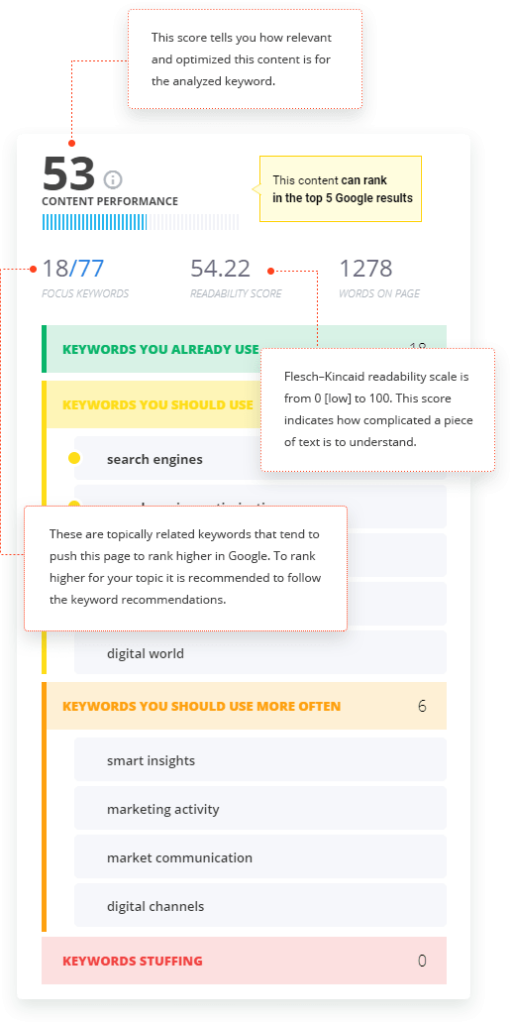
Razvan: You know, maybe because we have this keyword research and content assistant tool and, for example, I did an experiment, a few weeks ago, and we improved the rankings of one of the pages on our site, and what’s interesting with every optimization that we do with the tool and we’ve seen our customers do is that the number of impressions in Google Search Console, for example, increases, because you are recommended topically related terms that you did not use in the original content. This is another thing that people are not aware of because you’re targeting, for example, a specific keyword. With that specific keyword there are a multitude of other similar keywords with lower difficulty that you can rank on them and, practically, in my experiment with the optimization and adding the topics and keywords that were recommended there, we increased the number of impressions from 3,000 to over 10,000 and, practically this was done within one hour of content rewriting and re-indexation that we asked from Google Search Console and the impressions and traffic practically jumped in the next day.


David: Now that was the tool that’s you sent me the email about?


Razvan: Yeah.


David: Okay, I will go play with that after this. Because, yeah, so many people have tried, I remember Moz had their LDA tool and it’s been tried a few times unsuccessfully to find a tool to suggest proper supporting concepts for a page – if someone could pull that up, it’d be gold. So, obviously, you’ve got something that’s working there, so…


Razvan: Yeah, what the tool does is to analyze the top rankings in Google and based on that it find similarities and identifies new opportunities.


David: It looks for correlations of other terms from the top ranking sites?


Razvan: Yeah, yeah.


David: Nice.


Razvan:  Yeah, we work with lots of semantic algorithms behind it.


David: As long as you don’t say LSI, I’m happy. Yeah, that’s neat. Again, that’s another concept that I don’t think a lot of people consider or that there’s a lot of tools out there that can accomplish, you know what I mean? And that’s very important. That’s what semantic analysis is all about with Google: they’re looking for certain supporting concepts, and words, and terms, and phrases, that would support that. And this whole RankBrain thing that’s gonna keep flashing out… There was a word-to-vector patent that I did some work on it and a phrase-to-vector pattern. And that’s what it’s doing – it’s like how closely does “blue” relate to “apple” in a vector graph: not very much. But how much does “green” relate to “apple” in a vector graph or “red” relate to “apple” in a vector graph. They’re very close, right? So, that’s part of what RankBrain is doing, it’s looking on a term vector graph on phrases, terms, and words, that are related to a core concept of a query that comes into Google. So, yeah, tools like that are very… again, it’s been tried and not done well, so… Moz tried one and threw that in the garbage within a couple months.


What do you think are the top 3 SEO practices that can destroy a website’s rankings?


David: Well, obviously, link building. I mean, bad link building, and I’m not even a guy who… I don’t even like the term “link building” like many friends of mine, people that are very, very smart, people who still use that term. I like the word “attracting links” not “building links” I like to use a combination of smart content meaning content that’s going to get some visual eyes on it in a combination with everything from social media, followings that you build, to email lists and things like that, that you can build to surface content out to people. I think that is my way of doing things. Obviously, there are other ways to build links that people use, I guess citations and stuff like that’s okay for local. Link buildings is obviously the main danger. And from there, to be honest with you, you can literally… if you put in Google manual actions into Google, you’ll get a list of, I think, eleven different manual actions that Google has. Everyone always thinks of unnatural links, because that’s what we always see, but there’s thin content manual actions. You know, that entire list is a scary list. You can do cloaking by accident, people have done that. There are so many ways you can get in trouble, it’s not funny, but it’s funny that a lot of people just don’t really consider all these different things that Google watches. So really anything in the manual action list from thin content to unnatural links, that kind of stuff, it is probably dangerous. I think the 3 big ones would have to be: links, probably thin content, – and that’s just a few ways, because it’s not only a risk for a penalty, you’re also wasting crawl budget. If you’ve got a bunch of content on your site that’s really useless, it’s not getting links, it’s not getting search traffic, get rid of it because you’re eating up crawl budget for other pages that might be more important for your business and for Google. Just because you got 10,000 pages, it doesn’t mean you have 10,000 pages that are useful, so that could be a waste, so get rid of them. Just throw them in the garbage and redirect that somewhere else (not even redirected because then you’ll have to figure it out again).


What do you think about pruning content?


David: That’s what I’m talking about, yeah. I think that’s a great idea, I really do. It’s a good thing to do it quarterly, if not at least semi-annually. Go through the site and look for stuff that’s not getting traffic, that’s got no links, that has no value. Get rid of it, there’s no point in having it. It’s just taking up crawl budget and other things and it’s not serving a purpose so … And sometimes you can actually take two or three of those pages and put them into one page that might actually be more valuable to Google. You don’t always have to throw in the garbage, sometimes you can say “Okay, well, this is related, this related, this is related, but they’re all kind of thin content, let’s take them all, stick them on one page and see what happens”. Sometimes that approach can work.


Do you think hub pages work? I mean, you take all of these pages that are similar, create another extra page and link it from that as a hub page. What do you think, is this a good strategy?


David: Yeah, I think that could work. You got to monitor it because Google, literally, if you read enough patents and stuff, treats each query space somewhat differently. Like, you know, payday loans are treated differently than a craft page about painting or something. You have to understand you got to be very in tune with your query space, which is going back to the new SEOs thing.


Another thing that’s not understood: everyone thinks that SEO is just the same process, cookie-cutter page over a page, over page. You got to know your query space because some query spaces in this market are gonna be different than this niche, and this niche, and this niche, and that query space. You got to get a little more intimate with your query space and know what’s working and what’s not there. So you can’t just apply the same thing you do, like that’s a problem a lot of SEO agencies: they hire these people and they have this set way of doing things that they apply to every client because big agencies get into that because it’s more efficient. But really, a boutique shop like mine, we’re very more intimate; we look at each client, in each market, in each query differently, you know. So I think that’s a good idea to try. You have to have that toolbox so that when you approach a situation saying “Well, this has worked in the past, let’s go try that” and if it doesn’t work, well, you don’t do it. Sometimes it will, sometimes it won’t.


How do you usually pitch clients to win them? What do you show them that’s unique, that makes them become your customers?


David: I don’t really have that problem because of my standing and where I’ve been in the industry all my stuff comes referral. Whoever comes to my doors, I get to just Come in and go “All right! Here’s what I’m charging you, give me some money!”. But I do mentor a lot of guys, and what I try to teach the guys that I’ve mentor, the younger ones, is to be sincere, don’t try to oversell, don’t try to promise the the world, be brutally honest, say “Okay, this is the way it is”. We were talking about qualifying clients earlier, and I know it’s the urge for a lot of young guys. They need to make money and they don’t have a lot of clients and not high-paying clients and they get desperate and that’s often become the problem – you take on that client because you need to pay the bills, and they become that pain in the butt that destroys your life because you know they’re eating up all your time. But I think to qualify good clients, you need to be honest, you need to feel them out as much as they’re feeling you out. You can’t approach a new prospective client being desperate; it’s just a recipe for disaster. So I think for young guys or people I mentor, I try to be honest. I had a guy the other day – I, literally, with the guys I mentor, when they’re doing sales calls, I will go in on Skype with them and pretend I work with them and stuff, just to help them and listen and show them (and I do it for free) – so this one got the other days like “Well, what do you think, Dave? I charged him a couple hundo”, and I’m like “I don’t know, what do you mean? Do you know anything about the client, or his budget, or his keywords”, and he’s like “Nope!”. He wanted to price it before he knew anything. Well, I was “What are you doing? Know what you’re looking at here”. It’s that process of where you meet them. It’s one of their expectations. Managing their expectations is everything. What are they looking to get? Because some people’s expectations could be visibility, and building authority in their space, some is, obviously, making money, some could be what we call primary and secondary conversion points – you might have a primary conversion point of selling shoes, but your secondary conversion point might be building an email list – so you never know till you’re in there and showing that interest in a client is a huge step. Being able to go in there and… like you run your tools or something and get a few reports before you go into that sales call, so it looks like you care about them, you didn’t just walk in and go “All right, what do you want?”. You went in with some stuff that you ran through cognitiveSEO and said: “Okay, well, I looked at your site before we had the sales call and I saw this, I saw that I saw this”. Show that actual interest in them, in their business. And from there it’s really just “Are you gonna be able to work with this person?”. I let someone go the other day that, you know, the first meeting we had was a little bit aggressive and I was like “Nah, this is not gonna work”, so I emailed him back and said I don’t think we’ll be able to work together. Because if there isn’t even some sort of personal connection (I think for me at least) and you are just doing it for the money and, to me, I need that sort of passion to really want to see them succeed.


Razvan: Okay. Let’s end this call with a question about Google:


Where do you think is Google heading to and what’s the future search and what should webmasters be prepared for?


David: Well, I think a lot of the things will stay relatively the same and they always have, from optimizing content, and PageRank, and title tags, and all that kind of stuff. Even mobile’s become kind of intuitive for people that were used to mobile, I guess, in 2008-2009, when that really started to crawl in. I think voice search is gonna be the real challenge now; it’s something we’ve had a lot of internal discussions on at the DOJO and we’ve had some hangouts on it. It’s an interesting area to start to try and get your head around this because voice search will obviously be the way someday. What they call “conversational search” as well, – which is kind of tied into it – and that has all its beginnings and Hummingbird and things like that. So, yeah, I think this is gonna be one of the harder ones to get our heads around; it’s “How do you optimize for voice search” and things of that nature. They have what’s called Google Actions as well and Google actions are little querying voice or the little devices in the home that Google has now. You can actually go out and play with these you know I know Eric Enge, the guy at Stone Temple, have done a lot of work with it that I’ve been talking with them about. So you can actually, at this moment, go out and program into Google various actions related to your company and your entity and things so that when people… “What does Stone Temple think about title tags?” and it’ll come back and tell you invoice and everything, and Google Assistant will come back and talk to you. The Google assisted, the Google Voice, all that kind of stuff and, obviously, a harder line on the local and mobile and things of that nature. This is really gonna be a tough area I think for a lot of SEOs because they seem to have enough problems just figuring out homicide SEO, nevermind search. We have so many SEO that just through links to it, PBN, this and that. So I think this will weed out a lot of people over the next 10 years, so I think that’s one of the more challenging areas that people need, at least, at this point start to get their heads around is the voice search and how that affects everything.


Razvan: Okay. Thank you very much for joining us today and looking forward to hearing more from you in the future.


David: Yeah, anytime, at any time feel free to hit me up.


The post How Expertise, Authority and Trust Impact Your SEO Efforts with David Harry appeared first on SEO Blog | cognitiveSEO Blog on SEO Tactics & Strategies.


How Expertise, Authority and Trust Impact Your SEO Efforts with David Harry posted first on http://nickpontemarketing.tumblr.com/

Thursday, May 3, 2018

60 Tactics To Overcome A Bad Small Business Location

bad-small-business-location

Is a bad small business location hurting your business? Use these tactics to overcome a bad physical location cost-effectively to build your traffic, customer base and profits.

The post 60 Tactics To Overcome A Bad Small Business Location appeared first on Heidi Cohen.


60 Tactics To Overcome A Bad Small Business Location posted first on http://nickpontemarketing.tumblr.com/

Wednesday, May 2, 2018

How to Get Your Website Listed Multiple Times in Google SERPs

Do you have a business, or maybe clients that own local businesses? If yes, then you’re in the right place, because you’re going to find out how you can double or even triple their click-through rates on Google.


People often think that they can only rank once for a keyword. For the most part that’s true, because Google has gradually restricted the number of times you can show up with the same domain on the same search query. However, things are a little bit different when it comes to some businesses.


How to get your website listed multiple times in Google


  1. About Multiple Listings on Google
  2. Advertise with Google Adwords
    1. Set Up Your Account
    2. Choose or Create Your Landing Page
    3. Create a Campaign
    4. Set Up Your Budgets, Target Audience and Keywords
    5. Write Your Ad
  3. Google My Business (Google Maps)
    1. Set Up Your Account
    2. Fill in All the Details Correctly
    3. Get Some Fancy Pictures
    4. Get Some Reviews
  4. SEO & Organic Search Results
    1. Fix Technical Issues
    2. Keywords and Content (OnPage SEO)
    3. Promotion (OffPage SEO)
  5. Which Method Should You Focus on First?


Before we get into the specifics, let’s see why it’s hard to get multiple listings on Google in general and why local businesses have an advantage.


About Multiple Listings on Google


Multiple listings have been a concern for Google for a pretty long time. Plenty of changes have been made over time, but things have finally started to settle.


Although you can see multiple listings from the same domain on organic results, that happens rather rarely. Google’s algorithms are set up to increase the difficulty of ranking again, proportionally to the number of times a domain is already ranking.


Matt Cutts explains the phenomenon pretty well in the following video.


This video is yet another reason why blackhat SEOs make everyone else’s life harder. Google had to constantly change to adapt to people trying to manipulate the system.


If you try to rank multiple pages on the same keywords, some of your pages might end up in Google’s omitted results. Even worse, if you have a lot of pages competing for the same keyword, you might get into keyword cannibalization.


When Google has too many options to choose from, it gets annoyed. You risk getting a small penalty for that, which will result in lower overall rankings for that keyword.


Now you can always try to create multiple listings and manipulate the organic searches by buying more domains and pretending you’re not the same person, but it’s a risky move. If Google flags your network as a Private Blog Network, it will compromise all your websites. Since the laws of certain countries require visible business info on websites, a link between your sites can’t be easily avoided.


However, things are very different for local SEO. Why? Because there are multiple listings. First, we have Google Adwords, then we have the local business listings from Google Maps and lastly, we have the organic results. If you can get to the top of all three, you’re in for a guaranteed triple CTR to your business.


Solution #1. Advertise with Google Adwords


We’re going to cover this first, because it’s the highest listing you can get (above MyBusiness Listings and Organic search results). However, that’s not always true, considering ads can sometimes be displayed on the right sidebar, at the bottom of pages and even on second or third pages, depending on quality.


Although you can use Adwords to get multiple listings on any keywords, it’s known that Google will sometimes decide not to show any ads, if no relevant ads are found. For local businesses, on the other hand, chances of ads showing are pretty high.


The advantage of using Google Adwords is that you’ll get results as soon as you set up your first campaign. The downside, obviously, is that you have to pay.

Depending on the competitivity of your niche and also your skills on managing paid advertising campaigns, the costs can vary.


Furthermore, you can also take into account that the CTR for Adwords is only 2% of the total number of clicks on Google. The rest goes to organic searches. However, for local businesses people might be clicking more on maps and MyBusiness listings than on organic results.


1. Set Up Your Account


This is fairly simple and straight-forward. You need to go to Adwords’ Homepage and set up an account. If you don’t have a Google account, you’ll have to create one.


create adwords account


If you already have a Google/Gmail account, the setup will be a lot easier. Just log into your account on Chrome or any other browser, go to https://adwords.google.com and click on Start Now.


start adwords


The steps are pretty easy to follow. I’m sure you’ll be able to get past the account setup. What’s really cool about Adwords compared to SEO is that you get live phone support from Google itself. I recommend that you use it to your advantage, especially if it’s for setting up your first campaign.


2. Choose or Create Your Landing Page


Your landing page is very important for the success of your campaign.


First of all, you need to have a landing page that satisfies Google. It makes a lot of sense that Google also analyses the quality of the landing page you’re going to show for your ad, because otherwise, the highest bidder would always win, leaving no room for fair play or quality.


Google doesn’t only look at the money. If it was so, nobody would use Google by now. I mean, look at Yahoo! Don’t you just hate it when the entire background is an ad? I know I do!


Secondly, you need to A/B test during your campaign to optimize for better opt in rates. If your goal is for clients to fill up a form, then you have to constantly test out what makes more people do it.


landing page matters for seo


Now I’m no adwords expert, but friends of mine that are have told me that SEO criteria match the quality signals for Adwords landing pages, so keep this in mind when you’re building them.


However, it’s a bad idea to use the same pages that you use for organic traffic on your Adwords Campaigns. Search Engine Optimized pages are usually filled up with more content. Since you’re main purpose here is to get leads or make sales, adding more content might have an impact on the page’s performance.


For maximum profit and efficiency, make sure you use landing pages specifically designed for your ads and for your goals.


3. Create a Campaign


Once you finish creating your account, Google will ask you for your website. Provide it to enter the Adwords Dashboard. From there, find the Create New Campaign button. It sometimes also looks like a + sign.


New Adwords campaign


There are multiple types of campaigns that you can set up, but we’re interested in the Search Network and or Display Network.


create adwords campaign


Search Network means that your ads will show up when people search for particular keywords that you pick. Display Network means that your ads will also show up on other people’s websites, if they’re using Adsense. This type of advertising is called retargeting, as it can follow users for a long time after they perform a search and show them your ads. It’s also more visual, as you can display image ads, animated gifs and even videos.


You can pick any one of them or both, but keep in mind that the latter is more expensive.


4. Set Up Your Budget, Target Audience and Keywords


All these details are very important and you’ll learn more about them only through practice and experience. Start with a small budget at first, to test things out. You can always expand.


You can also use Google’s Keyword Planner to do keyword and bidding research. That way, you will be able to find out what people are searching for, how much your competition pays on average and also if the competition is low or high.


Keyword Planner Adwords

How to get to the Keyword Planner Tool


You can use these criteria to determine a budget and an average bid for your ad. After you do your research, set up your target audience and write a list of keywords you want to target. Don’t add all the keywords you can find. Only add very similar and close ones. Create more ad groups to be able to add the keywords in the title, description and URL of your ad when creating it. This will help with your click through rates.


Usually, the calculations are pretty simple. If your service/product is worth $100 and the cost per click is 1$, you’ll have to make 1 sale every 100 clicks just to break even. However, Google can’t tell you how many clicks you’re going to get. This is up to you and how your ad and landing page are written.


5. Write Your Ad


Finally, we got here! Things on this step aren’t too dificult. Just create your heading, description and URL. The URL is fake but, as I previously mentioned, having the keywords that the user has just searched helps a lot. When the users click, it will redirect them to your landing page.


adwords local ad creation


After you finish writing your ad, you will have to reach for your wallet and pull out your credit card.


Solution #2. Set Up Your Google My Business Listing (Google Maps)


If you don’t have a Google MyBusiness listing yet, then you should make one right now, as you read this article. It’s easy and, most importantly, it’s completely FREE. But wait, there’s more! It also works really well if you know what you’re doing.


1. Set Up Your Account


For this, you need to follow the same steps as for creating the Adwords account. The steps are very similar.


create google my business local


However, there’s a chance that your business is already listed. I really don’t know how Google does it, as often times every detail is right on the spot, from phone number to working hours. I assume they have some sort of field agents, or secret shoppers. Who knows?


If your business is already listed, you can claim the ownership pretty easy:


claim your local business


2. Fill in All the Details Correctly


Google will ask your for a lot of details about your business. Make sure you answer them all correctly. Fill everything up. The more info you give, the better it will help you rank.


3. Get Some Fancy Pictures


Pictures are very important for the local listing. Why? Because people are very interested in seeing them. For example, if you’re a restaurant, they might want to take a look at the surroundings and dishes. If you produce construction materials, they might want to see some screenshots of your products.


However, what’s most important for the start are pictures with the location itself, especially the entrance. If it’s a local business, it means that people want to go there physically. Help them find your place. Sometimes, trees are blocking Google Street View, and if your hair saloon is on the second floor of a building, people might be confused.


local business location


You can even include pictures with your staff. That’s always cute. Your clients can also post pictures at your location, so make sure you always treat them right. You don’t want pictures with bugs in your dishes getting on the Google Maps listing. If there is one downside to it, it’s that it’s very, and I need to emphasise on this, VERY HARD to remove a Local Business listing.


4. Get Some Reviews


Reviews are a very important ranking factor when it comes to local map listings. However, it’s a double sided blade. If you get negative reviews, it won’t help too much.


Remember, people are more inclined to leave a negative review than they are to leave a positive one. You’ll need action for a positive review, so make sure you have some sort of gamified system in place to convince your clients to leave one.


If you do get negative reviews, make sure you address them with a positive attitude. Apologise if it was your mistake and never insult or get angry if it’s just a dumbass (see what I did there?). Also, never try to rub your own back here. Google can figure out fake reviews if they’re coming from the same devices/IPs/locations.


Although location and reviews are probably the most important ranking factors for maps listings, there are other ranking factors that you can take into account. I wrote an article on this. You can read it here.


Solution #3. Get Your Website Ranking High in the Organic Search Results


This is by far the most complex thing in this list. Counterintuitively, it’s also going to be the shortest section. You’ll have to read far more from our blog to get a better understanding of SEO, but we will at least cover the basics.


You might not even need a website for your local business. However, you’ll never be able to get multiple listings without one, as it’s mandatory for both paid and organic results. If you don’t want to spend money now on building one, Google MyBusiness offers a free one. It’s very limited and doesn’t come up with a top level domain, but hey, it’s a website!


In order to get your website ranking naturally in Google, without the use of ads, you have to take good care of it, write useful content and promote it properly.


1. Fix Technical Issues


The first thing you want to do is make sure your website runs smoothly. Technical issues include but aren’t limited to optimizing images, minifying HTML, CSS and JS and leveraging browser cache.


You’re looking for a page load time of maximum 3 seconds. It’s known that conversions drop if your website loads slowly, so you can make this a priority. It will affect you greatly long term. If after all the optimizations the website is still running very slow, consider contacting your web hosting provider and ask them to increase resources, or even switch hosts.


If you run your website on a CMS (Content Management System) like WordPress, then things are pretty easy, because you can use plugins. Just search “issue you want to fix” + WordPress plugin on Google and you’ll get what you need. There are plugins out there for virtually anything you want to do. Make sure you pick a plugin that has been recently updated and has a lot of positive reviews.


Optimize images wordpress plugin

Example showing how to find WordPress plugins


You can do the same thing for other platforms, such as Joomla, Drupal or Magento. Although most of them are free, some more advanced plugins may require payment.


For a full list of what you need to do, you can check out our awesome article about fixing technical issues on your website.


2. Keywords, Content and UX (OnPage SEO)


The technical stuff is also OnPage SEO, but here we’re only going to talk about the content. Google ranks your pages depending on the quality of the content. It’s really hard to say what good content means, but a fair thing to say is that the user’s experience matters a lot.


Google has been looking into things like keyword density for a long time but, more recently, it has started analyzing things that include how much time a user spends on a page or if they hit the back button to search for something else. Google’s algorithms will record a user’s experience and rank your web pages according to it.


However, before you consider A/B testing and optimizing your page for a better user experience, make sure you have the proper keywords in your Title Tag and Headings. Even in 2018+ it’s pretty obvious that without them, you won’t be able to rank. You can use the same keywords from Adwords.


If you want your content to be very well optimized, you can use our Content Assistant. Also, focus on writing your content for human beings, not for robots. If you don’t know what to write about on your local business website, make sure you give this article a good read.

cognitiveSEO keywords-to-rank-higher


3. Promotion (OffPage SEO)


You can always kickstart a new piece of content with ads. However, it’s a better idea to use social media instead of adwords for this one. Before you do that, though, try to promote it for free in local groups, or groups related to your industry.


Speaking of social media, if you don’t have a Facebook page for your business yet, make sure you get one. In fact, go ahead and secure as many social profiles as you can. Some will fit your business and others won’t. For example, Pinterest works very well for restaurants, while Twitter works very well in the business and IT niches.


Your main purpose here is to get other websites to link to your site. You can also steal your competitor’s links by using the CognitiveSEO Toolset, or get notified when someone mentiones you or your competitors online by using BrandMentions. After you get notified, you can establish a relationship with whoever mentioned you, for further promotion.


For local SEO, it’s a great idea if you get links from other local websites. You can go ahead and create some links yourself, but if you scale this up, you can get in trouble with the big G. However, creating a few listings on local websites shouldn’t do any harm.


Also, don’t forget to promote offline. Online works best with offline. You can barter with other adjacent businesses around you that aren’t direct competitors. You’ll both have something to win this way and it will cost you nothing.


Local business promotion


If you keep doing this, you should start seeing results over time. You can use our Rank Tracker to monitor your progress.


Which One Should You Focus on?


Well, this really depends on every business and its possibilities, but I think it’s pretty obvious that the first move you should make is set up a Google MyBusiness listing. If you don’t have that, you’re losing a lot. It’s not only free and really easy to set up, but it also has a lot of potential. The sooner you start with it, the better, as you can start asking your clients for reviews.


For the other methods, you will need a website. The question of whether a local business needs a website or not has often knocked on my door. People try to replace websites with Facebook Pages and Google MyBusiness Pages, but I’ll tell you one thing: they’re not the same thing.


You have full control over your website, which means you can optimize it for your specific needs. Most importantly, you own it. Countless times have I heard about people desperate that they’ve got their Facebook Pages banned for various reasons.

In any case, without a decent website, you won’t be able to properly do SEO or Adwords.


Adwords can go well anytime, if you have the buck. To be honest, even as an SEO, I recommend investing in Adwords, especially when you’re starting out. SEO takes a lot of time and even a big budget if want to do it right. With adwords, you don’t have to wait 6 months for the results. However, there’s always a chance that you won’t make any money at all.


With SEO, the sooner you start, the better, as it does take a long time to rank. You can save money in exchange for time, if you do it yourself. However, be very careful how you ‘optimize’ your website. Make sure you read some more articles on our blog before you start and, if you have no idea what you’re doing, maybe even hire a consultant.


I hope you enjoyed reading this article. If you have successfully listed a local business multiple times on Google, please leave a comment below and share your experience with us. We’re always eager to hear about our readers’ success stories, so don’t hesitate to write.

The post How to Get Your Website Listed Multiple Times in Google SERPs appeared first on SEO Blog | cognitiveSEO Blog on SEO Tactics & Strategies.


How to Get Your Website Listed Multiple Times in Google SERPs posted first on http://nickpontemarketing.tumblr.com/