Together voice-first marketing, marketing AI and content saturation created a seismic content marketing shift. Use these tips, charts and data to adapt your content marketing tactics.
Now that you’re armed with the key principles on what makes a site suitable, it’s time to put them into action and find the suitable sites and corresponding contacts for your outreach list. Here’s a list of tactics we use at Builtvisible: 1. Manual discovery with Google By far the most popular approach to finding […]
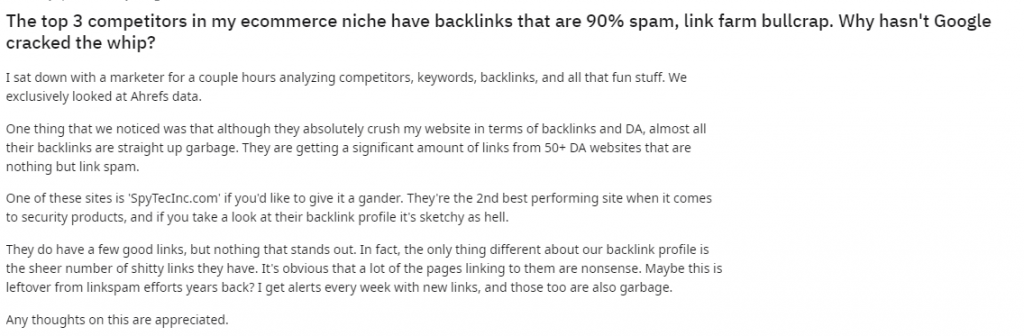
Outranking your competition can be very difficult, especially if your website is rather new. What’s even more frustrating is when you can’t outrank competitors which have spammy backlink profiles. Why doesn’t Google penalize them? Why does it rank you lower than them in the Google search results, even though you play the game by the book?
Google’s algorithm has evolved a lot over the years. The main purpose of the improvements was to be able to better distinguish natural links from artificially generated links. Unfortunately, although big advancements have been made, top ranking websites with clean link profiles aren’t always the case.
It probably happened to you (or to someone you know) to run a business in compliance with all Google’s guidelines when it comes to link building but, at the end of the day, to be dethroned by other sites from the industry with spammy link profiles. So, why is this happening? Let’s find out!
If you think I’m going to say that you can still improve your rankings using BlackHat SEO link building tactics in 2019, you’re wrong. But while some complain about their websites being penalized, others have a completely different issue:
“My competitors have spammy links but still rank better than me.”
Then, almost every time, the following question follows:
“What should I do in this case?”
There’s even an old Reddit thread about this:
If you’ve been struggling with this issue for a while, then you’ve landed on the right page.
The short answer to this question is that a spammy link profile doesn’t necessarily mean a website shouldn’t rank well. You see, Google’s (and other search engines) main purpose is to return the best search results for the users, not the search results with the best link profile. There are hundreds of other factors that are taken into consideration by Google when it ranks a website, and although links are still one of the top 3 most important ones, they aren’t everything.
Google has shown signs of steering away from links. Although links can’t completely be removed from the equation (at least not very soon), other factors, like user interaction, for example, have shown a lot of prominence recently.
If the top competitors have spammy backlinks but are still ranking good, well, my friend, then the truth is you’ve gotten yourself into a very competitive niche.
However, there’s still hope. But it’s not going to be easy, nor is it going to be cheap (is anything easy and cheap in digital marketing?). Before we dig into the tips and tricks, let’s better understand what Google has done against link spam over the years, and why.
Why Do Sites With Spammy Link Profiles Still Rank Well?
Ok, so if Google tries so hard to get spammers down, how come some webmasters with such obvious shady link profiles are still ranking well with their websites?
John Mueller from Google tells us that we don’t really know if they got away with it or not.
However, this often sounds unfair, as those websites clearly have spammy link profiles, but are ranking very well.
There could be a thousand reasons why this is happening, but I’ll try to provide some clearance with what I think is happening.
They Built Those Links Long Time Ago
Back in 2012, the BlackHat industry was thriving. ScrapeBox, GSA, Comment Spamming, Private Blog Networks, you name it. It worked. And people got hooked.
BlackHat SEO services were expensive because they could also be very profitable. Even big brands got into them as well.
The ones who suffered most were innocent business owners that had no idea about this. They just signed contracts with SEO agencies to get their websites higher on Google.
As the word spread, more and more shady things started to happen. It wasn’t a time when search engines provided the best results. And Google didn’t like that, so it took action against it.
Many of them lost their rankings forever. Some eventually recovered, through complex actions of improvement and link disavowing.
But some got away with it, and they’re probably still ranking today. Since the algorithm is now supposed to be real time and to ignore spammy links, this kind of makes sense.
It doesn’t mean they are bad websites or that they still use BlackHat SEO strategies. It could just be that they got away with it. They were lucky.
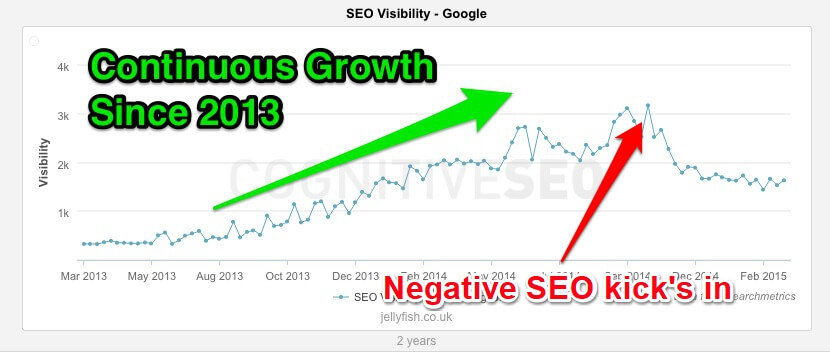
They Didn’t Build Those Links (Negative SEO Attack)
Sometimes, instead of working on their own websites, people prefer to ‘work’ other websites out, by trying to attract Google penalties to them. These techniques are called Negative SEO Attacks.
In theory, the process is pretty simple: do BlackHat SEO to another website until Google gives it a penalty. When they drop, you replace the spot.
Example showing a negative SEO attack happening on Jellyfish’s website
When you look at a website and see a lot of spammy links, you might say they’re cheating. But although you can analyze a site’s link profile, you have no idea if they disavowed those links or not.
Because they feared the penalty, many webmasters started submitting their spammy links through the disavow tool.
Sure, it could help you not get penalized, but yet again, it could do nothing. Some even lose rankings after they start disavowing links.
What the disavow tool might actually do is that it feeds Google thousands of patterns of spammy links. So Google gets smarter and smarter every day. Smart, eh?
Negative SEO attack patterns are anyway different from shady link building patterns. You might think that’s not the case, but the truth is when people are doing black-hat SEO for themselves, they’re very cautious and try to stay under the radar. On the other side, when they’re framing someone else, they’re too obvious.
That’s the big downside of negative search engine optimization. If you make it obvious, Google will know it’s a negative SEO attack, but if you don’t make it obvious enough, who knows, your competitor might never get caught and the spam might actually help him rank.
So although you can see your competitor’s backlinks are reall spammy, you can’t know for sure how Google sees the situation.
They’re Still the Best Site Out There
As I said, a spammy link profile doesn’t mean a site shouldn’t be first on Google. This usually happens when all the other sites also have a spammy link profile.
Google can’t penalize all the websites if they’re all breaking the rules because it wouldn’t have any search results left to return.
If the top website has been there for years, providing value and good services to its customers, Google will reward it by keeping it there, even though maybe it knows they’re breaking the rules.
Google Hasn’t Caught Them… Yet
Asking why Google doesn’t penalize all the spammers is like asking why doesn’t the police bust all drug dealers. It’s just too many of them, and it’s impossible for Google to catch them all right away. But it probably will, eventually…
Spamming is still profitable because it works. If you manage to spam under the radar, you might cash in some quick profits. But the frustration of constantly being on the run isn’t a nice feeling.
If you haven’t done it yet, go ahead and read The Confessions of a Google Spammer on InBound. Once Google finds you, it’s over. And they have to start all over again from scratch.
Although I want to say that Google will eventually catch everyone… the reality of life is that sometimes bad guys win.
One Example to Prove Them All
At first, I tried looking for a lot of examples, but without much success. I tried searching the wedding niche, the flowers niche, but time and time the top ranking websites were actually legit in terms of link building.
But then I thought to myself… why not payday loans?
I mean… if there’s a niche there that’s been spammy as hell since forever, it’s definitely this one. Google even has an algorithmic update named after it. And lucky me, I hit the Jackpot (although I couldn’t personally access all the websites; but this could be due to my location).
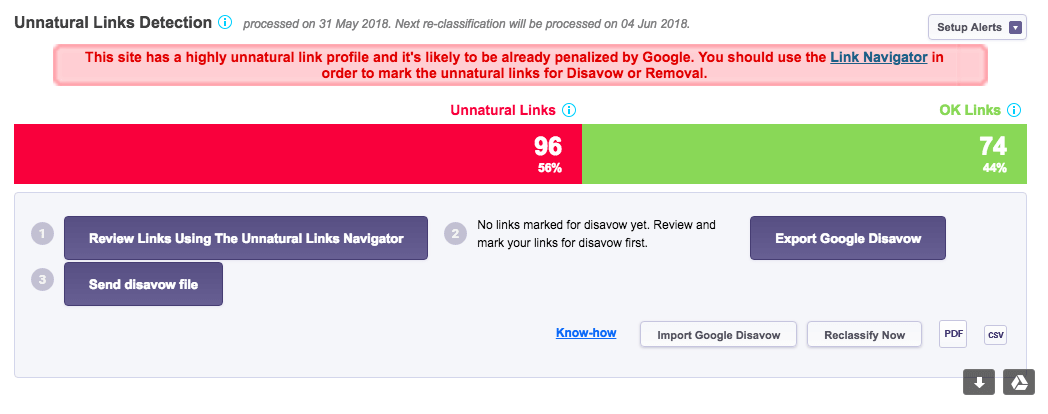
So I took a couple of sites from the top and one from the second page (United States/British) and used cognitiveSEO to classify the anchor texts and run the Unnatural Link Detection Tool.
The results were promising. The big majority of the links are definitely unnatural.
Snippet from the Unnatural Link Detection tool showing a top ranking website (speedycash.com)
Another website from a lower set of results shows similar patterns:
Snippet from the Unnatural Link Detection tool showing a competing website from the second page (cashone.com)
However, I can easily back up my points made earlier in the article with this example.
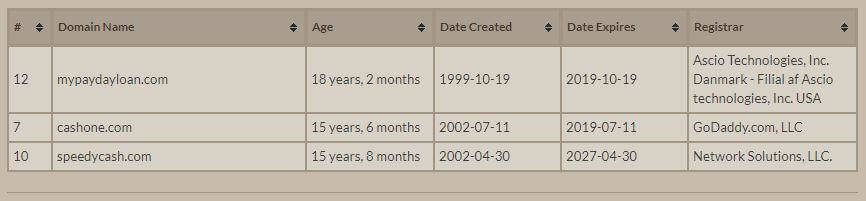
Point no. 1: The sites have been in business for a long time.
You can easily check when websites were registered. It doesn’t necessarily mean that they were in business since that date, but it’s a decent indicator.
These websites were registered over 15 years ago. If the company was doing business back then as well, it’s probably a very legit business with a lot of experience.
Screenshot taken from bulkseotools.com
Point no. 2: The links were made a long time ago.
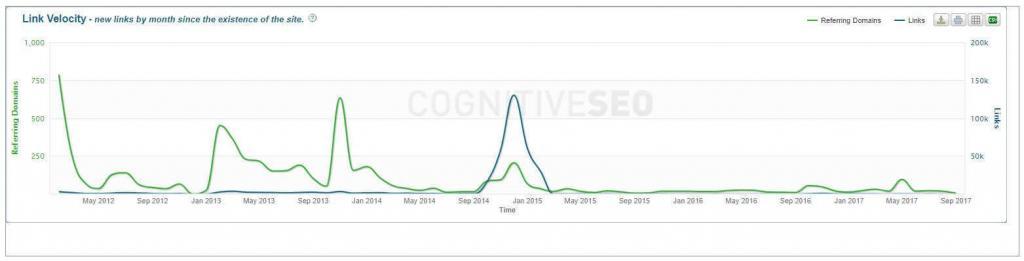
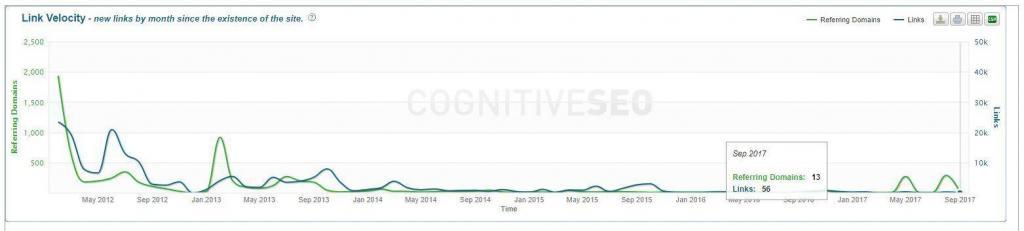
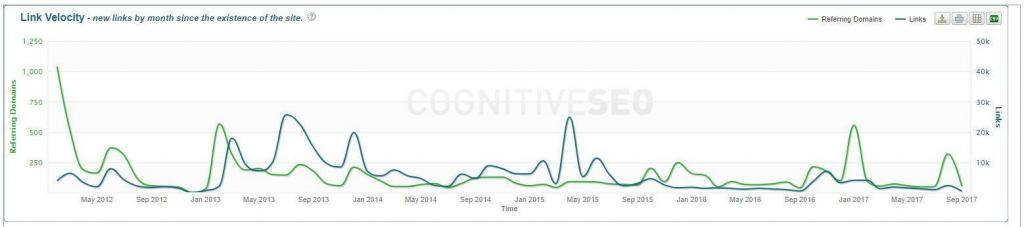
By checking the link velocity section, we can quickly spot that these websites built links some time ago, but aren’t doing it right now.
Cashone.com’s link velocity; screenshot taken from the cognitiveSEO tool
Mypaydaylonan.com’s link velocity; screenshot taken from the cognitiveSEO tool
The top website seems to be actively building links, but the spike just before 2012 is definitely a lot bigger than the ones happening right now.
Speedycash.com’s link velocity; screenshot taken from the cognitiveSEO tool
Point no. 3: These websites are still offering good services.
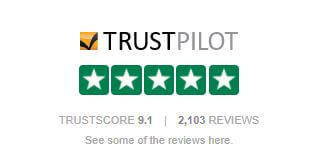
Although they still look spammy design-wise, one of the websites has over 2,000 reviews on TrustPilot, showing an average grade of 9.1. They could be fake reviews, of course, but yet again, they could not be. I think TrustPilot are doing their best to keep things real.
Sure, I didn’t analyze one thousand sites, but I hope I made my point. Chances are that most websites in this niche have a significant amount of unnatural links in their link profiles.
Why You Should NOT Build Spammy Links as Well
I know it’s tempting. I know how you feel. You’ve probably tried everything and they still rank better. But unless you’re trying to go for a hit and run niche site, no. It’s too risky.
Old sites that did BlackHat stuff in the past might still be ranking well in the Google search results, but new sites doing shady stuff attract a lot more attention. You might get penalized right from the start, losing your chance to ever rank for that keyword.
Although building a million spammy links might look easy, it’s not. It takes a lot of effort and the learning curve is quite steep. It’s also not cheap. You’ll need advanced tools and thousands of proxies to cover your ass up.
If you want to beat a BlackHat site the WhiteHat way, then it’s not going to be easy. But the advantage is that you don’t risk anything, and what you build, you build on the long-term.
Your time is far way spent on other things, such as quality content, improving user experience and relationship building. Instead of pointing our fingers at someone else, we should be taking a look at our own actions, and see how we could improve those.
Google Penguin 4.0 Update & the Disavow Tool
If you’ve heard about the Penguin Update, then you probably know it’s triggered by spammy links. Although it’s not the only algorithm that penalizes websites with spammy link profiles, it’s definitely the one that took the most spammers down. If you’re planning on some shady link building, then you should look out for flappy walks and orange beaks.
The problem with the first three Penguin algorithm updates was that although they got better, they were still pretty slow. Google used to gather information over a longer period of time (about 2-3 months) and then roll out a patch that would suddenly impact thousands of websites that broke the rules.
As of the latest version, Google’s spammy link tracking is now happening in real time. With the Penguin 4.0 update, Google ignores spammy links or penalizes single pages instead of penalizing entire websites.
This doesn’t mean that websites can’t be penalized anymore. Plenty of users still admit having suffered from Google penalties that affected their entire websites.
Some experts, such as Rand Fishkin, speculate that Google used this slow mass penalty process to create a fear factor that will determine webmasters to submit their spammy link profiles through the Disavow Tool.
This tool, launched in 2012, some months after the first Penguin update, enabled users to submit links that they wanted to be ignored by Google. People thought that if they submitted their links sooner, they could avoid a possible Google penalty. Google then supposedly fed the Disavow Tool database to the algorithm and used this to create a real-time version of Penguin, one that better understands link spamming patterns.
The Disavow Tool also somewhat protects webmasters against negative SEO attacks. If someone built some spammy links to your site you could start disavowing them. However, Google had previously stated that the Disavow Tool isn’t a replacement for removing links and that no reconsideration action will be taken unless users also try to remove some of those links.
Good ol’ Google! Never fails to surprise you with its tricks, right?
Although you can do this, I wouldn’t recommend rushing in. It’s not exactly the same, submitting a spam report does resemble a negative SEO attack because while you could try to outrank your competitor by gaining positions yourself, you’re trying to pull him down instead.
Think about the things I mentioned earlier:
What if your competitor just hired a company to do search engine optimization and he has no idea, although he’d probably be against it if he knew?
In addition, if you have some shady links yourself, or share some of the backlinks with your competitor, submitting a spam report might attract Google’s attention to your website as well. You’ll see why in a minute.
Instead of blowing into some other person’s candles, try to make your own candle burn brighter. The truth is, if you had started doing SEO 5 years ago, you’d be ranking now.
However, if you see a website that tries to steal information from clients and or is involved in any illegal activities ranking on top, then you should definitely submit a spam report, as soon as possible.
In theory, Google employees should manually review these websites and decide if to apply a penalty or not. Any phishing or malware attempts will surely be banned.
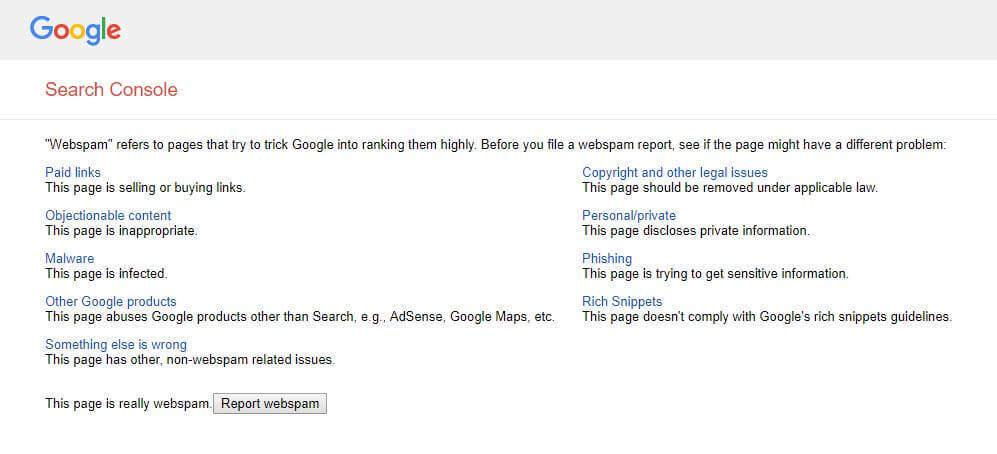
There are more types of spam reports. Some of the more… dangerous ones, let’s say, anyone can file. This includes Malware, Phishing or Copyright related issues.
The rest of them, on the other side, will require a search console account (former Webmaster Tools). This means that Google will know exactly who is filing the report. If you ever did some shady things yourself, you should keep this in mind.
Of course, you could just set up a fake account to set a report, but Google will probably ignore those, otherwise an account wouldn’t be required in the first place.
How to Outrank Competitors With Spammy Link Profiles
Even though things aren’t in your favor, you should not give up. There are still things you can do to outrank these types of competitors.
Actually, the journey is one of the things that makes SEO so interesting: figuring out those things you haven’t thought of before; making a move that provides results; doing it without cheating.
Outranking a BlackHat SEO feels like gaining more money and power than the Godfather by selling lollipops.
Focus More on OnPage and Technical SEO Factors
I know this might only sound motivational, but you should shift your focus from links to on-page factors. When people say they’ve tried everything, I still have a feeling they were only talking about link building.
That’s what usually happens when spammy link envy kicks in: you forget about all the other things, like making your website faster, securing the connection with an SSL and improving the overall user experience.
Here’s what you should be asking yourself:
Am I really offering the users a good experience?
One of the hardest things entrepreneurs have to do is jump into their customers’ minds. It’s hard to really see their frustrations and come up with good solutions to solve them. You might’ve heard the phrase “Customers don’t know what they want.” Well, that’s true and it’s exactly the issue! They don’t know what they want so they won’t buy. At least, not until you offer a good solution to the problem.
If you really want to understand the buyer, just go buy something. You’ll instantly shift into the buyer’s mindset. And that’s exactly what you should analyze for your site if you really want to find solutions and make more sales.
What’s your conversion rate? Is it satisfying? Where do your users click most of the time? Is it easy for them to understand what’s clickable and what’s not? Are you offering a live support chat? Are they wasting time looking for something? Maybe you should bring it more to the front.
Am I really trying to solve their problems?
Many websites out there don’t try to solve a problem. They’re just in because they heard you can make some money online. As long as you’re not focused at all on solving a user’s problem, you can’t really improve your website.
Is the content really answering their questions? Does it resonate with who they are? Figure it out before you put another word on your pages.
Is my website better than theirs?
The website must be prettier, faster and easier to use.
However, I’m not talking only about design and website performance . There are a lot of other variables which actually come from outside the website:
Is your brand known at all compared to your competitor’s? Could you really handle all the orders without an issue? How’s your social media engagement compared to theirs?
Really step up your content game
Everyone knows that content is King. But an inconsistent King can quickly lose his throne.
Consistency has proven itself time after time in the content marketing and SEO industry. We’ve experienced this ourselves here, at cognitiveSEO. That being said, get yourself an editorial schedule ready, and stick to it.
It doesn’t really matter how much you post. Obviously, the more, the better. But what really matters is that you post on a daily/weekly/monthly basis.
Remember that with quantity, you risk losing quality. To be able to post more often and keep the quality of your content, you’ll have to expand your writing department.
Think of innovating things in your niche. Analyze your competitors’ content and try to find the content gaps. Set personas for your targeted audience and really dig into it.
One thing I often recommend to websites, especially if it’s an eCommerce site, is to start blog posting. This can help a lot with building the authority of the domain, as articles and blog posts get shares and backlinks much easier than products. You’ll need a good content marketer for that. Some niches have a hard time coming up with interesting content.
Here are some next level tips on how to expand your content strategy, even in a really boring niche. It’s not a short video, but it’s worth watching.
The secret here is finding those questions and objections your clients have that your competitors don’t answer, and answer them! Any gap in the niche that the competition hasn’t filled yet is a great opportunity for you to improve your website.
Another great thing to do is update your content regularly with new information. You always learn new things about different topics. If you think you have new information you can add to an existing article, never hesitate to do it!
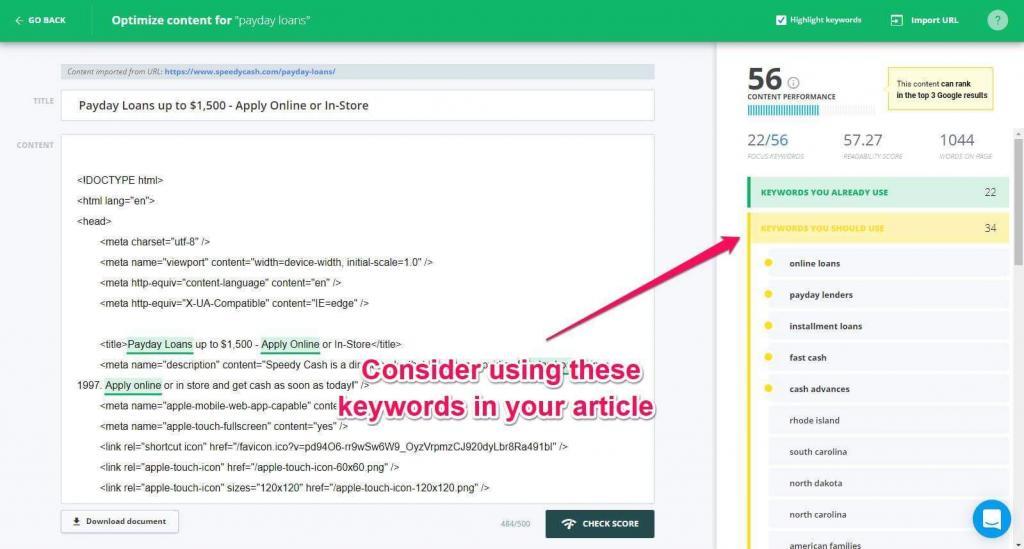
A great way to improve your content marketing strategies is using the cognitiveSEO Keyword Tool & Content Assistant. This set of SEO tools works by analyzing all the pages that rank for that keyword and providing keywords that you should add in order to make your article more relevant.
Don’t just bulk keywords in. Think of them as topics you haven’t covered before. Add them to relevant places and always keep the end user in mind. If it doesn’t make any sense for the reader, don’t add the keyword at all.
We’ve optimized our own content recently and the results were promising, providing a 70% increase in SEO visibility.
Look for other keywords to target
Keyword research is really important if you want to do well in SEO. Sometimes, if you can’t outrank your competitors on Google, you can try to target keywords that are less competitive.
Maybe the ones you are targeting right now are not the most relevant for your website and users. Maybe the keyword difficulty is too high for your website’s authority.
You can try targeting some longtail keywords instead. As you grow, your site will get stronger and will be able to target more competitive keywords.
Many times, people get stuck trying to rank for that one great keyword. Sure, high search volume keywords are nice, but there are other keywords out there.
Your spammy competitor can’t be ranking on all of them.
Don’t waste too much time trying to rank on a single keyword, or you’ll end up overoptimizing and doing yourself harm. You’ll also waste a lot of time and lose opportunities to rank hundreds of other keywords.
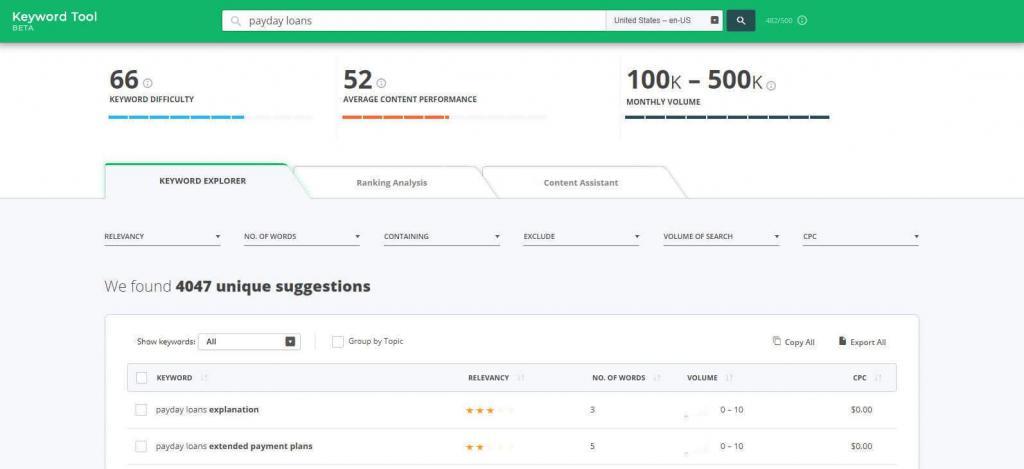
The cognitiveSEO Keyword Tool can provide you with some new keyword ideas that you can start targeting. The ones with more stars are more relevant to your primary searched keyword.
Snippet from the cognitiveSEO Keyword Tool
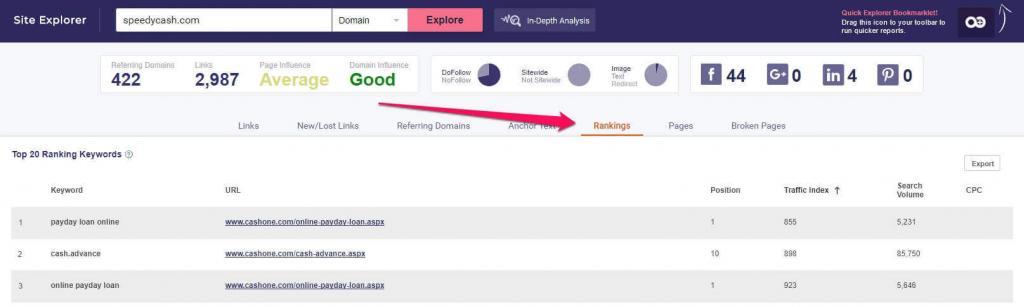
Another interesting trick you can do is to use the Site Explorer to find the Top 10-20 ranking keywords for a website. Not so useful if you use it on your own site, but if used on a competitor’s website, you can get new insights you probably haven’t thought of before.
Snippet from cognitiveSEO’s Site Explorer showing a website’s top ranking keywords
Another good way is to simply use the basic Google Keyword Planner. However, to get more accurate keyword statistics, you’ll need to spend some money on advertising, using Google Adwords.
Speaking of Google AdWords…
Invest in Advertising
If you’re not moving, you’re staying put. That’s exactly what you’re doing if you’re obsessing over a competitor’s backlink profile.
If you can’t outrank them and get enough traffic from SEO strategies alone, then you might need to invest in advertising. You can advertise either with Google Ads or on Social Media.
And did you know that there are ads that help you rank better on Google? Yes, it’s called buying links.
You can buy links without breaking any of Google’s guidelines by simply nofollowing the links. The secret is to make them site-wide and make it obvious it’s an ad.
Countless examples prove that nofollow links still provide SEO value. The best thing about it? You can actually use your target keywords in the anchor text!
If you think it works for you, you might even try using some press releases. Just make sure they are from reputable news sites.
Make sure you also strengthen your brand if you have enough budget to advertise. Maybe place an image ad as well using your brand logo near the link. Smart ads also have the chance of getting viral, especially in the video field.
Invest in it the white-hat way, and nofollow those links!
Improve your social media campaign
Although social media has been going down as a referral source (and Google has been climbing), it’s still a good idea to invest your time into building a social following. People spend a lot more time on social media than they spend on Google, and you need to be there.
Your competitors might spend a lot of time building shady links, but they might suck at social media. We don’t know for sure if social signals are a direct Google ranking factor or not, but they can have an impact on organic traffic, which can lead up to more natural links (a real ranking factor).
Maybe your competitor isn’t doing anything interesting on Facebook. You could, for example, bring something new by building yourself a chatbot. Chatbot marketing works well because the open rates for the messages are really high (up to 90%).
Get inspired from your competitor’s good links
The only time you should spend on analyzing the competitor’s links is if you want to spot opportunities for yourself.
Spending too much time on a competitor’s backlinks profile is a waste. You could instead spend that valuable time to figure out new issues on your website and fix those.
The reality is that not all the links on a spammy profile are bad.
Links usually cause higher rankings, but it can also be the other way around. As websites start ranking, they get more organic traffic which can lead to more links being created, as people discover and share your content around. And those are strong, natural links.
If a site has been ranking #1 for a long time, I bet there are some natural links in their profile as well.
You can dig for those natural links and try to replicate them. This, of course, if you have a better website. Nobody will link to you if they don’t find the website and the info on it useful.
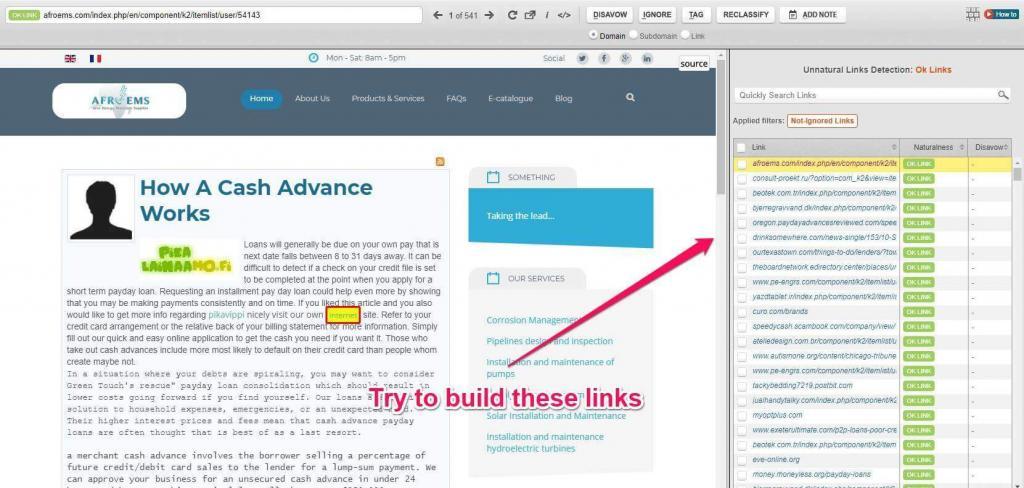
You can use the cognitiveSEO’s Unnatural Link Detection Tool to spot this kind of opportunities. Just run the backlink analysis, identify the good links and try to build them or earn them by contacting the owners.
Access the natural link navigator by clicking on the green bar
Steal your competitor’s natural links
However, your primary focus shouldn’t be on link building. Stealing your competitor’s links is a great link building strategy, but earning them naturally is an even better one. If you start improving all the things mentioned above, links will start coming on their own.
Conclusion
Outranking your competition isn’t an easy job, but it’s often something that needs to be done in the digital marketing world. Shifting your focus from building links to improving other things about your website (such as OnPage SEO and the conversion rate) can make the process less frustrating and a lot more effective.
Make your website better by adding more relevant content and by analyzing and improving the overall user experience. Try to gain a little traction from other sources of traffic, such as Google Ads or Social Media. Work on your conversion rate optimization and keep your customers happy.
Try to fill any gaps you can spot in the niche that your competition isn’t yet taking advantage of, and most of all, try to have a better site than they do, not just a better ranking one.
Improve content distribution with content marketing newsletters. They build relationships and reading habits to create SOAA. Has data, examples and tips.
This is a TRUE & SUCCESSFUL story from Jibran Qazi – Founder of Hunter Canada, a cognitiveSEO long-time customers and SEO experts with almost 15 years of expertise.
Jibran Qazi is an SEO consultant, growth hacker, and founder of Hunter Canada, a company that helps tech firms achieve exponential traffic growth. Enjoy his story, written and documented by himself, and see how he managed to grow an app in the Fintech space, increasing its number of monthly visitors from 4000 to 420K+ in just 6 months. All organic traffic from Google, no PPC, no paid ads.
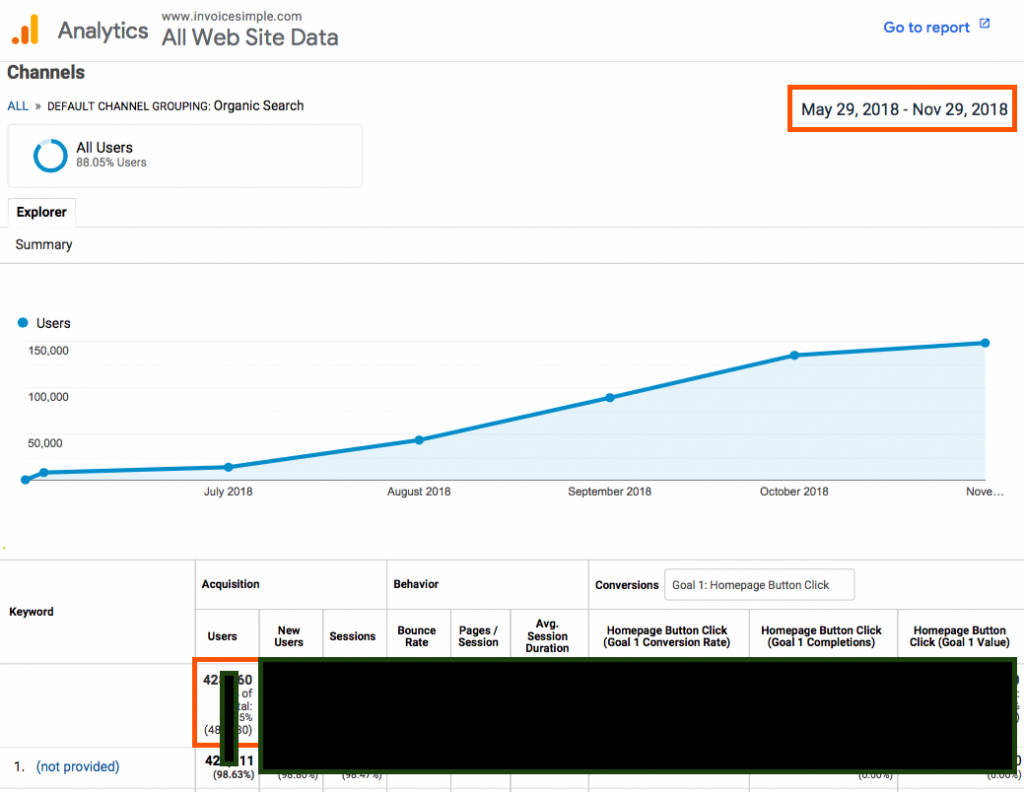
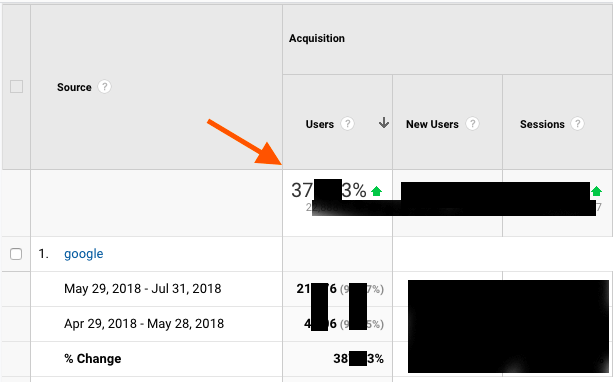
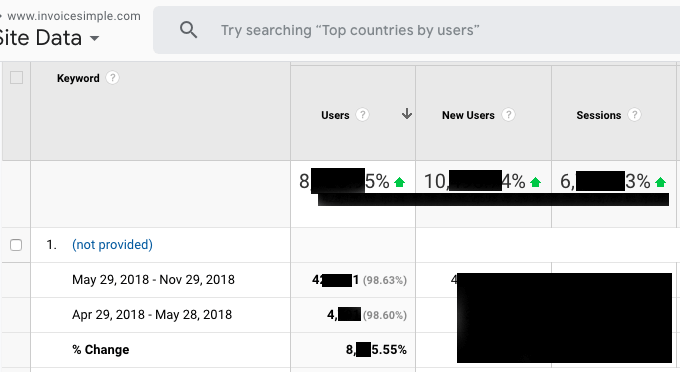
The length of our contract was 6 months which started on May 29th, 2018 and ended on Nov 29, 2018.
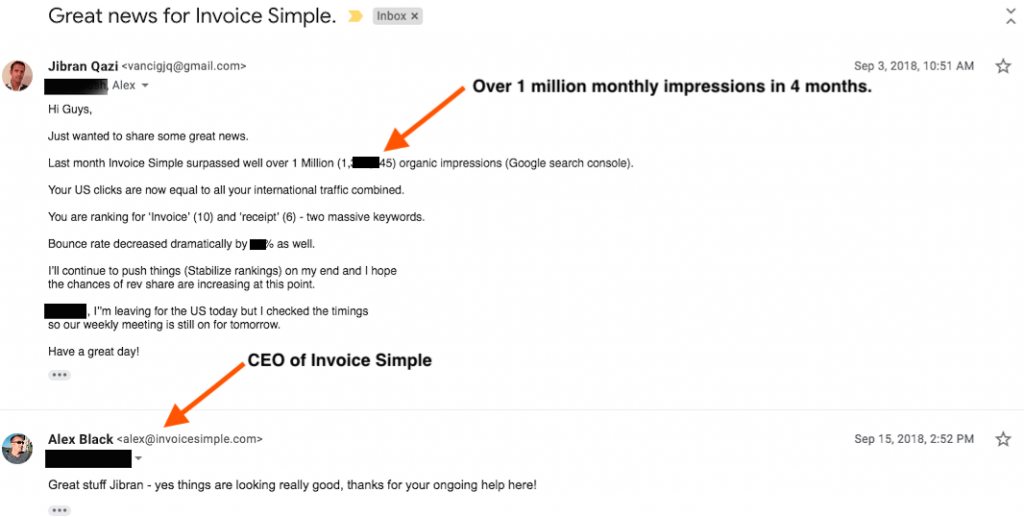
Let’s start with some social proof, shall we:
1.1 Social Proof
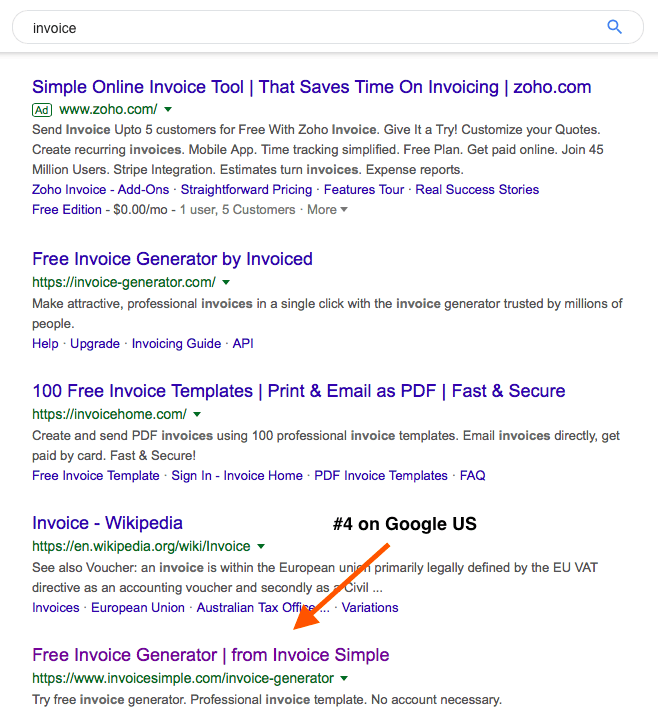
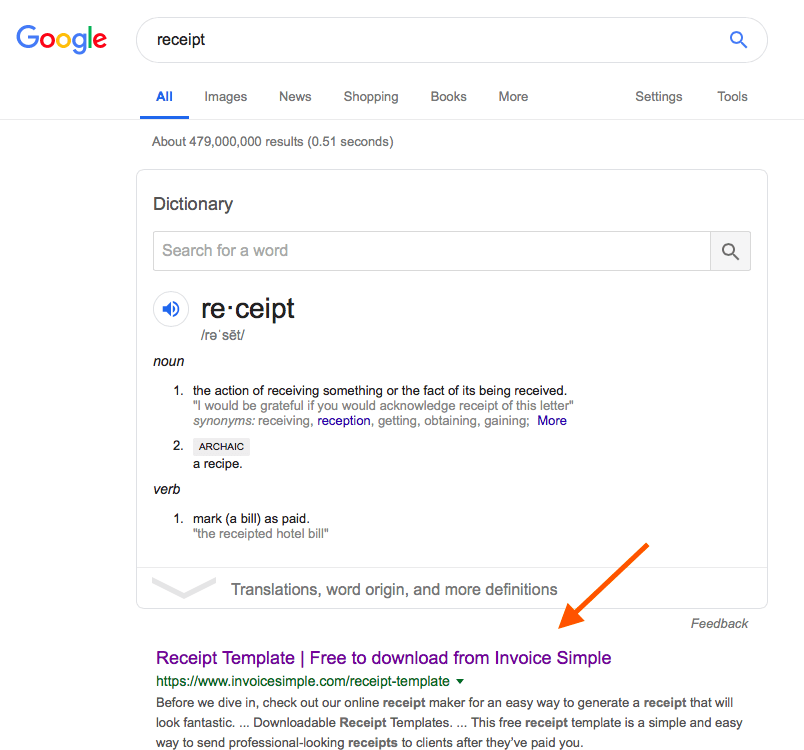
If you zoom into the email, you’ll see I got them on the first page for “Invoice” and “Receipt”. Two massive keywords. Not sure if they are still there but during that time, they sure were.
1.2 The Numbers
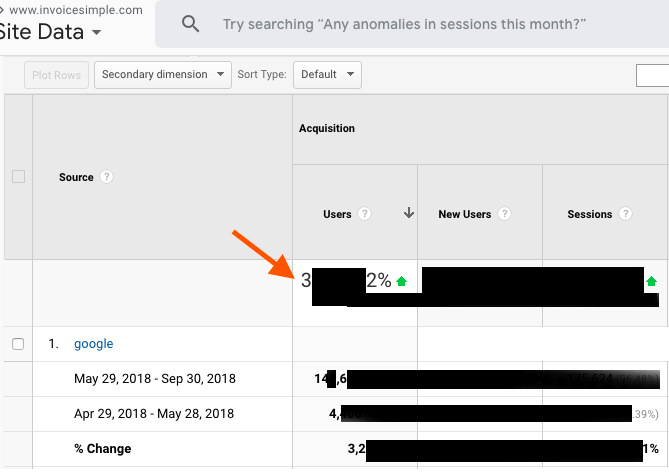
For obvious reasons, I can’t share the exact numbers but this should give you an idea.
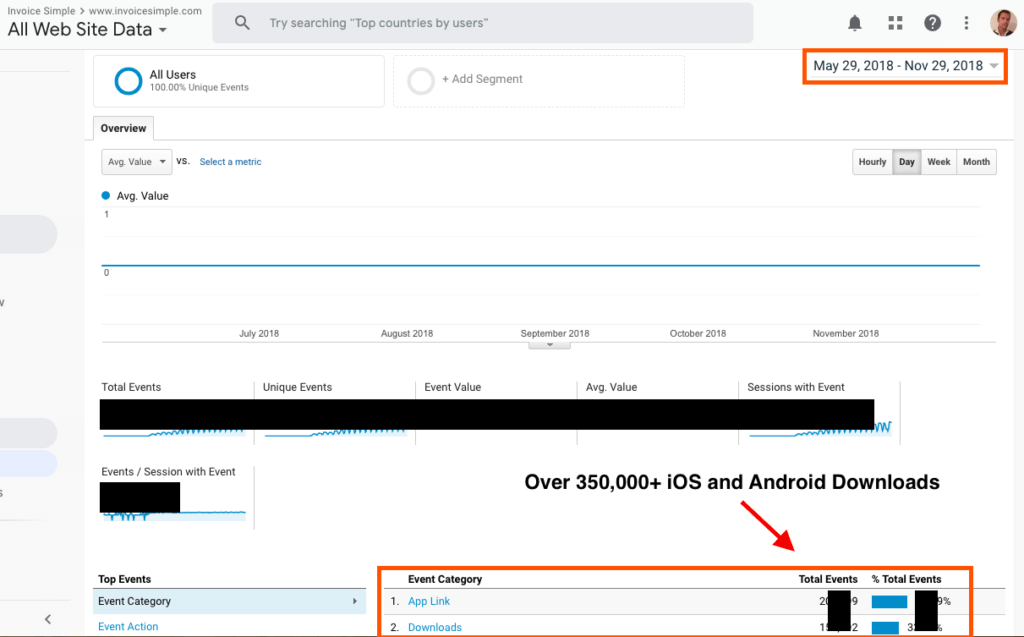
Which lead to over 350K downloads of their app.
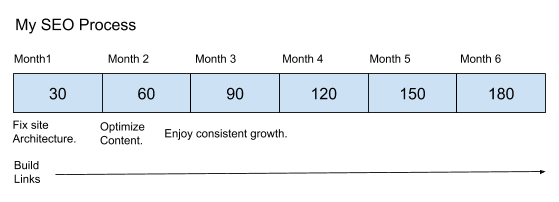
Let’s break down the month by month increase.
1.3 First 30 Days
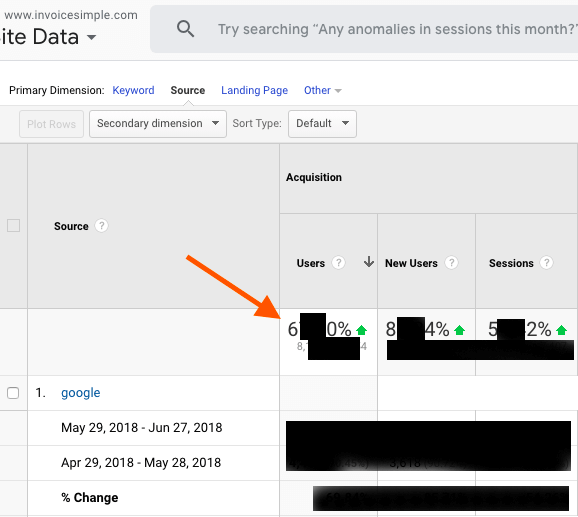
Success to these guys was a 30% increase in the first 3-6 months. I handed this to them in the first 30 days.
In fact, I more than doubled it. Over 60%.
1.4 First 60 days (2 months)
During these months and pretty much every month after I started, the growth was (As expected) simply exponential.
370%+ increase in traffic in just 2 months.
Over 1200%+ increase in just 3 months.
1.5 First 120 Days (4 Months)
Over 3000%+ increase in traffic. In fact, this was the first time the traffic went over 140K.
1.6 First 180 Days (6 months)
This is where I took them over 8000% in organic growth and had over 420k people in total. All in 6 months.
2. How To Get Exponential Results For Your Own Site
To get such results in your own niche, you must rank for some high volume keywords. I got this Fintech company on the first page for the following massive keywords:
Invoice;
Receipt;
Considering they weren’t even close when I benchmarked everything in the beginning, these are pretty solid results.
I literally beat out sites like Wikipedia, Shopify, Office.com and many more established sites with massive advertising budgets.
3. The SEO Process
Since I can’t share exactly what I did for legal reasons, let me share some “general tips”. I just applied my 3 step formula again:
Fix what’s wrong (Site Architecture).
Optimize Site (On-Page SEO).
Build Links (Starts from day 1).
If you’re new to SEO, or not sure what ‘link juice’ is, start here.
The only difference is instead of approaching these steps in a sequence, you should perform all 3 steps at the same time in a holistic way.
Now you can use lots of tools for the first two steps (Depends on your preference really) but the main one that really helped me get this site (Plus my other clients/sites) to the next level was hands down, Cognitive SEO.
Here’s why:
If you want the deepest backlink data, there is just no comparison.
For the past 3 years, I’ve been using it for the initial NegSEO cleanup and then ongoing monitoring.
When I’m considering getting a backlink from somewhere which looks a little odd, CognitiveSEO allows me to take a deeper look.
Guys, the thing is if you want great results, you have to use quality tools. CognitiveSEO is one of them. So generally speaking, here is how you should usually approach a site.
3.1 NegSEO Check on Main (Mysite.com) + Subdomains (help.mysite.com)
Always do a NegSEO check on your main domain and any subdomains first. Sometimes spammy links from your subdomains can kill your traffic over time. I love how CognitiveSEO allows me to look up subdomains for NegSEO as well. Very important.
When disavowing, always make sure you manually check the metrics of the sites you want to disavow. Sometimes you can disavow good ones as well and that could hurt you a lot.
There is a world of difference between a spammy site vs a low quality site. You need to disavow spammy site not low quality sites.
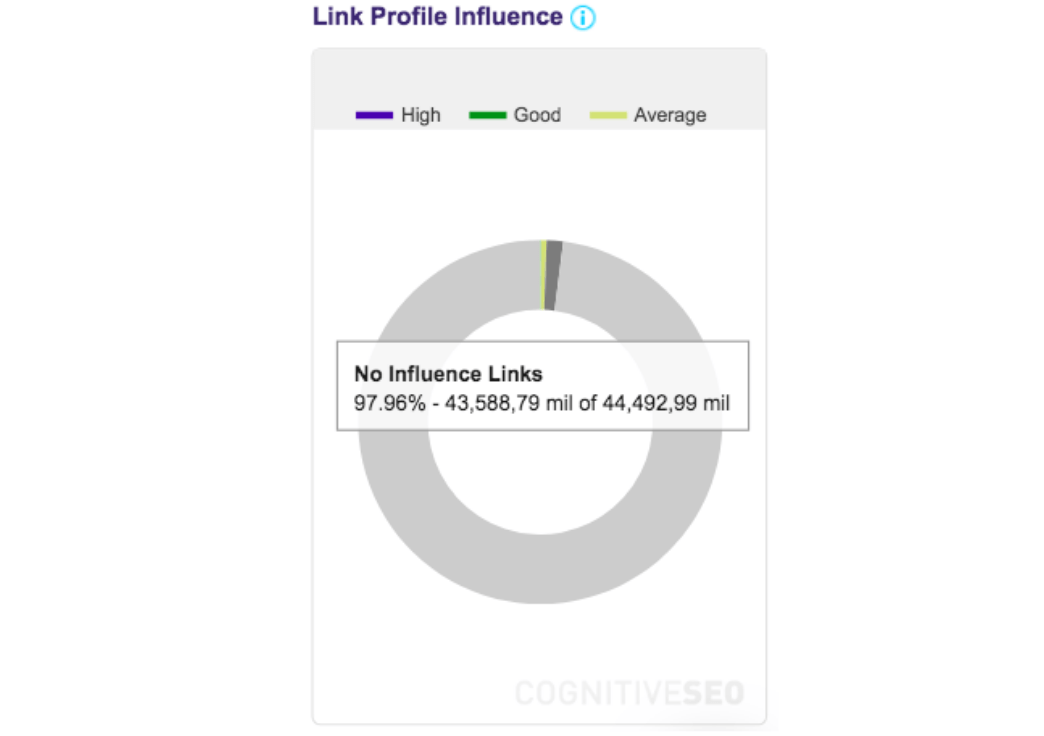
According to Cognitive SEO, 97% of Google is made of low-quality sites. Check out Google’s very own backlink profile below:
3.2 Build Citations
Citations are links from local business directories. It is surprising how so many businesses (Established or not), have not paid any attention to these.
Quality citations are a great source for backlinks and another great way of diversifying your backlink profile.
3.3 Add Your Link to JoeAnt
If there is one directory that I swear by to this day, it is JoeAnt. Love how they’ve maintained their quality throughout all these years. So always make sure you are present on JoeAnt.
It will give your site two things. A quality backlink and another diverse source that your backlinks is coming from. In this case, it would be from a directory.
3.4 Add Text
Try your best to turn your main pages (Pages you want to rank), into long copy.
These days, you need to have around 3000+ words. You don’t have to do it right away but keep adding text little by little.
3.5 Moving Forward
Most of these changes that I’ve mentioned here take the first 30-60 days. Usually 60 days as all the changes you are making need to get re-indexed as well. I used a service called One Hour Indexing for this.
Oh wait … What about backlinks?
Again, nothing special here either. Just you typical, manual, white hat link building (Blog comments, Forums, Directories, etc).
When it comes to SEO, it’s link building that takes most of my time. 2-4 hours a day at the very least. I recommend getting 15-20 links a month and see how your site reacts to it. Then you adjust your numbers accordingly. That’s really it.
3.6 Using Phrases As Anchor Text
Forget about one or two-word anchor texts. Most of the anchor texts that I use are between 5 to 7 words. Yes you read that right. It looks natural and it works.
In most cases, using the keywords isn’t necessary either.
4. The Link Building Strategy
Now, this is something I haven’t seen anyone discuss so I would like to share this. After finding quality link opportunities, where and how do you point them?
Well first, never link to the homepage. As the homepage usually already has enough links coming in. I’ve read case studies where they only link to the homepage and get great results. Like I said earlier, everyone has their own style and this is what has worked for me.
Once I reach the top, I randomize this pattern every 30 days so it all looks natural for Google as well. Think of link building as putting different coats of paint. Just make sure each coat (link building cycle) is different.
4.1 Forget About NoFollow Links
Forget about NoFollow or not. Just get links that fall in your pre-determined metric’s range (One I mentioned above).
You need both kinds of links (Heck I say get all kinds of links from all kinds of CMS’s) so you get quality links from diverse sources. That’s the key to successful link building.
Please stop ignoring ‘NoFollow’ links. If they are coming from a good authoritative place, get them. Nofollow links from Forbes or Wikipedia are still world-class links. Never check if a backlink is NoFollow or not. Haven’t done that in ages.
Conclusion
At the end of the day, if you do the following, you’ll get great results:
Pay attention to where and how the ‘link juice’ of a site flows. Be obsessed with link juice.
Make smart changes that work for you and Google. A healthy balance here can always be achieved.
Write about things your competitors aren’t.
Never stop getting backlinks.
Use proper tools to get a deeper look at your backlinks (Current and the ones that you want to acquire).
Run your own tests.
That’s pretty much it.
Disclaimer
This is not a paid post. cognitiveSEO made no agreement with the author. This is Jibran’s success story, written and documented by himself.
Please feel free to share your thoughts on this story with us.
About the author
Jibran Qazi is an SEO consultant, growth hacker, and founder of Hunter Canada, a company that helps tech firms achieve exponential growth.
We live in a world of information overload. If 10 years ago it was hard to find content at all, now there’s way too much of it! Which one is good? Which one is bad? We don’t know.
While this subject is very complex, it’s clear that Google is attempting to solve these content issues in its search results. One of the biggest issues they’ve encountered in the digital marketing world is what they call thin content.
But what exactly is thin content? Should you worry about it? Can it affect your website’s SEO in a negative way? Well, thin content can get your site manually penalized but it can also sometimes send your website in Google’s omitted results. If you want to avoid these issues, keep reading!
Thin content is an OnPage SEO issue that has been defined by Google as content with no added value.
When you’re publishing content on your website and it doesn’t improve the quality of a search results page at least a little bit, you’re publishing thin content.
For a very dull example, when you search Google for a question such as “What color is the sky?” and there’s an article out there saying “The sky is blue!”, if you publish an article with the same answer you would be guilty of adding no value.
So does it mean that this article is thin content because there are other articles about thin content out there?
Well.. no. Why? Because I’m adding value to it. First, I’m adding my own opinion, which is crucial. Then, I’m trying to structure it as logically as possible, address as many important issues as I can and cover gaps which I have identified from other pieces.
Sometimes, you might not have something new to say, but you might have a better way of saying it. To go back to our example, you could say something like “The sky doesn’t really have a color but is perceived as blue by the human eye because of the way light scatters through the atmosphere.”
Of course, you would probably have to add at least another 1500 words to that to make it seem like it’s not thin. It’s true. Longer content tends to rank better in Google, with top positions averaging about 2000 words.
How your content should be to rank
Sometimes, you might add value through design or maybe even through a faster website. There are multiple ways through which you can add value. We’ll talk about them soon.
From the Google Webmaster Guidelines page we can extract 4 types of practices which are strictly related to content quality. However, they are not easy to define!
Automatically generated content: Simple. It’s content created by robots to replace regular content, written by humans. Don’t do it. But… some AI content marketing tools have become so advanced that it’s hard to distinguish between real and automatically generated content. Humans can write poorly too. Don’t expect a cheap freelancer who writes 1000 words for $1 to have good grammar and copy. A robot might be better. But theoretically, that’s against the rules.
Thin affiliate pages: If you’re publishing affiliate pages which don’t include reviews or opinions, you’re not providing any new value to the users compared to what the actual store is already providing on their sales page.
Scraped or copied content: The catch here is to have original content. If you don’t have original content, you shouldn’t be posting it to claim it’s yours. However, even when you don’t claim it’s yours, you can’t expect Google to rank it better than the original source. Maybe there can be a reason (better design, faster website) but, generally, nobody would say it’s fair. Scraping is a no no and Google really hates it.
Doorway pages: Doorway pages are pages created to target and rank for a variety of very similar queries. While this is bad in Google’s eyes, the search giant doesn’t provide an alternative to doorway pages. If you have to target 5-10 similar queries (let’s say if you’re doing local SEO for a client), you might pull something off with one page, but if you have to target thousands of similar queries, you won’t be able to do it. A national car rental service, for example, will always have pages which could be considered doorways.
If you want, you can listen to Matt Cutts’ explanation from this video.
As you can see, it all revolves around value. The content that you publish must have some value to the user. If it’s just there because you want traffic, then you’re doing it wrong.
But value can sometimes be hard to define. For some, their content might seem as the most valuable, while for others it might seem useless. For example, one might write “Plumbing services New York, $35 / hour, Phone number”. The other might write “The entire history of plumbing, How to do it yourself, Plumbing services New York, $35 / hour, Phone number.”
Which one is more relevant? Which one provides more value? It really depends on the user’s intent. If the user just wants a plumber, they don’t want to hear about all the history. They just want a phone number and a quick, good service.
However, what’s important to understand is that there is always a way to add value.
In the end, it’s the search engine that decides, but there are some guidelines you can follow to make sure Google sees your content as valuable. Keep reading and you’ll find out all about them. But first, let’s better understand why thin content is still an issue and how it actually affects search engine optimization.
1.1 Is Thin Content Still a Problem in 2019?
The thin content purge started on February 23, 2011 with the first Panda Update. At first, Google introduced the thin content penalty because many people were generating content automatically or were creating thousands of irrelevant pages.
The series of further updates were successful and many websites with low quality content got penalized or deranked. This pushed site owners to write better content.
Unfortunately, today this mostly translates to longer content. The more you write, the more value you can provide, right? We know it’s not necessarily the case, but as I’ve said, longer content does tend to rank better in Google. Be it because the content makes its way up there or because the search engine is biased towards it… it’s hard to tell.
But there’s also evidence that long form content gets more shares on social media. This can result in more backlinks, which translates to better rankings. So it’s not directly the fact that the content is long, but rather an indirect factor related to it.
It’s kind of ironic, as Google sometimes uses its answer boxes to give a very ‘thin’ answer to questions that might require more context to be well understood.
However, in 2019 it’s common SEO knowledge that content must be of high quality. The issue today shifts to the overload of content that is constantly being published. Everything is, at least to some extent, qualitative.
But it’s hard to get all the information from everywhere and you don’t always know which source to rely on or trust. That’s why content curation has been doing so well lately.
This manifests itself in other areas, especially where there’s a very tough competition, such as eCommerce.
1.2 How Does Thin Content Affect SEO?
Google wants to serve its users the best possible content it can. If Google doesn’t do that, then its users won’t return to Google and could classify it as a poor quality service. And that makes the search engine unhappy.
Google generally applies a manual action penalty to websites it considers to contain thin content. You will see it in the Google Search Console (former Google Webmaster Tools) and it looks like this:
However, your site can still be affected by thin content even if you don’t get a warning from Google in your Search Console account. That’s because you’re diluting your site’s value and burning through your crawl budget.
The problem that search engines have is that they constantly have to crawl a lot of pages. The more pages you give it to crawl, the more work it has to do.
If the pages the search engine crawls are not useful for the users, then Google will have a problem with wasting its time on your content.
1.3 Where Is Thin Content Found Most Often?
Thin content is found most of the time on bigger websites. For the sake of helping people that really need help, let’s exclude spammy affiliate websites and automated blogs from this list.
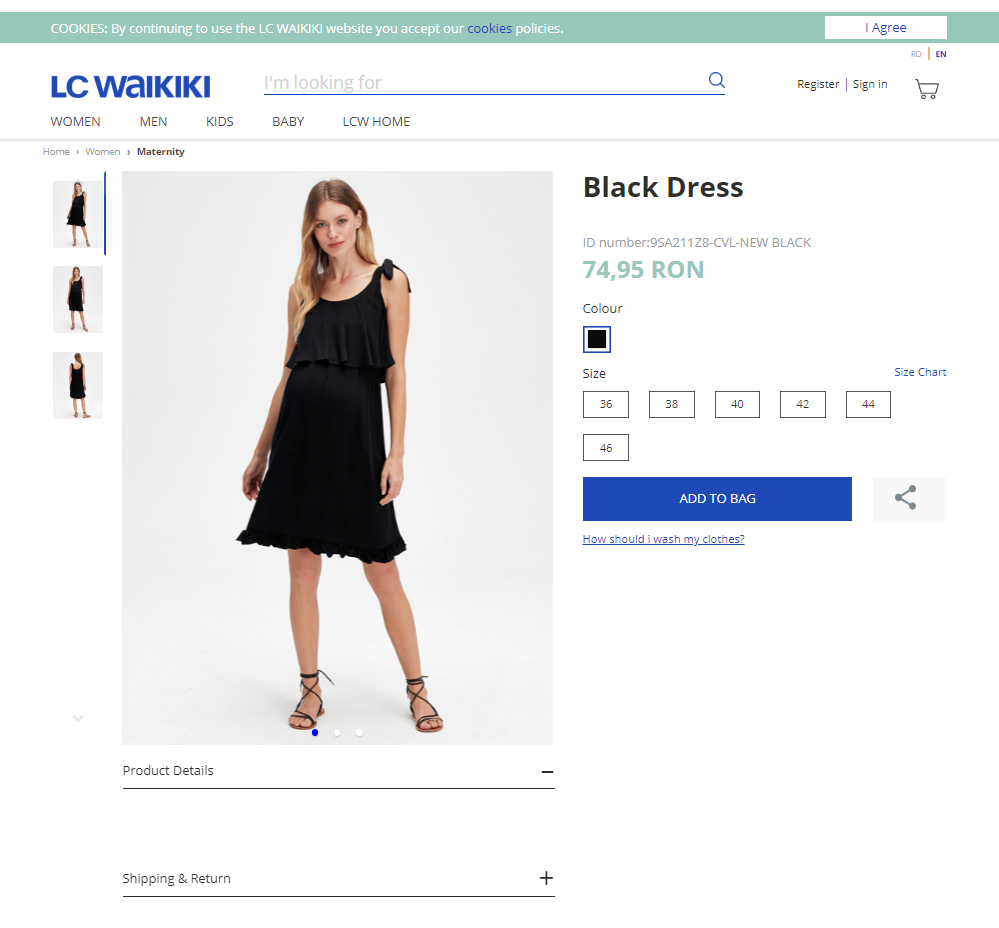
Big websites, like eCommerce stores, often have a hard time coming up with original, high quality content for all their pages, especially for thousands of product pages.
In the example above, you can see that although the Product Details section under the image is expanded, there’s no content there. This means that users don’t have any details at all about the dress. All they know is that it’s a dress, it’s black and it costs about $20.
This doesn’t look too bad when you’re looking as a human at a single page, but when you’re a search engine and take a look at thousands and thousands of pages just like this one, then you begin to see the issue.
The solution here is to add some copy. Think of what users want to know about your product. Make sure you add the details about everything they might want to know and make them easily accessible!
Sometimes, thin content makes its way into eCommerce sites unnoticed. For example, you might have a category page which hosts a single product. Compared to all your other categories or competitor websites,that can be seen as thin content.
2. How to Identify Thin Content Pages
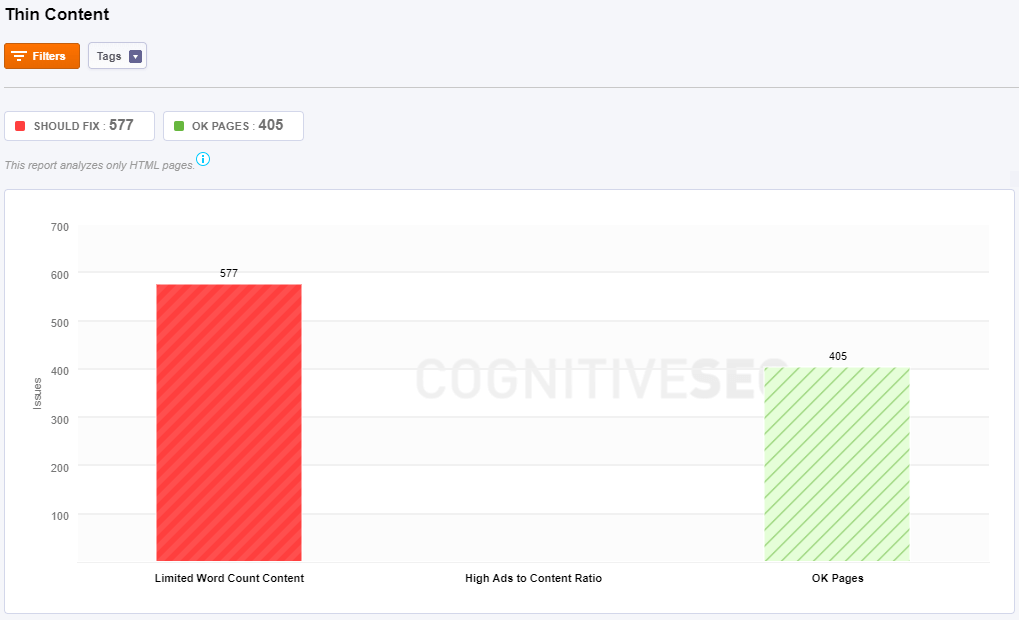
If we are referring merely to its size, then thin content can be easily identified using the cognitiveSEO Tool’s Site Audit.
Did you know?
Identifying thin content is actually really easy with a tool like cognitiveSEO Site Audit. The tool has a Thin Content section where you can easily find the pages with issues.
It’s as simple as that! Once you have your list, you can export it and start adding some content to those pages. This will improve their chances to make it to the top of the search results.
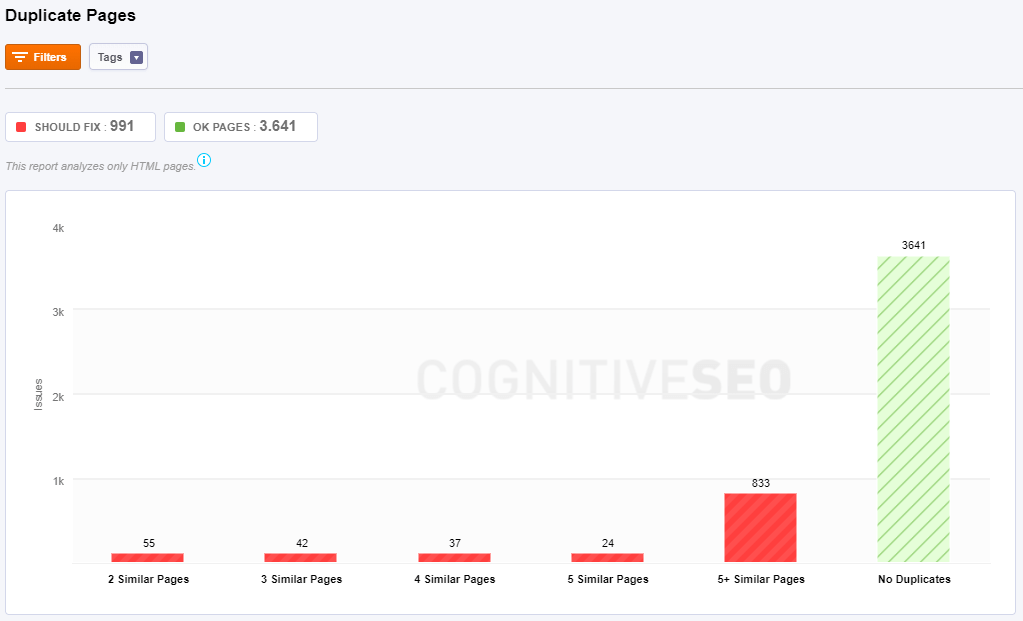
However, you also want to take a look at the duplicate content section in the Site Audit tool. This can also lead to a lot of indexation & content issues.
Extremely similar pages can be “combined” using canonical tags. Sometimes it can be a good idea to remove them completely from the search engine results.
3. How to Fix Thin Content Issues & Avoid a Google Penalty
Sometimes, you can fix thin content issues easily, especially if you get a manual penalty warning. At least if your website isn’t huge. If you have thousands of pages, it might take a while till you can fix them.
Here’ s a happy ending case from one of Doug Cunnington’s students:
However, the “penalty” can also come from the algorithm and you won’t even know it’s there because there is no warning. It’s not actually a penalty, it’s just the fact that Google won’t rank your pages because of their poor quality.
When that’s the case, it might not be as easy to get things fixed as in the video above.
In order to avoid getting these penalties, here’s a few things that you should consider when you write content.
3.1 Make sure your site looks legit
First of all, if your website looks shady, then you have a higher chance of getting a manual penalty on your website. If someone from Google reviews your website and decides it looks spammy at a first glance, they will be more likely to consider penalizing it.
To avoid this, make sure you:
Use an original template and customize it a little bit
Have a logo or some sort of original branding
Provide an about page and contact details
3.2 Add more content & avoid very similar titles
The best way to show Google that your pages are worth taking a look at is to not leave them empty. In 2019, I hope we all know that for good OnPage SEO we need to add a little bit more content.
Your pages should have at least 300 words of copy. Notice how I say copy, not words. If you’re there to sell, write copy. Even on an eCommerce product page.
If you’re not sure what to write about, you can always use the CognitiveSEO Keyword Tool & Content Assistant. It will give you ideas on what you should write on your pages to make them relevant for the query you want them to rank on.
Automatically generated titles can also quickly trigger Google’s alarms. If you review multiple products from the same brand and your titles are like this:
Nike Air Max 520 Review
Nike Air Max 620 Review
Nike Air Max 720 Review
then you can see how it might be an issue. Do those articles provide any value or are they all the same except for one digit?
It’s important to have the keywords in your title, but you can also try to add some diversity to them. It’s not always very hard to do. A good example could be:
Nike Air Max 520 Review | Best bang for the buck
Nike Air Max 620 | A Comprehensive Review Regarding Comfort
Nike Air Max 720 | Review After 2 Weeks of Wearing Them at The Gym
But Adrian, I have an eCommerce site with over 2000 products, I can’t write original titles for all of them!
That’s why I said that content isn’t the only way you can provide value with. If you can’t change the titles and content, improve some other areas.
However, the truth is that there’s someone out there who does optimize and show love to all their titles, even if there are 2000 of them. So why shouldn’t they be rewarded for it?
Usually, very similar titles are a result of content duplication issues. If you have a product that comes in 100 different colors, you don’t necessarily need to have 100 different pages with 100 unique titles and copy. You can just make them 1 single page where users can select their color without having to go to another URL.
Combining pages can also be done via canonical tags, although it’s recommended to only keep this for duplicate content. Pages with different colors can count as duplicate content, as only one word is different, so the similarity is 99.9%.
Make sure that the pages that get canonicalized don’t provide organic search traffic. For example, if people search for “blue dress for ladies” then it’s a good idea to have a separate page that can directly rank for that query instead of canonicalizing it to the black version.
Copying content from other websites will definitely make your site look bad in Google’s eyes.
Again, this happens mostly on eCommerce websites, where editors get the descriptions directly from the producer’s official website. Many times they also duplicate pages in order to save time and just change a couple of words.
On the long run, this will definitely get you into duplicate content issues, which can become very hard to fix once they’re out of control. It will also tell Google that your site endorses competitors. By using their copy, you’re considering it valuable, right?
3.4 Web design, formatting & ads
Sometimes, you can identify gaps in web design or formatting. That’s not easy to do, as you’ll have to manually take a look at your competitor’s websites. Here are some questions you should ask yourself:
Are competitors presenting their information in an unpleasant manner? Do they have too many pop-ups, too many ads or very nasty designs?
Then that’s obviously where you can make a difference. This doesn’t give you the right not to have an original copy, but it might have a greater impact.
Source: premiumcoding.com
3.5 Video, images, text, audio, etc.
Big, successful eCommerce businesses which have an entire community supporting them and backing them up have used this technique for a long time: video content.
This might work better in some niches, such as tech. In Romania, cel.ro has a very bad reputation with delivery and quality, yet it still has a decent amount of market share due to its strong video content marketing strategy.
If you want to improve the value of your page, make sure you add images, videos or whatever you think might better serve your user. If you’re a fashion store, images might be your priority, while if you’re an electronics store, the product specifications should be more visible instead.
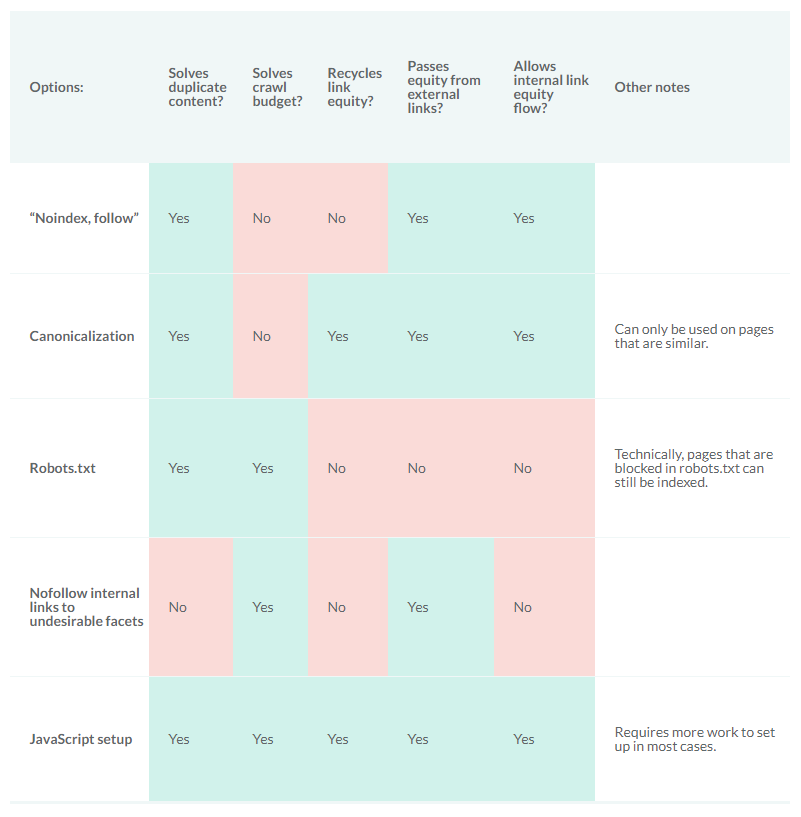
3.6 Deindex useless pages
Sometimes, when you have a lot of very similar pages that host thin content with no added value, the only viable solution is to remove those pages completely.
This can be done in a number of ways. However, the best ones are:
Removing the content altogether
Using canonical tags to combine them
Using robots.txt & noindex
However, you’ll have to choose carefully which method you use. Remember, you don’t want to remove those pages with search demand from the search engines!
Source: Moz.com
This can determine you to switch the focus from optimizing individual product pages to optimizing category pages.
Conclusion
Thin content is definitely bad for your website. It’s always better to avoid an issue from the beginning than to have to fix it later on. This saves you both time and money.
However, you’ll have to know about these issues early on, before you even start setting up your website and content marketing strategy. Hopefully, this article helped you have a better understanding on the topic.
Have you ever faced thin content issues on your websites in your digital marketing journey? How do you identify it? And how did you solve these content issues? Let us know in the comments section below!

 Together voice-first marketing, marketing AI and content saturation created a seismic content marketing shift. Use these tips, charts and data to adapt your content marketing tactics.







 Improve content distribution with content marketing newsletters. They build relationships and reading habits to create SOAA. Has data, examples and tips.