Wednesday, October 16, 2019

Sitemaps & SEO: Are Sitemaps Still Important for SEO in 2019?

As SEO evolves, it gets more and more human-centered and people in the industry begin to question old techniques, targeted mostly at search engines. Such is the case with Sitemaps, which have been around for ages.


Do sitemaps still matter for SEO in 2019 or are they just a waste of time? When and why should you use them? And how can you optimize them for maximum SEO results?
 

How_Sitemaps_Affect_SEO2.1


In this article, you’ll find out the answers to all those questions, so keep reading!


  1. What Are Sitemaps & How Do They Work?
  2. Are Sitemaps Important for SEO?
  3. How to Add a Sitemap to Your Website
  4. How to Optimize Your Sitemaps for SEO
 

What Are Sitemaps & How Do They Work?


Sitemaps are files used to tell search engines about pages that are available for crawling on websites. These files are simply just a list of URLs that contain some extra information about the pages, such as when they were last updated, for example.


Sitemap Types


There are two types of sitemap formats, but they can be split into multiple categories, depending on their purpose.


First, we have HTML sitemaps and XML sitemaps.


HTML sitemaps are basically just web pages containing href tags which link to other pages. They are useful for users when seeking something but also for search engines. Crawlers discover your website by ‘clicking’ from link to link until there are no more new links to be found.


If all your website’s links are in a sitemap, be it HTML or XML, search engines will find those pages more easily.


A HTML sitemap would look something like this to a user:
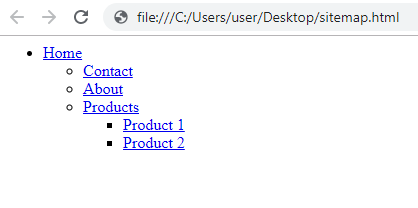
 

Basic HTML Sitemap

The HTML code in the backend would be pretty simple as well:


<ul>
<li><a href="/">Home</a></li>
<ul>
<li><a href="/contact">Contact</a></li>
<li><a href="/about">About</a></li>
<li><a href="/products">Products</a></li>
<ul>
<li><a href="/product-1">Product 1</a></li>
<li><a href="/product-2">Product 2</a></li>
</ul>
</ul>
</ul>


Of course, you’re free to add to the HTML sitemap page any CSS you want to style it, as well as a navigation menu, structure or titles.


A good sitemap example in HTML format can be found on the Disney Store. As you can see, all the important categories are listed there and you can basically browse the entire site from that page alone.
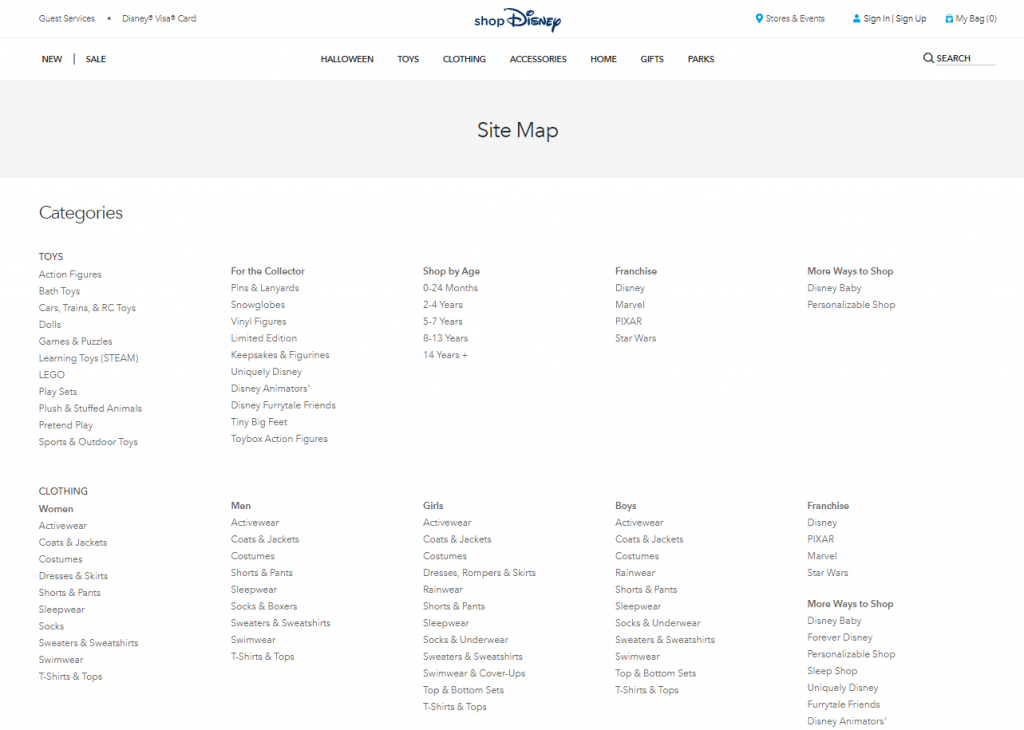
 

Disney Store HTML Sitemap Example


However, the standardized format for distributing sitemaps is the XML format. Search engines use these to read more information about the page, such as the title, directly from the sitemap file.


You can also upload XML files to tools such as the Search Console (former Google Webmaster Tools), where Google will validate it and check it from time to time.


An XML Sitemap is a little bit more difficult to write, as it contains all the metadata about the page in a standardized format. While visually the XML sitemap might not look very different, at a core level you can immediately see they are a lot more complex:


<?xml version="1.0" encoding="UTF-8"?>
<urlset xmlns="http://www.sitemaps.org/schemas/sitemap/0.9">
<url>
<loc>http://www.example.com/</loc>
<lastmod>2005-01-01</lastmod>
<changefreq>monthly</changefreq>
<priority>0.8</priority>
</url>
</urlset>


You can see some special tags there such as <loc> and <lastmod>. These two tags are very important, so make sure you add them to your sitemap! The other two might be ignored by Google. We’ll talk about them soon.


Note that the URLs in the XML sitemaps are absolute. This means that you can’t just add /your-page but you must add https://yoursite.com/your-page instead.


If we go back to our Disney example, we can see that the site also has a XML Sitemap, targeted at search engines.
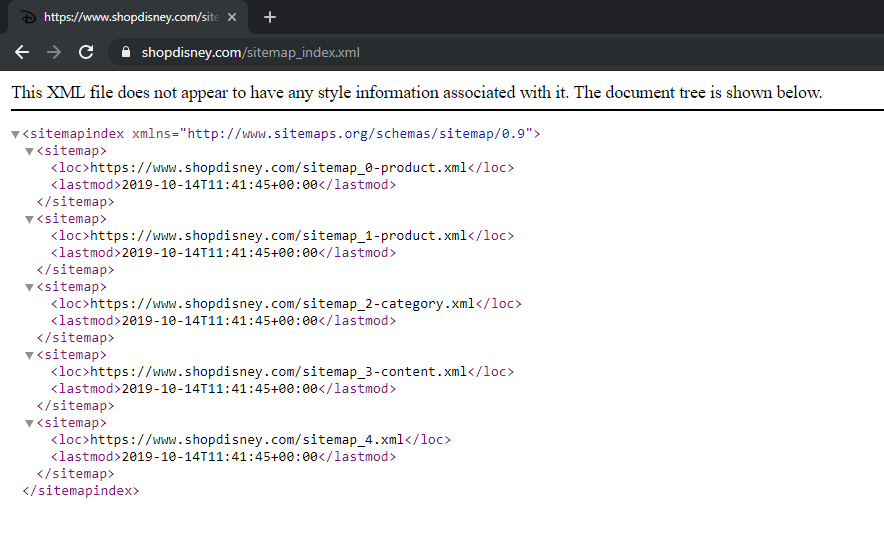
 

XML Sitemap Example Disney

You can go one step further and show sitemaps only to Search Engines. You can differentiate via the user agent and show an HTML sitemap instead if a real person visits the page.


Yoast SEO already does this. Visiting a /sitemap_index.xml file on a WordPress website will return an HTML sitemap, while hitting CTRL + U to view the source will return the actual XML sitemap.


Sitemap Categories


As previously mentioned, sitemaps can be split into categories, depending on their purpose.


Normal sitemaps: These are by far the most common sitemaps. Pretty much every website out there tends to have one. That’s because most platforms include some sort of sitemap generation system by default.


They are delivered in XML format and can usually be found on the relative path /sitemap.xml.


Most WordPress websites have their sitemap on /sitemap_index.xml. That is the default URL for sitemaps generated by the Yoast SEO plugin.


The sitemap is delivered by Yoast SEO that way with a purpose. XML files can only become so large before it’s unreliable for crawlers to download and read them.


There’s a limit of 50,000 URLs and 50MB for an XML file, but Google limits that to only 10MB so make sure your file doesn’t have more than 50,000 URLs and 10MB.


If you have a particularly large website, you can break your sitemap into multiple smaller sitemaps and use a sitemap index file to manage them.


Search engines will know how to crawl these as long as you provide the right format for your index file.


<sitemapindex xmlns=”http://www.sitemaps.org/schemas/sitemap/0.9″>
<sitemap>
<loc>https://example.com/pages-sitemap.xml</loc>
<lastmod>2019-04-17T15:12:13+00:00</lastmod>
</sitemap>
<sitemap>
<loc>https://example.com/product-sitemap.xml</loc>
<lastmod>2019-05-15T14:04:43+00:00</lastmod>
</sitemap>
</sitemapindex>


Then, on each XML sitemap, you can use the regular format mentioned above.


Image sitemaps: Normally, images can be added to a regular XML sitemap. However, if you have a lot of them, it might be a good idea to create a separate XML file only for your images.


More information on how to properly add images to your sitemaps can be found here.


Video sitemaps: You can also add videos to your sitemaps. However, similarly to images, the videos are listed in the sitemap in relation to a page / URL.


If you only have a few pages that contain video, just add that information in the normal sitemap. However, if you have an entire section of your website full with videos, then you might consider splitting them into a separate sitemap.


More info on how to properly include videos in your sitemaps can be found here.


News sitemaps: If you have a news website, then you can specify it in your sitemap. Since Google has a News section, it can really come in handy when quick indexation is a requirement.


More details about how to properly create a news sitemap can be found here.


Last but not least, Sitemaps can be static or dynamic. I would see no purpose in having a static sitemap though, as it would have to be updated simultaneously with the addition of new pages on the website.


If the goal of the sitemap is to let search engines know about new pages, then it should be updated as soon as the pages are published.


This means that you need a dynamic sitemap in order for it to be effective. Keep reading and you’ll learn how to generate a dynamic sitemap for your website.


Are Sitemaps Important for SEO?


First, let’s hear what Matt Cutts has to say about this:


But hold your horses, as you’ll want to prioritize your tasks! There are other much bigger technical SEO issues you should fix before adding a sitemap.


For example, do you have duplicate content on your website? If yes, then you should fix that first. Why? Because Google doesn’t like duplicate content and, by creating and submitting a sitemap, you’re showing it directly to Google.


Sitemaps are not required for search engines to effectively crawl your website.


However, they can come in handy, in particular cases. Since they are listed in the Search Console, it is certain that Google offers them some attention.


A sitemap will be most useful in the following scenarios:


You have a big website: Anything from eComm to big informational websites or news outlets fits here. If your site has a lot of pages, it means it will burn quickly your crawl budget. A sitemap won’t help with the crawl budget, but it can help get some deeper pages indexed faster.


A big website might also mean you make frequent updates. Maybe you post new products a lot and remove old ones. Maybe you are a news outlet. Having your XML sitemap set up properly can ensure the most important pages on your site are crawled and indexed.


Your site has a bad internal linking strategy: If you don’t regularly link in-between your pages, some of them might be hard to crawl by search engines. A sitemap could help here. But again… missing an internal linking structure is a far greater technical SEO issue than missing a sitemap. Search Engines focus on crawling your website naturally first. Even if Google does discover a page through your sitemap, without any links to it no Page Rank will flow to it so it will be considered unimportant.


Your site is new or/and has very little backlinks: Since websites are discovered from link to link, it is essential that other websites link to your site to signal its existence. If no website links to your new blog posts, a sitemap can help search engines quickly discover new pages on your site.


Sitemaps can be also used to hide pages from users while still letting search engines crawl them. I can’t really think of a good example for this… But let’s say you have a product landing page you want to show to search engines with a discount as an incentive to click, but you want to keep it hidden from users which came on your site from direct traffic.


Of course, they would be visible if the user visits the actual sitemap file.


There are things though that don’t matter in sitemaps anymore. For example, change frequency and priority don’t matter. At least that’s what John Mueller says:


https://platform.twitter.com/widgets.js


In any way, adding a sitemap to your website will not do any harm. But the truth is you might not REALLY need one, or that you have other priorities which can bring bigger SEO benefits.


Or, how Google puts it:

Google says sitemaps won't harm your SEO

Source: https://support.google.com/webmasters/answer/156184?hl=en


So… if your SEO is perfect and you don’t have anything better to do… let’s add a sitemap to your website.


How to Add a Sitemap to Your Website


First, check if you already have a sitemap! As previously mentioned, it probably lurks somewhere under /sitemap.xml or /sitemap_index.xml. The files could also have the .html extension so check them as well.


If you don’t have a sitemap, you can always create one. The difficulty really depends on what type of platform your website is built on.


How to Add a Sitemap on a Custom Made Website


If it’s a custom made website, adding a sitemap might require your developers to intervene.


Of course, you can just generate a static XML sitemap and upload it to your server. You could even write one yourself, but that would take forever! However, a static sitemap means you would constantly have to generate it every time you add a new page to your website in order for it to be effective.


The developers would have to write some code. The process is pretty straight forward. As a new page/entry is added to the database, an nXML file must be updated with the required information.


If you want to go for the free option, you can generate a sitemap with https://www.xml-sitemaps.com/. The tool will simply crawl your website and structure the information it finds about the URLs in an XML file which you’ll then be able to download to your computer and upload it to your public_html folder on your server.
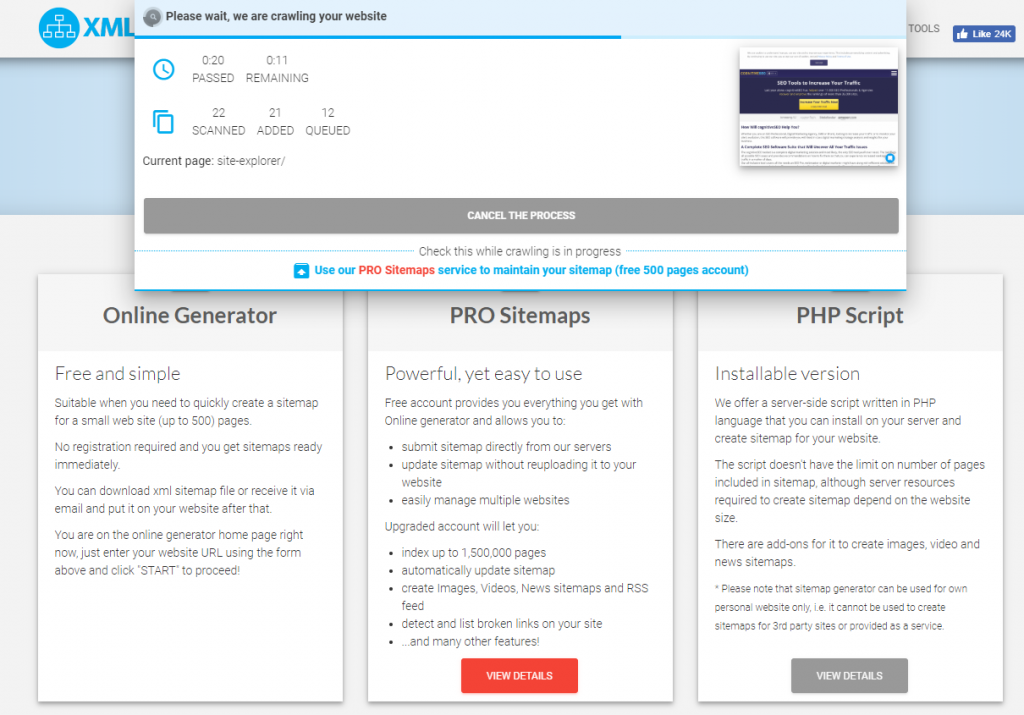
 

XML Sitemap Generator


However, this has its flaws. Firstly, it will be static which means you’ll have to keep regenerating and reuploading it. Secondly, since the tool crawls your site like any other search engine, this means that if your internal linking is bad, the tool won’t find deep pages and thus it won’t add it to the XML file.


Luckily, https://www.xml-sitemaps.com/ also provides paid versions, one that will dynamically add your pages to your website. However, the best option is probably the PHP version, which you can plug into your website and run directly from your website.


Depending on your needs, the solutions above are the best ones for a custom website.


How to add a Sitemap to a popular CMS, such as WordPress


If you’re on a popular platform such as WordPress, you’re in luck! You can solve your issue by installing a Sitemap plugin. On WordPress, the most popular one is Yoast SEO, which generates a search engine optimized sitemap on its own. You won’t have any struggles with it.
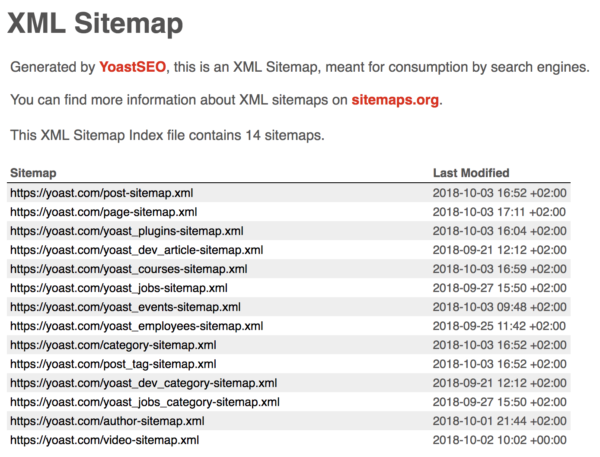


Similar plugins/extensions/modules can be found for other platforms, such as Drupal, Joomla or Magento. Simply perform a Google search for “sitemap plugin + your platform” and you’ll find out if something is available.


How to Optimize Your Sitemaps for SEO


Now that you have a Sitemap, it’s time to make sure it’s beneficial for SEO. While Google says a sitemap will never get you in trouble, it actually can, if you do it the wrong way. For example, you might highlight some duplicate content pages which we know cause at least a little bit of issues.


A good way to check your Sitemap for Errors is the Google Search Console (former Webmaster Tools). However, before you submit your Sitemap to Google, you might want to check it with a proper set of SEO Tools. Once you upload it to Google, it will have an impact on your site, be it positive or negative.


The CognitiveSEO Site Audit comes in handy here, as it can solve for you most issues related to Sitemaps. Once you set up your campaign and run the Site Audit, the tool will crawl your entire site and analyze it for errors. 


The tool will first highlight the discrepancy between the found page (which the tool was able to crawl, just as Google would) and the pages listed in the sitemap. You might do this on purpose, if you want to exclude certain pages. That’s why it’s a warning in the tool and it’s colored yellow, instead of being colored red, like actual errors are.
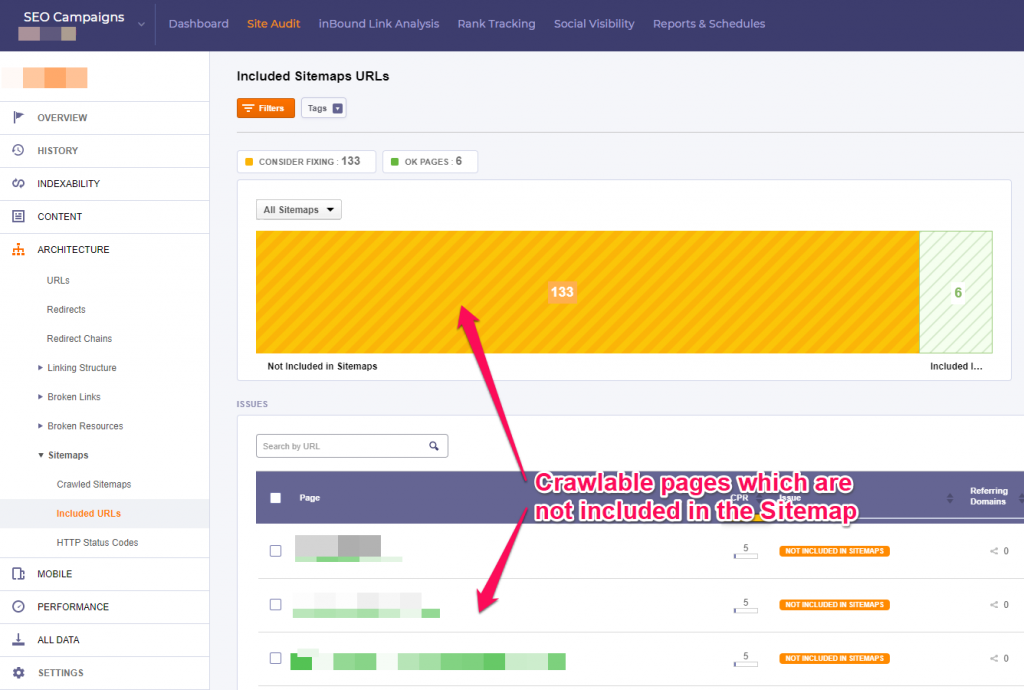
 

CognitiveSEO Sitemap Audit Tool


Secondly, you want to fix any duplicate and thin content issues on your website. You don’t want to include those in the Sitemap.


You can do this easily with the Site Audit. You can find what you’re looking for under the Content section:
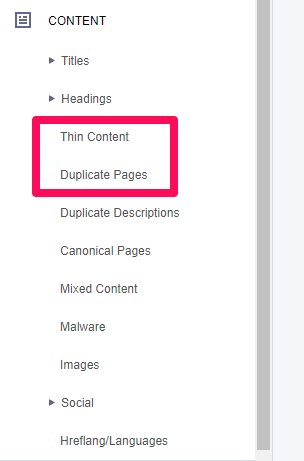
 

Duplicate & Thin Content


So make sure you exclude those pages from the Sitemap. Even better, you can fix your issues by canonicalizing the duplicates and adding content to your thin pages.


We ‘know’ from John Mueller that the priority tag is an optional tag and doesn’t matter for Google, we can assume search engines and browsers read files from top to bottom, making the information at the top a priority, since they’re read first.


Most sitemaps are structured alphabetically or chronologically as it is simple, but nobody says you can’t structure it the way you want. Consider adding the most important pages first. 


A sitemap should be structured hierarchically, similarly to an eCommerce site’s internal linking structure. However, it’s better if you focus on the site structure internal linking strategy instead of the sitemap.


Search engines prefer to crawl your website in a “human way”, which means they will go from link to link on your website until they find all your pages.


If it takes users 1 hour and 100 clicks to get to your important pages and find out what they seek, there’s a big chance Sitemaps won’t fix your problem.



Other XML Sitemap best practices that benefit SEO:


  • Consider adding the international hreflang attribute to your sitemaps. You can do it as such:


<url>
<loc>http://www.example.com/english/page.html</loc>
<xhtml:link rel=”alternate” hreflang=”de” href=”http://www.example.com/deutsch/page.html”/>
<xhtml:link rel=”alternate” hreflang=”de-ch” href=”http://www.example.com/schweiz-deutsch/page.html”/>
<xhtml:link  rel=”alternate” hreflang=”en” href=”http://www.example.com/english/page.html”/>
</url>


This will help you get your international pages indexed better as well.


  • You can also exclude any unimportant pages which you don’t necessarily want indexed, such as pages with thin content or archive pages and paginated content.


  • Make sure to exclude any pages that are blocking Google from crawling them, such as pages blocked in the robots.txt file or by a noindex meta tag. It wouldn’t be nice to invite someone at your house and then not open the door!


  • That also goes for 404 pages, canonicals or pages that redirect to other pages via 301.


  • Last but not least, although they’re also duplicate content, make sure you don’t add URLs with parameters or anchors in your sitemap (such as comment or social media tracking IDs), unless they are unique URLs with original content.


Once you finish creating and optimizing your sitemap, you can finally add it to the Google Search Console and validate it. There you can also view any previously submitted sitemaps.
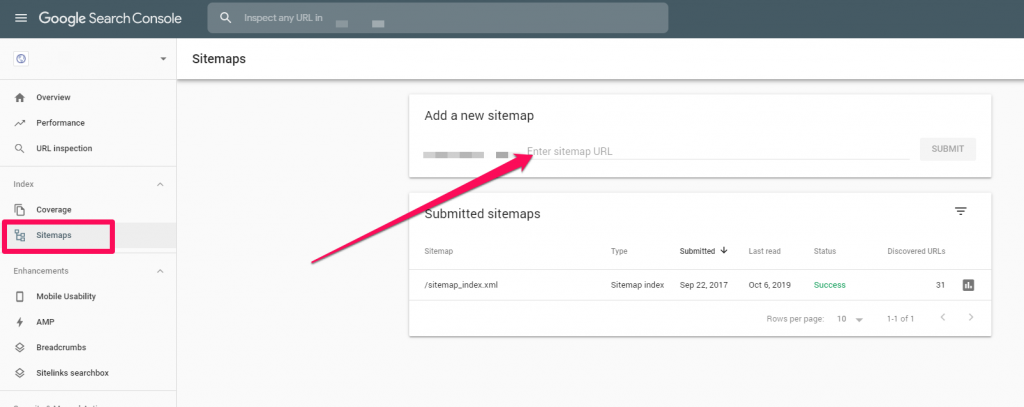
 

Add Sitemap To Google


The Search Console will let you know if there are any issues, such as duplicate content ones. Luckily, you’ve already fixed those with the CognitiveSEO Tool.


If your website doesn’t get crawled properly, a sitemap should definitely help, considering that all the other possible causes, such as noindex tags, have already been excluded. The sitemaps uploaded here will tell Google to crawl your site, but it’s still up to Google if it will do it or not.


Now you know when it’s important to have a sitemap and how you can properly set one up on your website.


What’s your experience with sitemaps? Have they ever helped you rank better? Have you ever fixed any sitemap related issues and ranked better after? Let us know in the comments section. Also, consider joining our Social Media group on Facebook where you can get more insights on Search Engine Optimization and Digital Marketing.

The post Sitemaps & SEO: Are Sitemaps Still Important for SEO in 2019? appeared first on SEO Blog | cognitiveSEO Blog on SEO Tactics & Strategies.


Sitemaps & SEO: Are Sitemaps Still Important for SEO in 2019? posted first on http://nickpontemarketing.tumblr.com/

Saturday, October 12, 2019

Indistractable – Author Interview

Indistractable

IndistractableIn Indistractable, Eyal reveals the hidden psychology driving us to distraction. He describes why solving the problem is not as simple as swearing off our devices.

The post Indistractable – Author Interview appeared first on Heidi Cohen.


Indistractable – Author Interview posted first on http://nickpontemarketing.tumblr.com/

Friday, October 11, 2019

Is Google Blocking Your Site Due to Mixed Content? Identify & Fix Mixed Content Issues

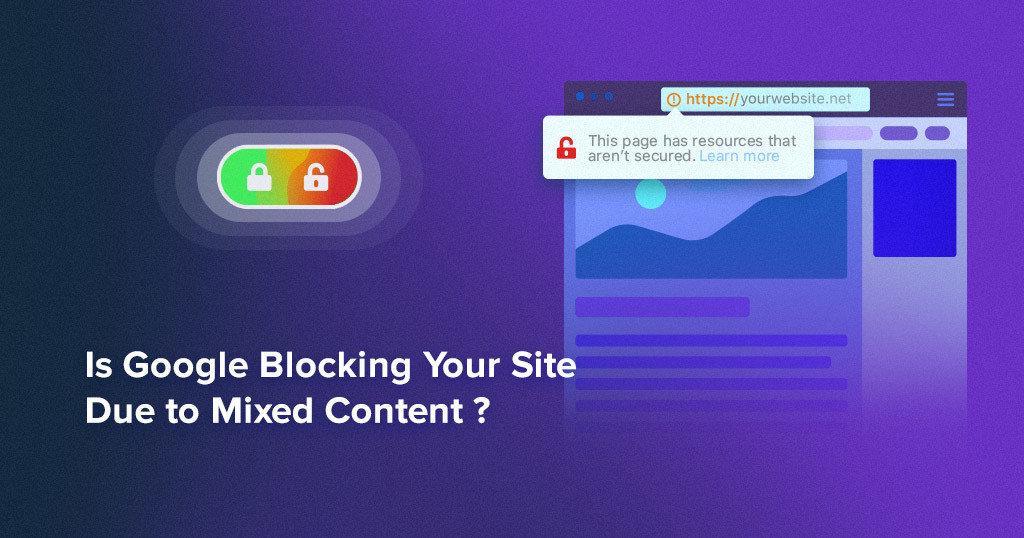
Google has recently announced that Chrome will block mixed content on web pages beginning December 2019. Starting with the Chrome 79 version, Google will gradually move to blocking all mixed content by default. Therefore, if your website has mixed content, it will be blocked and your users won’t be able to access it.


Everything from what mixed content is to how to identify/fix it can be found in the following lines. 


Is_Google_Blocking_Your_Site_Due to_mixed_Content


The Google Security Team reports that Chrome users now spend more than 90% of their browsing time on HTTPS on both desktop and mobile. The plan to begin blocking mixed content is targeted at addressing insecure holes in SSL implementations of sites that have already made the switch to HTTPS. Here’s everything you need to know about it:


  1. What Is Mixed Content?
  2. Why Is Google Blocking Mixed Content?
  3. How Do You Detect Mixed Content?
  4. How Do You Fix Mixed Content Issue?
  5. Does Mixed Content Affect SEO?
 

What Is Mixed Content?


Mixed content occurs when a secure web page (a page loaded through HTTPS) contains resources like scripts, videos, images, etc. that are served through an insecure protocol (HTTP). 


As you probably guessed it from the name, it’s called mixed content because both HTTP and HTTPS contents are loaded to display the same page, and the initial request was secure over HTTPS. 


In the following lines we’ll let you know why HTTPS is a must. You already know, but as repetition is the mother of learning, we want to highlight that that Hypertext Transfer Protocol Secure (HTTPS) is an extension of the Hypertext Transfer Protocol (HTTP) and is used for secure communication over a computer network.


The main motivation for HTTPS is the authentication of the website being accessed and the protection of the privacy and integrity of the exchanged data while in transit. 


Therefore, managing security risks is the key. Furthermore, you need to know that in HTTPS the communication protocol is encrypted using Secure Sockets Layers (SSL).  And, to better understand the concept of mixed content resources or insecure content and why the “s” from the HTTPS makes such a big difference, let’s briefly go through SSL certificates. 


What Are SSL Certificates?


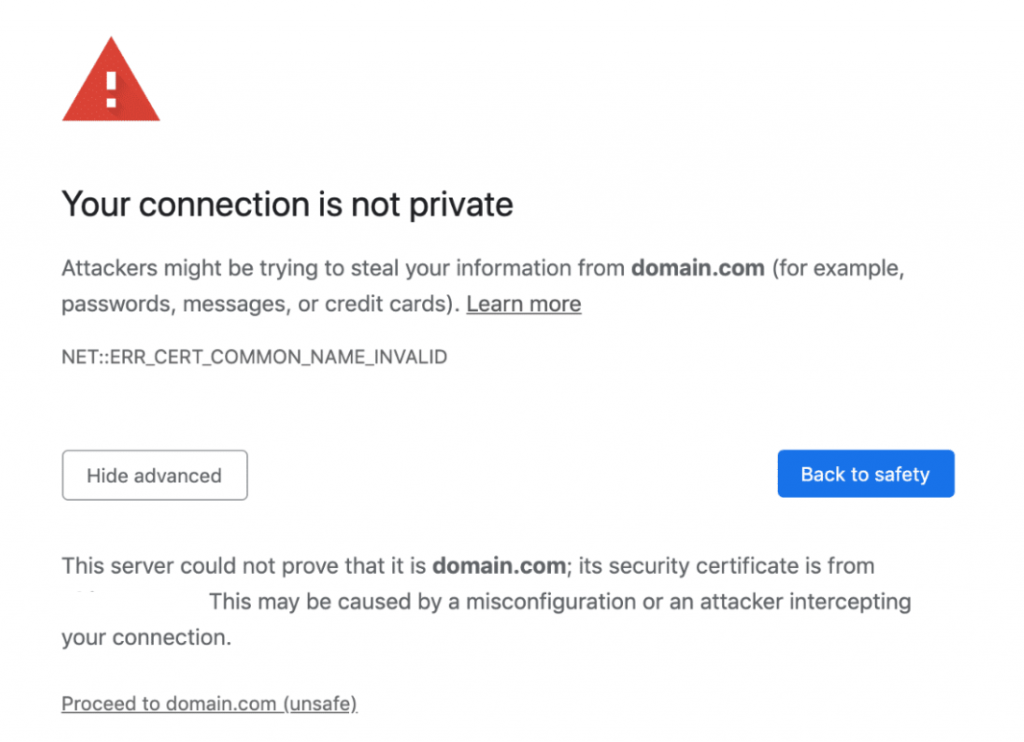
SSL certificates are only used to confirm the identity of a website. These certificates are emitted and signed by certificate authorities with their private keys. Before getting a certificate from them, you must somehow confirm your identity and prove that you are the organization and website owner. Web browsers come packed up with a bunch of public keys from certificate authorities. They check if the certificates have been signed with the proper private keys, therefore confirming that their identity has been verified by a trusted authority and not by some random certificate generator. If the certificate is expired or not valid, a red warning will show up.  These warning messages will definitely turn the user down. 


not secure privacy

By using an SSL Certificate, webmasters can improve the security of their websites and better protect their users’ information.


Taking one step further, you need to know that there are two types of mixed content: active and passive.


Active mixed content – the mixed active content is the type of content that is the most harmful. In this case, an attacker can take full control of your page or website and change anything about the page. They can steal passwords, login credentials, user cookies or redirect users to other sites, etc.


Passive mixed content – when it comes to passive content, an attacker can intercept an HTTP request (resources loading via http) for videos or images on your site and replace those images with whatever they want. They can also replace your product pictures or place ads for a totally different product.


Why Is Google Blocking Mixed Content?


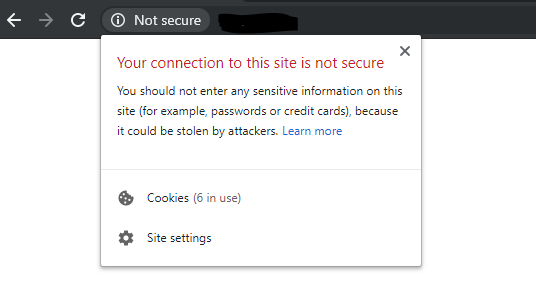
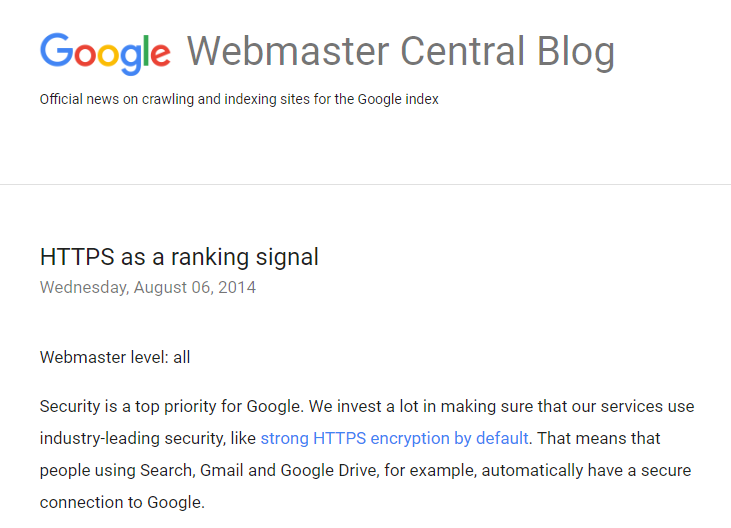
Although Google confirmed in 2014 that it considers HTTPS a ranking factor, all the buzz started when Google released version 68 of the Chrome Web Browser in July 2018. In this version, websites that don’t run on HTTPS are marked as Not Secure. 


not secure


As you can see in the screenshot above, the browser advises the user of that site not to disclose any passwords or credit cards.

The browser is advising potential customers not to perform any transaction on your site.

And that’s the last thing you want your user to see.


Yet, why mixing rum and cola makes a great cocktail but mixing HTTP and HTTPs is a big no-no? 


There are many situations that can cause mixed content issues and many reasons why mixed content is harmful, lots of them highlighted by Google itself.  Let’s focus on just a few important ones: 


  • Mixed content degrades the security and user experience of your HTTPS site.


Whether you like Google’s rules or not, you have to agree with this one: web security is more important than ever. And offering your users the comfort of security is not just a whim but a must.   


Imagine that you’re navigating to your bank’s website. If it’s an HTTPS connection, your browser authenticates the website, thus preventing an attacker from impersonating your bank and stealing your login credentials. Also, when transferring money using your bank’s website, this prevents an attacker from changing the destination account number while your request is in transit. 

One of the big advantages of HTTPS is that it lets the browser check that it has opened the correct website and hasn’t been redirected to a malicious site.


  • Mixed content is confusing. 


If a web page is using HTTPS, then all its resources should be pulled in via HTTPS as well. You’re somehow viewing a web page that’s both secure and not secure. It is like you bought a very good bicycle lock but you’re not using it every single time, just randomly, and at the end of the day you are surprised to see that your bike was stolen. 


Let’s say that you’re on a secure web page and you stay assured that everything is OK as the webpage is on HTTPS. Yet, if that page has some  insecure images (or other HTTP resources) and let’s say you’re on a public Wi-Fi network, you can get into lots of problems, from getting your keystrokes monitored to tracking cookies.


  • Mixed content weakens HTTPS.


You might have heard before about the man-in-the-middle attack (MITM). In computer security, a man-in-the-middle attack is a type of attack where the attacker secretly relays and possibly alters the communications between two parties who believe they are directly communicating with each other. One example is when the attacker makes independent connections with the victims and relays messages between them to make them believe they are talking directly to each other over a private connection, when in fact the entire conversation is controlled by the attacker. It’s like eavesdropping, just that the stakes are much higher than the latest gossip from the office. 


Therefore, requesting subresources using the insecure HTTP protocol weakens the security of the entire page, as these requests are vulnerable to man-in-the-middle attacks.


Running your site over HTTPS is not an option; it is a must. Not only is it more secure (everything is encrypted), but it also builds trust, is an SEO ranking factor, and provides more accurate referral data. Not to mention that the most important web browsers are blocking pages that are not considered secure.


These are just some of the many reasons why Google decided to block mixed content.  This new update will break a big number of website and many, many businesses will lose big time.

Yet, there is hope: you can quickly detect if you have mixed content and you can also fix it. Keep on reading to find out how can you still make your site accessible to your users. 


How Do You Detect Mixed Content?


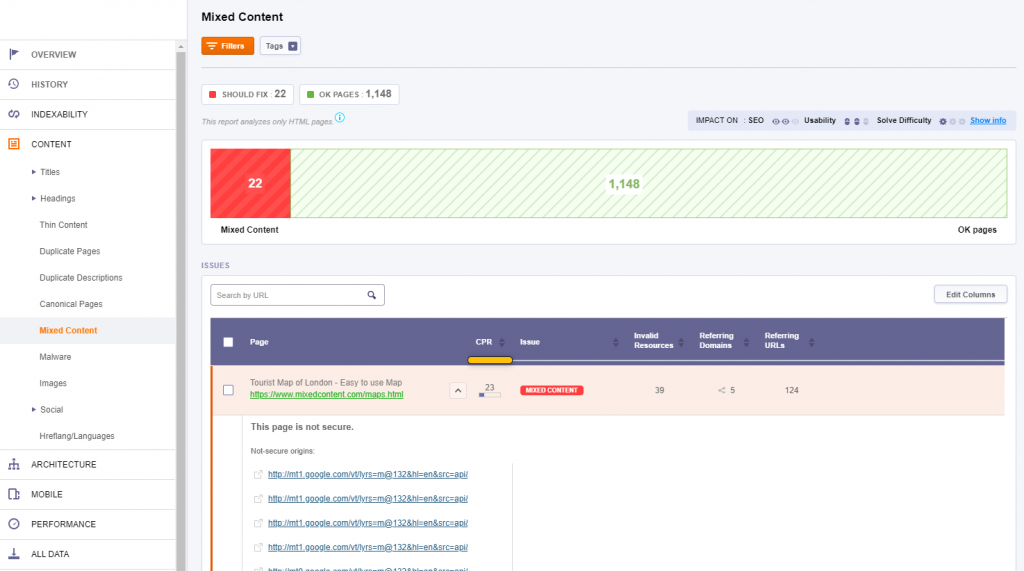
The easiest possible way to see whether you have any mixed content error on your site is to run a Site Audit within cognitiveSEO. It is the easiest, safest and stress-free option you could take and it doesn’t imply any programming skills or developer guides to fix mixed content warnings. I mean, you find out if you have mixed content (+ many other issues ) on your site, with just a few clicks.


Just start an analysis of your site and the tool will automatically identify the mixed content issue. There is a section dedicated to this exact matter where you can see the not secure pages of any website and its insecure origins. No headaches, reliable and super simple to identify. 


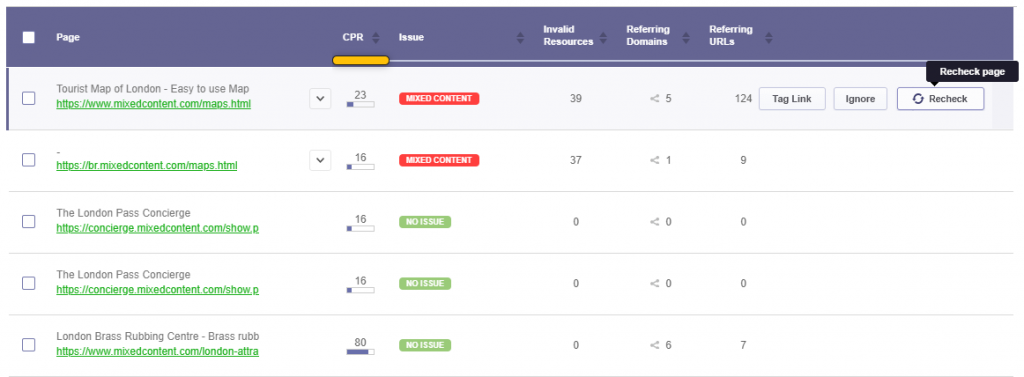
mixed content cognitiveseo


It couldn’t get much easier than this. Simply check the reported pages and start fixing them. 


How Do You Fix Mixed Content Issue?


Once you find the insecure content, the resources being served over HTTP vs. HTTPS, you can start changing the URLs, by simply append HTTPS at the beginning.


Fixing the issue is often as simple as adding an “s” to links – http:// to https://.


Yet, before you do that, be sure that the HTTP resource is available over an HTTPS connection. To check this, simply copy – paste the HTTP URL into a new web browser, and change HTTP to HTTPS. If the resource (URL, image, video, etc.)  is available over HTTPs, then you can start changing HTTP to HTTPS in your source code. 


Mixed content is an issue that can be so easily identified and solved, but if ignored it can cause big problems, like your website being blocked by Google. 


Once you solved the issue, go back to the Site Audit to make sure you didn’t miss any insecure content resource. The tool re-crawls your website periodically to spot any new changes, although you can always check particular issues only to see if they have been solved. 


recheck issue cognitiveSEO


Does Mixed Content Affect SEO?


As we stated above, Google made it pretty clear that it values secure content and it considers it a ranking factor. It’s listed on their blog, out wide in the open.


The main reason is definitely security. If Google provides its users with better security, it provides better value and the users will be pleased. The fact that internet credit card fraud is on the rise definitely pushed Google into this direction.


google ranking factor


Google has tested its results with HTTPS as a ranking signal and has seen positive results. It could also mean that webmasters who take security seriously might generally present better websites as they care about the users. 


While there is no doubt that mixed content affects SEO (especially with the latest announcement from Google), before search engine optimization one has to think about user trust and user experience. 


If you have mixed content, most of the modern browsers (like Mozilla Firefox, Google Chrome, etc) will display warnings about this type of content to indicate to the user that the page contains insecure resources. Due to the mixed content warning and insecure resources loading, most likely the user will leave your site, will mark you as a deceiving site and will browse websites that offer similar services and are secure. All your digital marketing and content strategies efforts will go down the drain with chrome blocking your http content. 

So, the answer is yes, mixed content certainly impacts SEO, but more than that, it impacts your users’ trust and that’s something you can’t afford to lose. 


We know it’s unlikely but yet, if you haven’t done it already and you want to switch from HTTP to HTTPS, check out this article for everything you need to know about it. 


The post Is Google Blocking Your Site Due to Mixed Content? Identify & Fix Mixed Content Issues appeared first on SEO Blog | cognitiveSEO Blog on SEO Tactics & Strategies.


Is Google Blocking Your Site Due to Mixed Content? Identify & Fix Mixed Content Issues posted first on http://nickpontemarketing.tumblr.com/

Wednesday, October 9, 2019

Measuring content performance in GA: enhanced engagement metrics

In the last article I wrote in this series I explored the many challenges faced when using out-of-the-box engagement metrics in Google Analytics to measure content performance. This second instalment will run through some smart ways to overcome these challenges by expanding your measurement approaches using GTM. These new tracking techniques don’t require you to […]

The post Measuring content performance in GA: enhanced engagement metrics appeared first on Builtvisible.


Measuring content performance in GA: enhanced engagement metrics posted first on http://nickpontemarketing.tumblr.com/

SEO Content Writing Done Right – Create Content that Google Wants to Rank at the Top

We know that there’s no such thing as perfection nor the perfect content marketing recipe. Yet, you can get close to it and create a piece of content that Google will want to rank. We’re not saying that it’s easy but it’s surely not impossible, especially when you have at your disposal the right content tools that can give you a big help. 


It all started with thorough research to find the right ingredients that could build the perfect piece of SEO content, the “divine” copy, the father of all that has ever been written, the kid you have ever wanted, the … you get my point. So keep reading and take notes!


How_to_Create_Content_that_Google Will_Rank_to_the_Top


Research served as our base to pull out accurate data and relevant info that anybody could use in their content writing process. Everything in terms of length, title tags tips, headlines,  URLs appearance, publishing time and more finesse structuring ideas. 


How to write perfect content, you might ask? If you observe the following steps, you’ll get a chance to achieve it: 


  1. Find Out What Type of Content Google Wants You to Write for Your Users
  2. Write In-Depth and Relevant Pieces of Content
  3. Add the Keywords You Want to Rank for in Your Title
  4. Design an Internal Linking Structure
  5. Create Google Friendly URLs
  6. Keep Updating Your Blog with Fresh Content


1. Find Out What Type of Content Google Wants You to Write for Your Users


Before actually starting to write your content, your first step is to understand what type of content users want and Google encourages you to write. SEO and content go hand in hand.


Usually, users search for something on search engines because they have a desire, and want to find answers and information. Finding the reason behind it requires deeper SEO analysis and Google is using context to show better search intent results. User-intent-based content responds to that need. To deliver that type of content, you must find out the proper type of search intent. 

There are three types of content that can respond to a user’s needs: 


  • Informational content ranks for informational queries that cover a broad topic.
  • Transactional content responds to a transactional query that user is searching for due to commercial intents.
  • Navigational content responds to a navigational query which the user is searching to reach a particular website/brand that he has knowledge about. 


For each stage you need to understand the user intent exactly as Google tries for each search performed on SERP. Optimizing for each type of search intent can be a little trickier, but with the right tools, nothing seems impossible. 


Did you know?


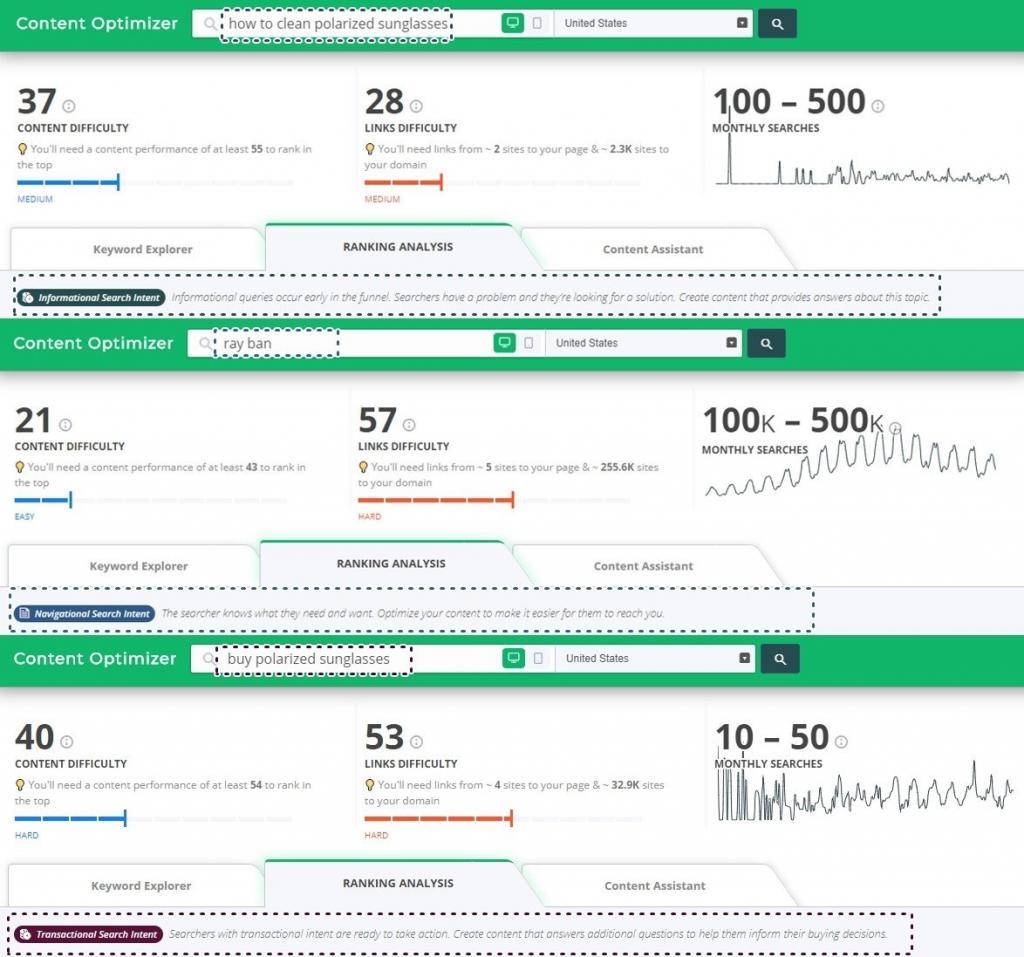
The Content Optimizer & Keyword Tool from cognitiveSEO automatically classifies the search intent for you. 

You just need to type in the keywords you are interested in optimizing for, and the tool does most of the job for you. The tool performs keyword research, it will tell you what the user search intent is, how popular and competitive keywords are, how difficult it is to rank in search engines, and cream of the crop: what it takes to rank for a specific keyword, meaning what are the exact keywords and links that boosted that page in the top of the search results. 


user search intent cognitiveseo


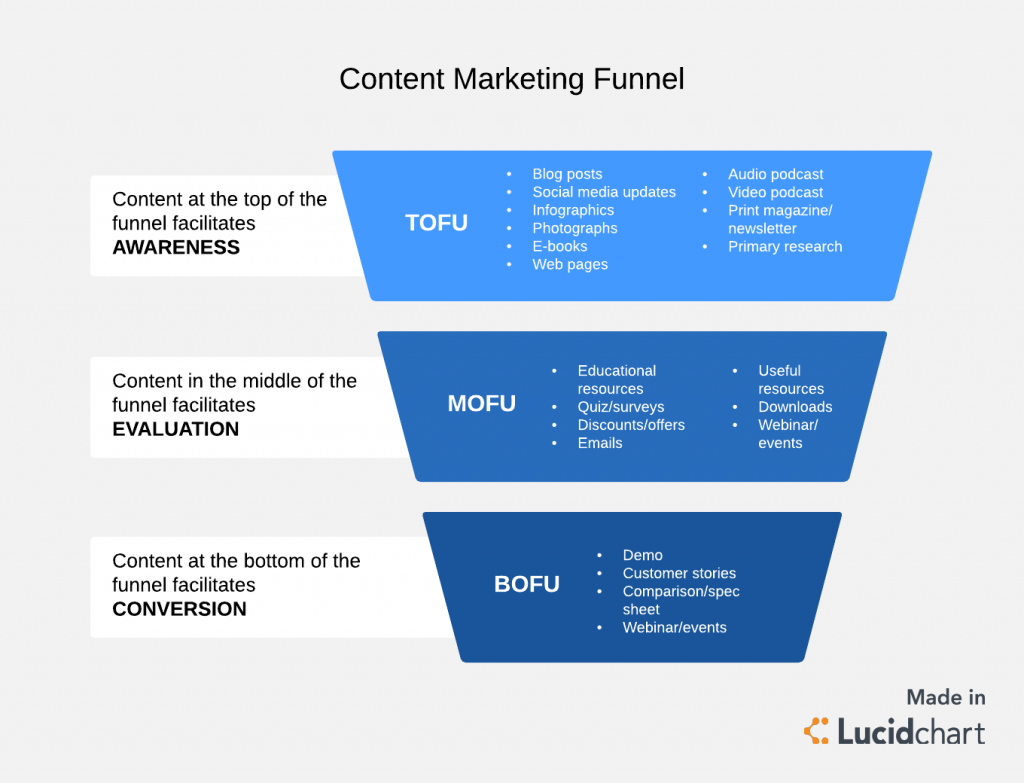
We can agree that on a larger scale, there are three types of content: 


  • TOFU content delivers informational content
  • MOFU content delivers transactional content
  • BOFU content delivers navigational content


In the screenshot below, you can see what each of these acronyms mean. 


content marketing unnel


What is top of funnel content (TOFU)?


Top of the funnel content is that type of content that offers information and tries to teach the visitors, answers common questions or pain points. At this stage, you don’t try to sell to the visitor because you might risk losing them. At all costs, avoid commercial content for this audience. TOFU content is used mainly for attracting new prospects and build awareness. 


What is middle of funnel content (MOFU)?


Middle of the funnel content lays between quality content that keeps the users informed and their understanding and need of your services or products. It is a key piece in your content marketing strategy. You can deliver MOFU content through case studies, personalized white paper that includes your business solutions, product reviews and best practices, discounts, webinars, events, surveys and so on. 


What is bottom of funnel content (BOFU)?


Bottom of the funnel content is at the purchase level, where you have brand loyalty and users see in you their loved brand. It comes after TOFU content and MOFU content as validation for delivering valuable content that responded to your clients’ needs. It is the type of content where you nurture and convert your lead magnets into customers. With the right data, you can increase your conversion rate. BOFU content can have different forms, such as live demos, customer stories and personal reviews from clients, comparison products, new product or features launch and so on.


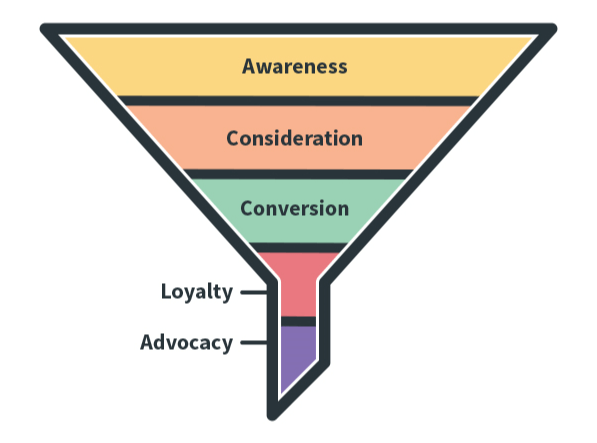
Your audience can be divided into all three stages of the buying funnel: top of funnel (TOFU), middle of funnel (MOFU) and bottom of funnel (BOFU). For each stage, there are specific triggers that pull the visitor down the funnel. And for that, you need to create content that will convert them. 


Marketing funnel and SEO

Source: www.aweber.com


The perfect content needs to deliver information based on the stage of the content marketing funnel where your audience is. For that, you need to know what type of content works best for all those three stages. 


2. Write In-Depth and Relevant Pieces of Content


Now that you know what type of content you should write, it’s time to actually start writing for SEO and most importantly for your users’ needs.


Google likes long and relevant content.


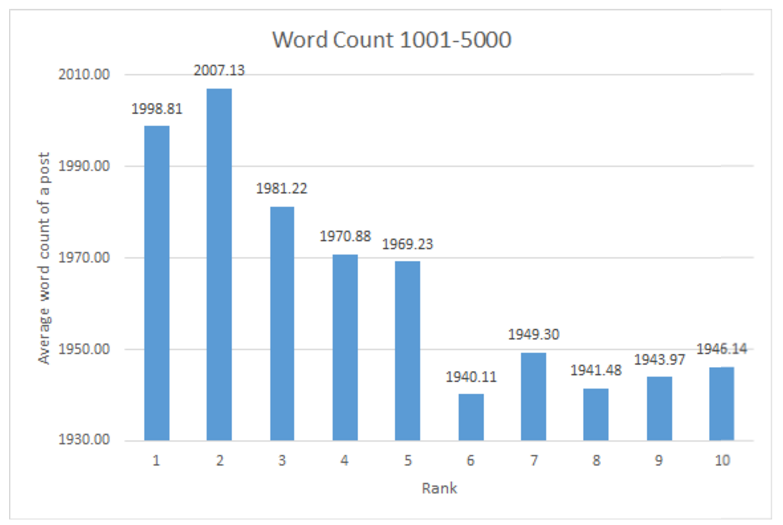
Studies say longer posts are more often associated with better ranks. Buffer says that the ideal blog post has around 1600 words. In one of our researches, it turned out that the top-ranking articles have 2000 words. 


Below you can see the results for the blog posts that have 1001-5000 number of words, amongst other categories. 


Number of words in an article

As you can see  the number of ranks decreases when the positions drop. The first 5 positions can be set apart from the rest of the pages. It seems that overall a higher number of words are correlated with higher ranks. That is suggested not only by the chart but also by the Pearson Correlation Coefficient, which indicates a very strong negative correlation (-0.9). The negative correlation means that, in general, longer posts are more often associated with better ranks.


I am not saying to write long content for the sake of writing. But when you tackle a subject, try to make the most out of it and go as in-depth as possible (and suitable for your site and business).


How would I know what to write about? one might ask. The Content Optimizer comes to rescue as it does most of the job for you,  no matter the niche. Because it is designed for content writers and combines all the steps for the content writing process.:


  • Keyword Research: First you can search for the perfect fitting keyword phrase for your topic. Understand the keyword intent and select your best option. Based on the language, the country and the device you want to rank for, you get a list of recommended keywords relevant for your selection. 
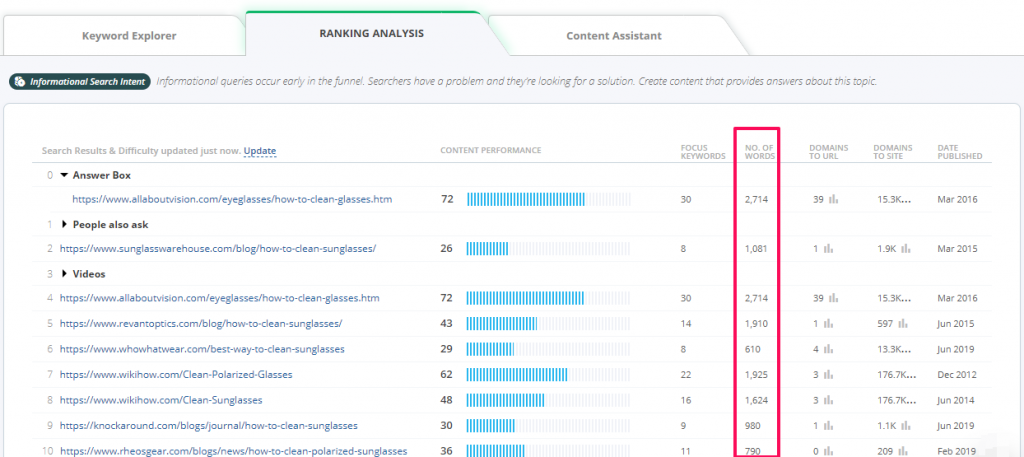
  • Ranking Analysis: Second, you can perform a short a concise competitive analysis on a particular keyword, see what type of pages rank (video, text, how-to, lists, tutorials and so on) and find similar topics. Plus you’ll get to see how long are the articles written by your competitors, the readability score and the number of focus keywords used in the content. 
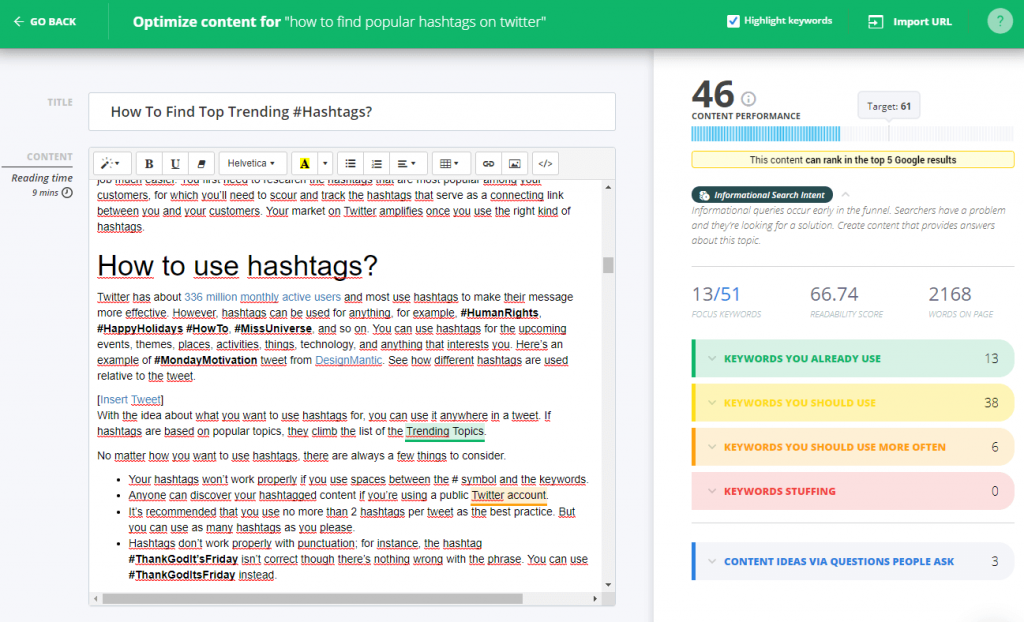
  • Content Optimization: In the final step, you can start adding your piece of content and optimize it for that search term, by including your original idea. Depending on what type of query intent, you’ll have to write similar blog content to respond to that intent, to have useful content. The tool will give you a list of keywords that you’ll have to add them in context and it will tell you if your piece is well optimized for search engines by using a Content Score. The higher the Content Score, the higher the chances to improve your ranking in Google and respond to the users’ needs. That way you can produce content that is relevant and it has value.


You get lots of metrics that will tell you how many words your piece of content has, what keywords does it use, what keywords it should use, and it gives you new ideas about arguments you should cover in your copy.


Content Optimizer cognitiveseo


Did you know?


The Content Optimizer & Keyword Tool from cognitiveSEO is a tool created by digital marketers for content writers. The cool thing about it is the fact that has all sorts of metrics and gives insights. On the matter of content leght, it automatically correlates the number of words on a page with rankings.  

You just need to type in a keyword you’re interested in for optimizing a page, and the tool extracts the search results that rank for that keyword + many useful data. You get to know how well optimized from a content point of view each page is, what links are pointing to that page, how many words are on the page, the publish date, etc. All this data is very useful as it gives you insights on how your content should look like to rank in top Google results. 


Number of words content optimizer


3. Add the Keywords You Want to Rank for in Your Title


Besides content, the title also matters. The third step for writing the perfect content is to strategically add keywords in the title.  And for that, there are lots of studies to back up. 


Years of practice and research showed us that Google puts more weight on the keywords that are closer to the beginning. Adding the keyword closer to the beginning of the title will give you high advantages. Firstly, because you can increase your click-through rate, as the user would like to click on titles that contain what they are looking for online.  Secondly, this way you can avoid that the title to be changed by Google and have a different title shown in SERP. Google does this now. Depending on the search made by the user and what is found relevant on your page, the search result for your webpage as you know it can be altered by Google and you can get a different title and meta description. 


Google is smart to understand what your page is about, but it is important you give it some hints.


If you offer good hints, then it will figure it out easier and reward your webpage with better SEO rankings. 


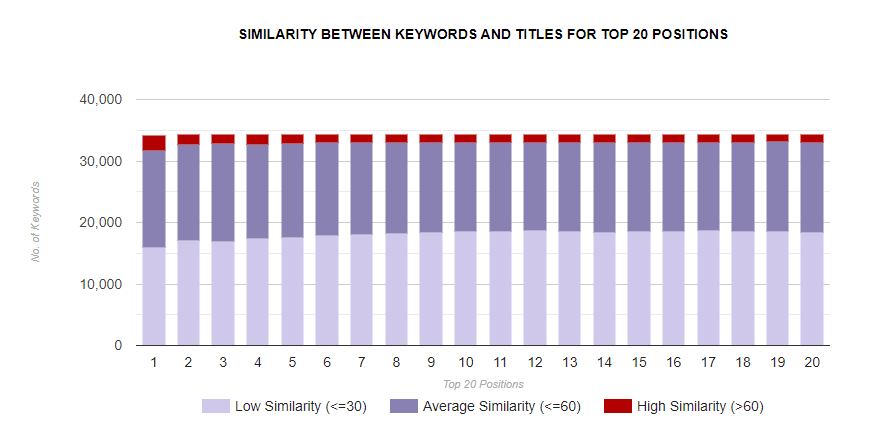
The second thing to mention on this topic is the effect of keywords in the title. In one of our researches, we could see if adding the keyword in the title has any ranking importance. By evaluating titles analyzed in the research, we used 3 levels of similarity (low, medium and high) to spark some light into the discovery and extract data from the first 20 search engine ranking positions. 


The effect of Keywords in titles


If we take a look at the chart results, we can’t really talk about a high correlation since the differences are pretty subtle. But we can surely get out some insights. For example, mainly the instances with a high similarity can be found for 1st ranking website. The red line is slightly bigger than the rest of the rankings. Moreover, there’s an overall decreasing trend form the 1st position until the 20th position. Which can mean only one thing:


Adding the keyword in the title can make a clear difference between ranking 1st or 2nd.


Another good intake is to try optimizing the title for multiple keywords, if possible. But don’t include keywords just for the sake of it. 


4. Design an Internal Linking Structure


Nobody says it better than Google: Link architecture—the method of internal linking on your site—is a crucial step in site design if you want your site indexed by search engines. It plays a critical role in Googlebot’s ability to find your site’s pages and ensures that your visitors can navigate and enjoy your site.


Any good website should have a well-designed internal linking structure. If you want your website to rank higher, your content creation process should include an internal linking strategy. Search engines look at internal links when deciding what pages should rank, amongst lots of other factors.  

The best internal linking strategy is to do internal linking.

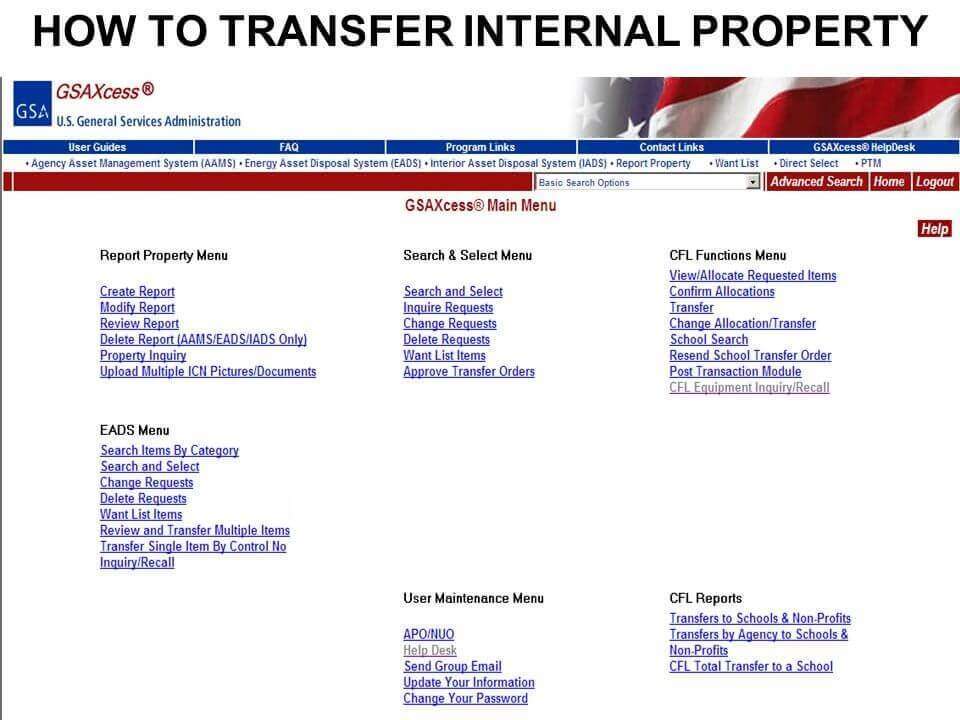
An internal linking structure should connect web pages that are related and bring added value and more information when needed, not just for the sake of it. Too many internal links on a page won’t do any good for that page. Just think of those pages flooded with a huge list of links, like the one below: 


Lots of internal links


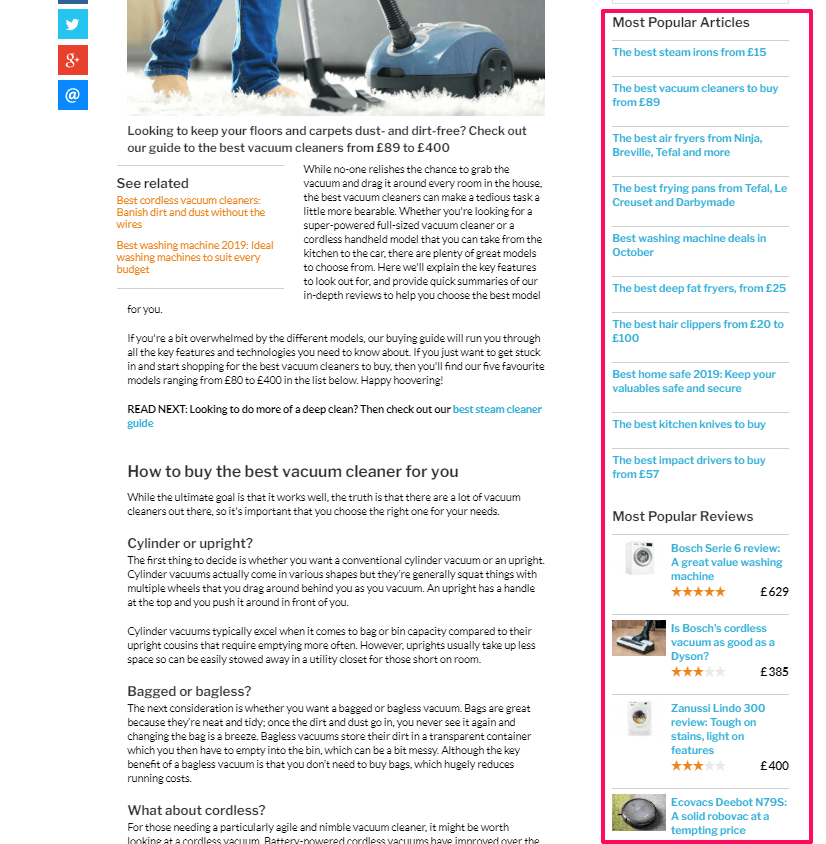
Another example of pages with lots of internal links is when it has a huge navigation or right side/left side “Most popular categories” or “Most popular articles”.


Most popular categories- Right side list of internal links


Note this: Adding more internal links on a single page will devalue the existing links. You have to rob Peter to pay Paul. One way or another, you decide to strengthen particular pages and reduce the weight of other pages. 


Each page has a PageRank amount (from 0 to 100, for example) divided by the number of links. So, the fewer the number of links, the more weight they pass.


Dave Davies performed an SEO audit on a large e-commerce site called Trophy Central and implemented an optimization plan including internal linking and web design. After the implementation was defined, the results came slightly easy. He monitored 381 terms and high changes in SERP, divided into 4 categories: 

  • Top 100: More 56 keywords ranking in top 100 terms, across 24 declined in rankings and across 165 improved.
  • Top 20. More 34 phrases ranking in top 20 terms, 5 declined in rankings and 55 improved.
  • Top 10. New more 9 in top 10 terms, declined for 3 and improved for 13 phrases.
  • Top 3. The site had no top 3 terms in the beginning and had 2 after the changes.


If you decide to design an internal linking strategy and receive more website traffic, besides improving your site’s rankings, make your links highly visible and not hidden in obscure locations. 

Did you know?


The Site Audit Tool from cognitiveSEO automatically shows you information about the internal linking structure of any site.  

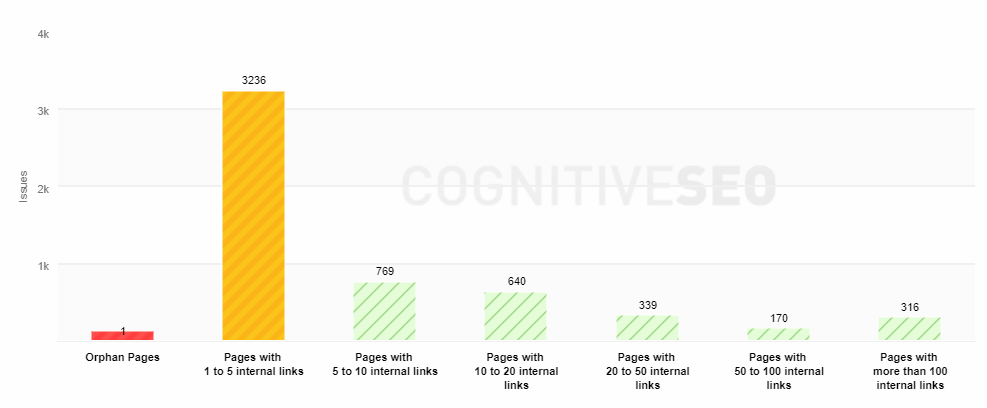
You get a list with all your internal links categorized, as you can see in the print screen below. There are three categories of pages you should take a close look at:

  • Pages with a small number of internal links – try to link them from a higher number of pages in your site.
  • Orphan pages – those are pages that are not linked at all from your site.
  • Pages with over 100 links – they might be linked too much.


internal links

You can use Site Audit tool to check other linking issues (internal and external, broken link building), duplicate content, indexability, performance metrics, mobile data, mixed content, social media issues and many more.


5. Create Google Friendly URLs


The fifth step is to create Google-friendly URLs following our next guidelines. 


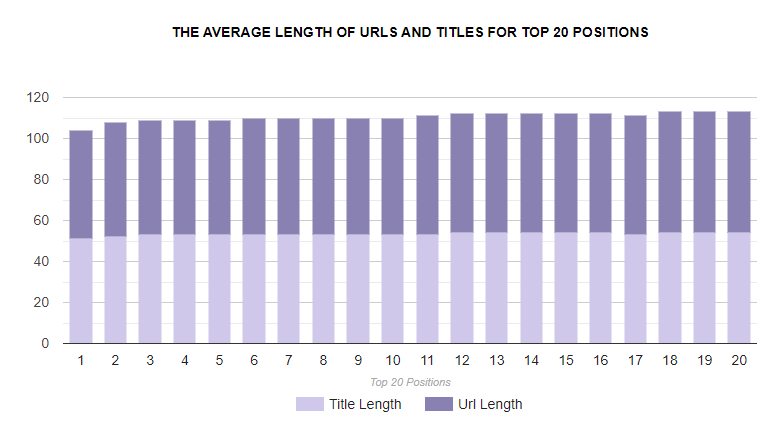
Some time ago, we performed an in-depth study on 34k Keywords to study the influence of titles and URLs in SERP. When we analyzed the URLs length to see which is the best format correlated with higher rankings, we saw that the more concise the URLs, the greater the chance to have higher rankings. Below you can see the chart with the extracted data:


Title and URLs lenght


As long as the title length is between 50-60 characters and the URL length is between 90-105, you’re safe. Having a concise URL length carries more benefits than having a long and not so easy to read or remember URL. If the URL and title contain the focus keyword, that is surely an advantage. But we’ll discuss this further on. 


Of course, having a concise URL is helpful in all sorts of ways beyond the search results hierarchy. For instance, even if most casual users don’t bother remembering full URLs nowadays, it can still count as an advantage if you make it easy on the brain. Think about EMDs, for instance: instinctively, you are more likely to go with the URL that most resembles your thought process (“I need to find an electrical bicycle…. oh, looks: a site named just that”). The extra effort you can put into it is making sure that not only the homepage, but pretty much any page on your website has its URL fit in a neat number of characters (that, if too large to be easily remembered, can at least be short enough to be easily recognized).


6. Keep Updating Your Blog with Fresh Content


Amongst all the ranking factors mentioned above, freshness is highly important for Google as it has improved its ranking algorithm to offer up-to-date relevant results. At the time the algorithm was updated, Google promised that its focus was to provide the user with “fresher, more recent search results“. Which makes freshness a factor that can define your perfect content strategy. 


Freshness isn’t the same thing as frequency. The “freshness” in the fresh content lays in the information. Writing fresh content can be visible through its value at the moment we speak and the meaning of the data behind it. Fresh content is dynamic in meaning. 


Google likes fresh content but only in certain cases. Changing the date isn’t updating a piece of content, but rather faking it. There are some industries where freshness has a higher importance on rankings: 

  • Recent events or hot topics such as news. 
  • Recurring events such as conferences.
  • Frequent updates such as product reviews.


Here’s what John Mueller says: 


Publishing fresh content will help you get more links and achieve higher SEO visibility. Moreover, freshness factors in your content can impact your CTR.  


Conclusion


All these success factors can help you create evergreen content and deliver perfect content for SEO purposes, but mostly for your users’ well-being. You’re probably writing lots of content on a daily basis, but to make it worth your time, you need to be strategic about it. Writing successful content will help you increase your conversion optimization. For that, your content strategy needs to contain several things: length, keyword appearance, optimized URL & title, reason & intent, link power. So your blog articles should be around 2000 words, have keywords in title and URL, preferably in the beginning. 


You need to understand users’ intent and offer similar content, deliver dynamic and interactive content that has accurate information, valid data. In addition, create connections between webpages through a powerful internal link architecture.  


If you understand how SEO and content fits into your overall digital marketing strategy, then you’ll manage to increase traffic, and in the end, increase your rankings.


Takeaways – The type of content Google wants to rank:

  • Is intent-based.
  • Contains concise URLs, titles with keywords closer to the beginning.
  • Has a well-structured internal linking architecture.
  • Has well-targeted content for target audiences from each stage of the funnel.
  • Is quite long (~2000 words).
  • Offers fresh information.

The post SEO Content Writing Done Right – Create Content that Google Wants to Rank at the Top appeared first on SEO Blog | cognitiveSEO Blog on SEO Tactics & Strategies.


SEO Content Writing Done Right – Create Content that Google Wants to Rank at the Top posted first on http://nickpontemarketing.tumblr.com/

Monday, September 30, 2019

It’s been 10 years… Builtvisible is celebrating our 10-year anniversary

Builtvisible (once known as SEOgadget) sprang to life in a bedroom in Mile End in 2009. Actually, there had been a blog for a year or so prior to this, but the business we know and love today was started 10 years ago this month. It seems crazy to write this: Builtvisible is celebrating its […]

The post It’s been 10 years… Builtvisible is celebrating our 10-year anniversary appeared first on Builtvisible.


It’s been 10 years… Builtvisible is celebrating our 10-year anniversary posted first on http://nickpontemarketing.tumblr.com/

Thursday, September 26, 2019

When to execute outreach

We’ve come to the final post in our outreach series. For the full journey, download our Complete guide to outreach. It’s no good doing all the prep work we’ve mentioned in previous posts if your email ends up getting buried in your recipient’s inbox because it’s poorly timed. Although there is no sure-fire way of […]

The post When to execute outreach appeared first on Builtvisible.


When to execute outreach posted first on http://nickpontemarketing.tumblr.com/